
Wim Wenders’ latest film, Perfect Days, premiered at Cannes 2023, sharing the spotlight with his new documentary Anselm. While the documentary immerses audiences in creative practice by following the life of an artist, Perfect Days explores something subtler. Experiencing it at London Film Festival 2023, its cinematic grace and visual storytelling gently ushered the audience through its beautifully understated narrative.
 In Tokyo, toilet cleaner Hirayama (Koji Yakusho) embraces a meticulously ritualistic life, albeit rich with an appreciation for the smaller joys. Koji Yakusho, whose embodiment of Hirayama garnered him the Best Actor award at Cannes, delivers a performance that is as understated as it is profoundly moving, effortlessly drawing viewers into the quiet, contemplative world of his character. A man of few words, Hirayama finds contentment in reading, caring for his plants, and listening to a wide spectrum of old-school rock and pop music, presenting a bittersweet and endearing character study.
Equipped with all necessary tools—a compact hand mirror, an extendable mop, a jumpsuit, a van, and a courteous demeanor—Hirayama serves as somewhat of a quiet, friendly puzzle to his young, preoccupied and perplexed colleague, Takashi (Tokio Emoto), as they move from one public toilet to another throughout the week. Though disruptions to his methodical work life are met with mild disdain rather than anger, Hirayama approaches challenges with admirable resilience, marking what feels like Wenders’ triumphant return to the essence of slow cinema. Descending into Hirayama’s life rather than broadening the scope to encompass broader themes seems vital to grasping the poignant subtleties of Perfect Days.
Wenders’ film gently and thoughtfully observes Hirayama, avoiding the romanticization or exoticization of a working-class existence. Steering clear of repackaging cultural motifs, Wenders presents a film that invites viewers on a sensitive, introspective exploration of Hirayama’s Tokyo life. The melodic remnants from old cassette tapes and literary echoes do not always act as vessels for nostalgia, but rather as threads that enhance our understanding of his peaceful solitude amidst Tokyo’s vibrant bustle.
Even though some music choices and placements might seem conspicuous, the film manages this adeptly because Hirayama maintains a profound, spiritual connection to the world around him. His ability to find solace and beauty in many of his surroundings, particularly during brief lunch breaks where he photographs trees and becomes absorbed in delicate light patterns on concrete, is enhanced by Franz Lustig’s evocative cinematography. Koji Yakusho’s character, perhaps a concealed artist, doesn’t openly express his passions. His dreams, depicted in succinct, black-and-white impressionistic sequences, often revisit his daily encounters, seamlessly intertwining his conscious and subconscious realms. The dream sequences, beautifully crafted in a black-and-white palette, act like little pieces of abstract art within the film, offering a unique window into the protagonist’s subconscious. They’re not just replaying his day, but adding a layer of mystery and emotion that gently nudges viewers to ponder what might linger beneath his calm exterior.
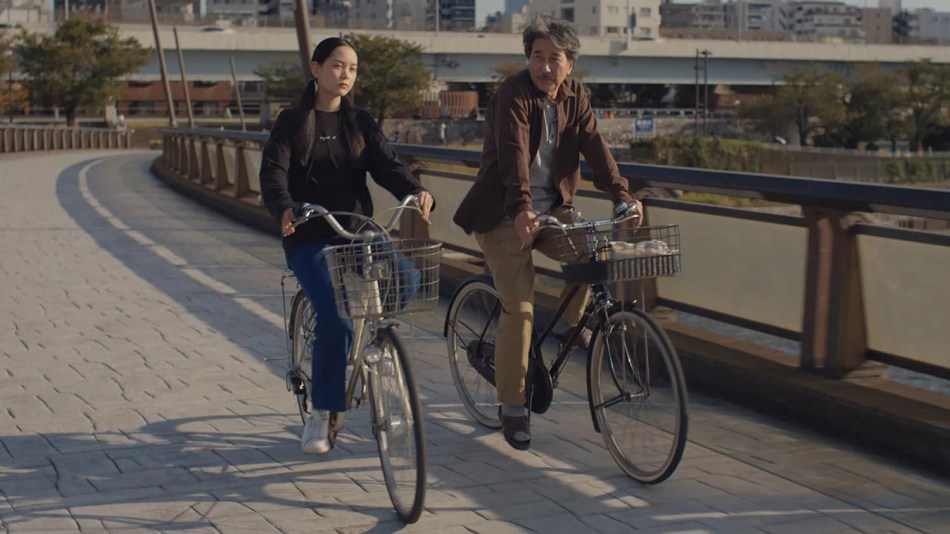
The film subtly unwraps the complexities of Hirayama’s world, especially when his niece Niko (Arisa Nakano) introduces a soft chaos that he willingly embraces. The tranquil rhythm of his life enchants Niko, until her mother, and Hirayama’s sister, intervenes. This brief family reunion, peppered with allusions to their father’s actions, sparks a rare emotional response from Hirayama. Wenders guides the narrative through visible and verbal components, while also probing into the characters’ silent emotions and concealed histories, inviting viewers to delve beyond what is immediately perceptible, and explore the depth of unspoken realities.
In Perfect Days, the film wraps us in a gentle hug, whispering sweet truths about the small, everyday miracles in life. It doesn’t shout its messages but lays them out quietly, like soft petals, asking viewers to stop, breathe, and really see the world around them. It nudges us to remember that the simple, everyday moments carry a deep, quiet importance of their own. Amidst our busy, modern lives, there’s a chance to find peace and unexpected joy in the pauses in between, allowing ourselves to be touched by the quiet, simple beauty found in ordinary moments.
Discover more from Cineccentric
Subscribe to get the latest posts sent to your email.
 Cineccentric
0 comments on “Perfect Days ★★★★”