

The migrant crisis in Europe has become increasingly impossible to ignore. Countries such as Italy are particularly impacted due to their proximity to and shared waters with Africa. Newscasts showcase videos of migrants arriving and their lives in Europe, but seldom portray the experience of traversing Africa to make it onto one of the migrants’ boats. Matteo Garrone’s Io Capitano shows this very experience, the film telling the story of two teenage cousins from Dakar and is inspired by real events.
 Seydou (Seydou Sarr) and Moussa (Moustapha Fall) dream of a better future for themselves. On their phones, Europe looks to be a land of opportunity and offers a better life than they have now. If only they were in Europe, Moussa believes, they would be able to become famous musicians and one day even have White people begging for their autographs. In Africa, they don’t see a chance of that happening or much else in terms of opportunities. Their aspirations are ever-optimistic, and are more than sufficient motivation to save up money to make the journey to Europe.
Io Capitano does not portray Senegal or Seydou and Moussa’s lives in Africa in great detail. We see that Seydou and Moussa come from loving families, but to them their comfortable home life is worth risking for a chance at a life within Europe. They’re warned by family and those older with more life experience that their perspective of Europe is fanciful, but Seydou and Moussa are not dissuaded. They leave at night and begin a treacherous trek that presents the boys with much more trouble than they had in mind. Not only do they have to traverse the Sahara Desert to get to Libya, but they also have to do so with little support and a multitude of false promises from those who offer help. The money that Seydou and Moussa save quickly dwindles and is eventually stolen, leaving the boys victim to imprisonment, slavery, and at risk of death. While hiking the Sahara, they see more than a handful of dead bodies of those unhealthy enough to survive the scorching temperature. Garrone shows that for every migrant that arrives in Europe, there’s numerous others who fell impoverished or died in the journey. To make matters more challenging, Seydou and Massou are forcibly separated and have to fend for themselves.
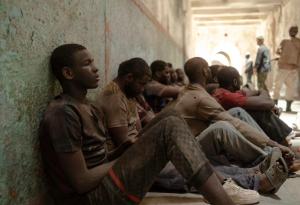
From border patrol to the Libyan mafia, there are people around every corner to take advantage of the migrants. A particularly twisted instance of this is when Seydou is held captive and is threatened with torture if he does not disclose contact information for his family so his captives can demand money for his freedom. Discarded bodies in the corner of the room make the threat disturbingly lucid. Not only is Seydou abused in his journey to Europe, his family and their livelihood is also at risk. Io Capitano shows that many survivors of migration bear trauma from their experiences, all in hopes of a better life.
Io Capitano is Matteo Garrone’s first film that isn’t set in Italy. By bringing on story consultants Mamadou Kouassi and Amara Fofana, migrants from Africa themselves, Garrone is able to lean on the authenticity of Kouassi and Fofana’s experiences when telling this story. To migrate to Europe, Fofana steered an over-capacity boat with no training. Io Capitano features a similar scene that is almost impossible to believe, culminating in Sarr expressing a myriad of emotions as he is placed with an undue amount of responsibility for a sixteen year old boy. Casting Senegalese actors as Seydou and Massou contribute to how genuine their performances are in Io Capitano, and filming in chronological order allows for the dramatic weight of the film to set in naturally.
Despite their hardships, Seydou and Massou never lose their resilience to make it to Europe together. And even in the darkness of their journey, they are supported by their fellow migrants. Acts of kindness provide hope for Seydou and Massou, and allow Io Capitano to have humanistic undertones. Kindness existing amidst evil is deeply affecting, and enables Matteo Garrone to tell a very different kind of migrant story in Io Capitano than we’re used to seeing on our televisions.
Discover more from Cineccentric
Subscribe to get the latest posts sent to your email.
 Cineccentric
0 comments on “Io Capitano ★★★”