
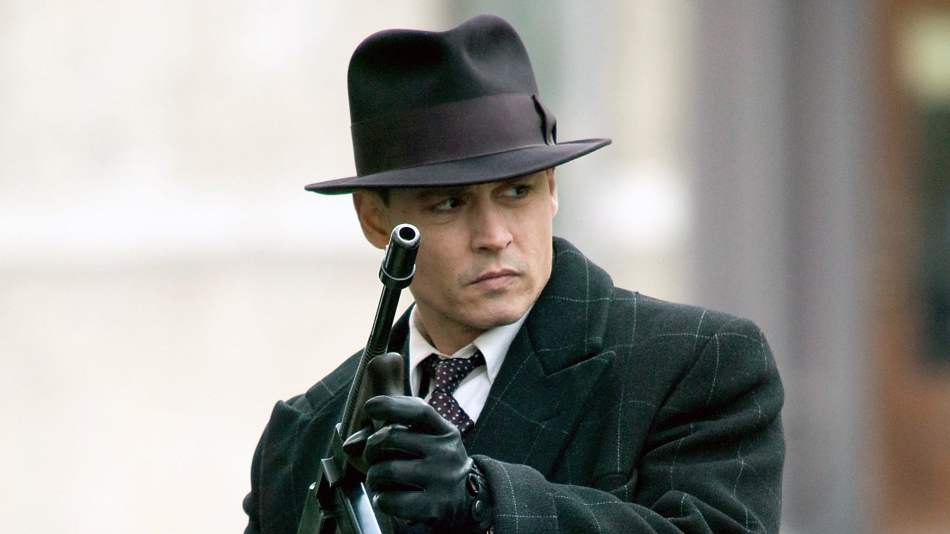
A Vittorio De Sica film and a number of action films have captured our attention in this month’s What We’re Watching. Read below:
The Children Are Watching Us (1944)
The Children Are Watching Us marked the first collaboration between Vittorio De Sica and screenwriter Cesare Zavattini. De Sica’s gift for capturing children’s emotions was already very apparent and it’s remarkable how much mileage this bourgeois family drama gets out of subjecting Luciano De Ambrosis’ Pricò to an endless series of traumatic events. Far removed from Rossellini‘s treatment of his troubled kid protagonist in Germany Year Zero, The Children Are Watching Us renders Pricò’s inner life as in a way that is perfectly legible for an adult audience, with numerous close-ups providing insight into his state of mind.
 De Sica’s sentimentalist streak isn’t as finely calibrated as it would become on his 1948 milestone Bicycle Thieves but the melodrama is certainly effective in its own way. Like Bicycle Thieves, his 1944 film is very much focused on the loss of innocence — Pauline Kael used the phrase “destruction of innocence” in her review — and one is reminded of Lino’s final words to Marcello in Alberto Moravia‘s 1951 novel, “The Conformist“: “Marcello, we were all innocent. Don’t you think I was innocent, too? And we all lose our innocence, one way or another. That’s normality.” – Fred Barrett
Action Jackson (1988)
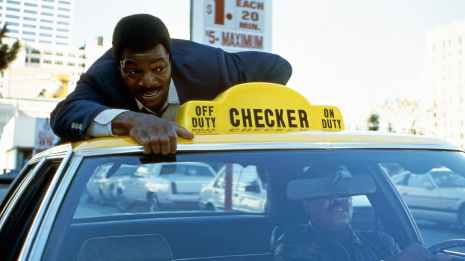 The late Carl Weathers was a physically imposing presence due to his past as a football player in high school and college. Obviously, his physicality served him well for his iconic role as Apollo Creed in the Rocky franchise. But often, his most interesting performances occurred when his physicality would be at odds with his actual character. In Predator, for instance, Weathers’ Colonel Dillon is essentially a deceitful pencil pusher with muscles. And in Action Jackson, Weathers is playing a detective who has been demoted to office work for asking too many questions about the criminal activities of the son of influential Detroit businessman Peter Dellaplane. On paper, he seems to be the perfect hero – a star athlete who attended Harvard Law and had a flawless record before his run-in. “Action” is in fact a derogatory name, meant to contrast with his relatively insignificant role in the department. It is absurd to think this if you were to simply look at Weathers, but he leans into the vulnerability and insecurity of his character, even as the action gets more frenetic around him as he becomes embroiled in another run-in with Dellaplane. His relationship with Sydney (Vanity), a nightclub singer who is Dellaplane’s lover, is fun to watch since Sydney almost immediately latches onto his insecurity and we can watch Jackson battling with himself to protect someone very vulnerable (Vanity’s personal struggle with drugs gives her role a sad verisimilitude). Action Jackson is a lot of 80’s action mayhem, but Weathers and Vanity make it worthwhile viewing. – Eugene Kang
Beyond Hypothermia (1996)
Patrick Leung‘s 1996 action drama Beyond Hypothermia is a La Femme Nikita riff that’s lean, mean, and of course marches ruthlessly towards a tragic heroic bloodshed finale. Leung wasn’t the first to remake Luc Besson‘s 1990 cult hit: Stephen Shin already tackled it for the Hong Kong market with his unofficial 1991 remake, Black Cat, and Hollywood took a crack at it with the Bridget Fonda-led, John Badham-directed Point of No Return, an interesting film in its own right. But Beyond Hypethermia could reasonably lay claim to being the best spin on the story — certainly the most emotionally resonant.
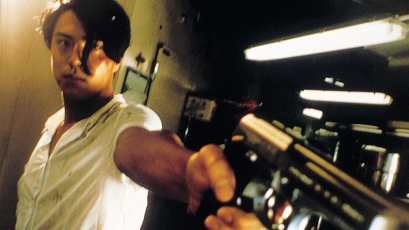 Leung’s film is pretty pared down as far as Hong Kong action films from the era go but that doesn’t take away from all the gunfightin’ beauty on display. Doom hangs heavy over the story and the central relationship in particular is permeated by the residual brutality of Shu Li Han’s (Jacklyn Wu) clandestine profession. However, there’s a real poetry to the violence that’s perhaps most apparent in its final moments: two lovers, mortally wounded, taking their dying breaths together, surrounded by dead bodies, glass shards, bent metal, and bullet casings. There are certainly worse ways to go. – Fred Barrett
Public Enemies (2009)
Life, death, and crime at the dawn of the surveillance state. Rarely considered to sit amongst the upper echelon of Michael Mann‘s work but certainly worthy of that distinction — it’s certainly better than film bro favorite Miami Vice. Public Enemies echoes Sam Peckinpah‘s The Wild Bunch, picking up that film’s theme of trigger-happy outlaws navigating a world in which they are increasingly out of place. (Says William Holden‘s Pike Bishop in The Wild Bunch: “We’ve got to start thinking beyond our guns. Those days are closing fast.”) Dante Spinotti‘s digital cinematography fundamentally puts the gangsters at odds with their surroundings, the flat textures clashing heavily with the dusty Great Depression-era setting.
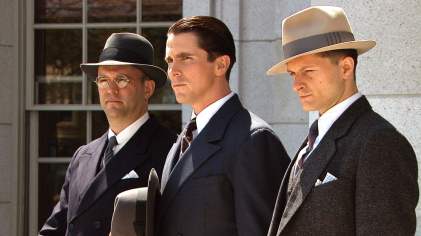 But as is so often the case, Mann finds beauty amidst tragedy. Here, that beauty is at its most entrancing when Depp‘s Dillinger, the FBI’s Public Enemy No. 1, not-so-discreetly strolls through a Chicago police station, captivated by the mess of documents and photographs related to him and his criminal deeds. A man coming face to face with his legacy, wandering a museum of his own life as the haunting sounds of Blind Willie Johnson‘s “Dark Was the Night, Cold Was the Ground” emerge from the ambient score. It doesn’t get much better than that. – Fred Barrett
Discover more from Cineccentric
Subscribe to get the latest posts sent to your email.
 Cineccentric
0 comments on “What We’re Watching – March 2024”