
This month, we revisit the 1970s with two films that are emblematic of their decade and well worth seeing. Continue reading below:
The Conversation (1974)
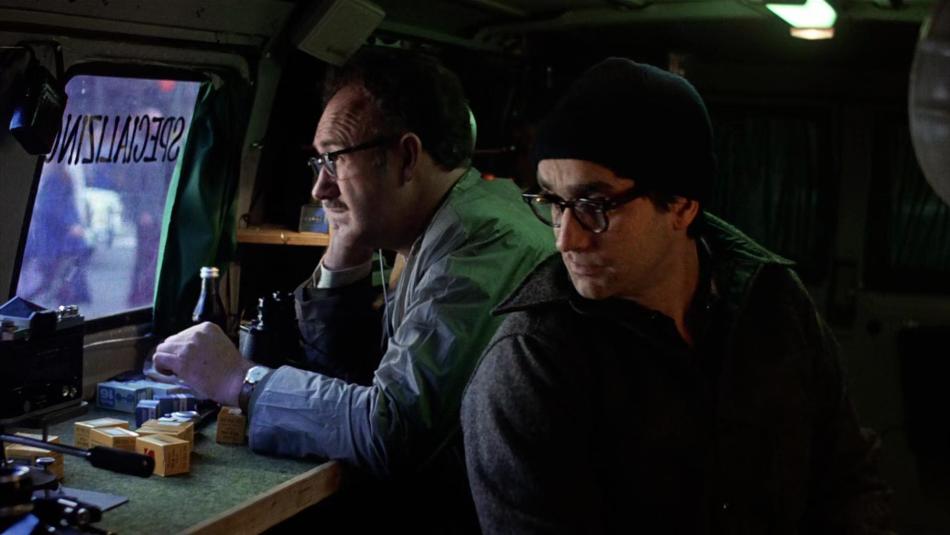
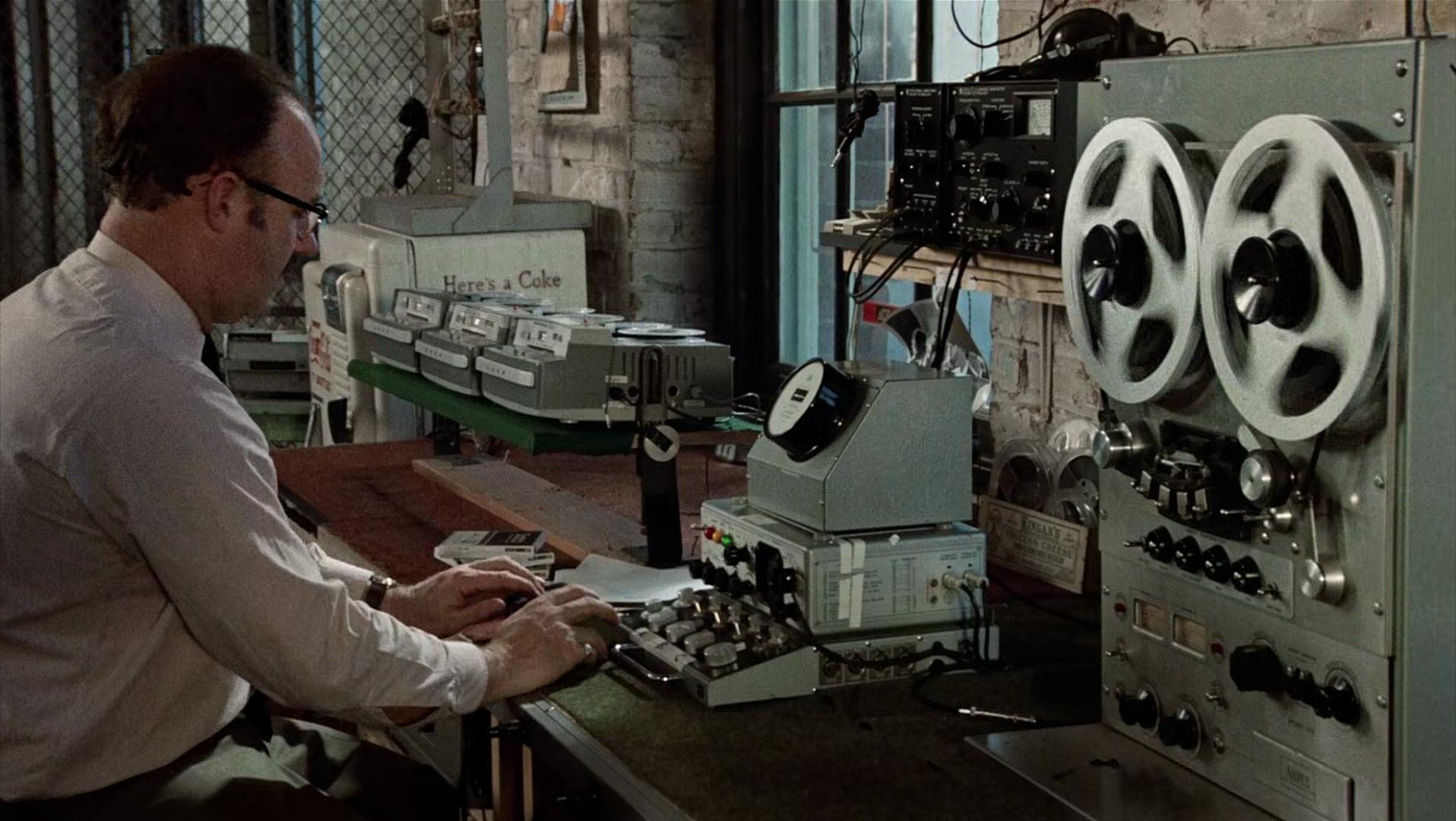 Released in 1974, Francis Ford Coppola‘s The Conversation came at a time of national distrust and unease during the Watergate scandal. The Conversation was written years before the wiretaps occurred yet finds an unlikely timeliness in its place in history. Coppola’s film captures a sense of paranoia through the character of Harry R. Caul portrayed by Gene Hackman. Caul is a freelance surveillance expert. He takes on clients and believes that he is not morally responsible for how his surveillance is used, but is disturbed when the phrase “he’d kill us if he got the chance” is uttered by a couple he is spying on. Caul tries to confront his client about what he heard, and is met with a dismissive response and efforts from Martin Stett (Harrison Ford), his client’s assistant, to discourage Caul from exploring his inquiry further. Caul becomes deeply disturbed by this, and has to get creative in order to prevent a potential murder.
In The Conversation, Caul is shown to be a quirky and admired expert in his field. But as the film progresses at a slow-burning, tension-inducing pace, Caul reaches outside of his comfort zone and is met with resistance and is belittled. His confidence is stripped away in favor of confusion and paranoia, and this is emphasized in full effect in the nihilistic final scene of The Conversation. Though The Conversation likely isn’t the first Francis Ford Coppola film that comes to mind when discussing the director, the film shouldn’t be missed and is a testament to Coppola’s directorial talent. – Alex Sitaras
Stay Hungry (1976)
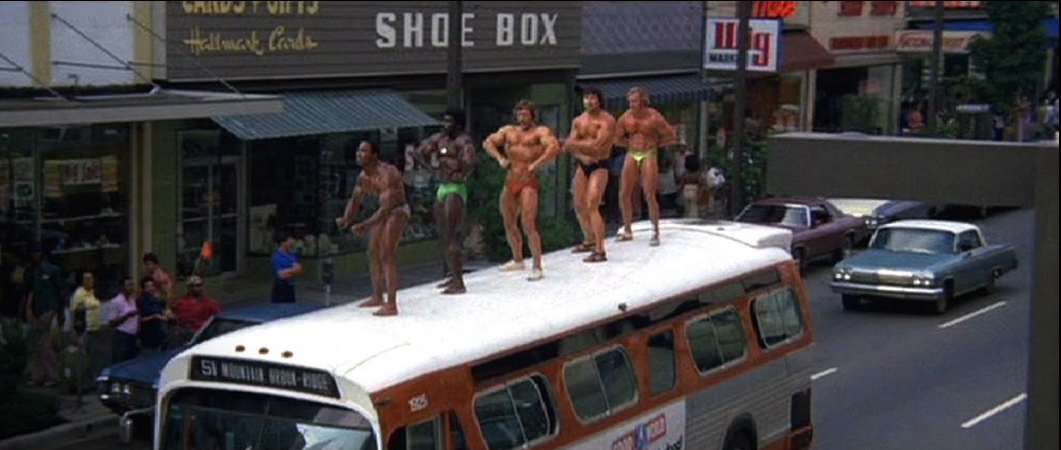 Bob Rafelson is best known for directing Five Easy Pieces, starring Jack Nicholson. Its portrayal of a drifter who cannot fit into society mostly because he refuses to would color the antiheroes that populated the auteur-driven American films of the 70’s. Stay Hungry follows Craig Blake, a similarly disaffected scion of a rich family played by Jeff Bridges, who lives in an antebellum Southern mansion and is recruited by the investment firm he works for to scout out a gym to see if the owner (R.G. Armstrong) would be willing to sell the gym so that the firm can build an office high-rise there. In the gym, Blake finds a colorful crew including Sally Field as a spunky receptionist and a young Arnold Schwarzenegger as a bodybuilder training for the Mr. Universe competition.
Blake soon finds himself drawn into this motley crew partly out of loneliness and largely because they are so different from the upper crust bourgeois he is surrounded by. Sally Field’s Mary Tate is free-spirited and modern but not in a performative way. She makes her romantic interest in Blake known quickly and directly. Schwarzenneger’s Santo is far from a meathead; he is dedicated to his bodybuilding to almost a comical degree (Santo is dressed up in a mask and cape the first time Blake meets him) but he is also free-spirited and hedonistic in a compelling way.
Stay Hungry is somewhat meandering in its plot, but not to the movie’s detriment. We get many great character moments such as Robert Englund’s character foiling an attempted robbery on the gym while his date (Helena Kallianiotes) dispatches with some of the thugs with karate (which she teaches). Rafelson does not entirely sanction the lifestyle of the gym staff and patrons. Armstrong’s character is perhaps the most deeply flawed of the characters and assaults Mary Tate near the end of the movie while he is in a drug-induced rage. Yet Stay Hungry’s intent is not to pass judgment on its characters but rather to show how how the counterculture of the 60’s and 70’s has gone far beyond the fringe and into the lives of many different types of people. – Eugene Kang
Discover more from Cineccentric
Subscribe to get the latest posts sent to your email.
 Cineccentric
0 comments on “What We’re Watching – June 2024”