

Director Daina O. Pusić leaves no stone unturned in her ambitious feature debut Tuesday, a magical realism story of a dying teenage girl and her grieving mother who are visited by Death. Taking the form of a macaw, Death is capable of taking life purely by raising its wing and washing over its next target. It visits all forms of life, stopping by a few people in the film’s opening sequence as well as a dead mouse on a sticky pad before it finally shows up in young Tuesday’s (Lola Petticrew) room. Tuesday is under no illusions and needs no explanation. She knows it is Death right in front of her and she, having long been in pain from a terminal illness, is ready. All she asks for is some time to wait for her mother, Zora (Julia Louis-Dreyfus), to return home from work, which Death grants her. From there, Tuesday goes in a wild direction. Veering from comedy to horror to post-apocalyptic fantasy and everything in between, Pusić’s vision is unique.

One can immediately start to draw comparisons between Tuesday and other films about Death in tangible form, such as The Seventh Seal, or films about grief. The recent A Monster Calls is an especially apt comparison, in which a young boy is visited by a monster that helps him come to terms with not only his grief over his mother, but also his own confused feelings over wanting his mother to live and wanting her to die for their shared pain to end. In Tuesday, Tuesday is ready and accepting of the end. Zora is anything but, as she goes through their house and systematically sells everything to fund Tuesday’s care and spends her days about town, avoiding going home (even when Tuesday calls her) and maintaining a lie that she has a job that keeps her very busy. The denial, escapism, preemptive grief, rage, and confusion that consume Zora set the stage for her own journey in Tuesday with Pusić forcing her to confront not only Tuesday’s death, but death’s necessity and inevitability in life and the potential for it to be a relief if the alternative is just more suffering. Zora is an imperfect person, handling this the only way she knows how – avoidance and stubbornness – while losing sight of the constant agony Tuesday is in, prioritizing her own desire for her daughter’s health, normalcy, and life, above the reality of the situation. These ideas set the stage for Tuesday to conjure plenty of emotion and create countless poignant moments. It especially benefits from the chemistry and performances of Louis-Dreyfus and Petticrew. Louis-Dreyfus shines, capturing the rage and tension of the moment as well as the overwhelming emotion, shock, and sorrow of the experience with great depth and feeling.
Elsewhere, Tuesday defies logical explanation. Death – voiced by Arinzé Kene – and Tuesday strike up a bond, in large part owing to Tuesday’s kindness towards this being. While the film can be quite strange here – think odd couple buddy comedy – it does well in using this angle to define Tuesday’s generally graceful and understanding nature. Meanwhile, it allows Tuesday to symbolize the often indescribable as it shows Tuesday bargaining with Death, hanging on just long enough to see her mother, and listening to stories of Death’s exploits. It is all very odd tonally and Pusić’s inexperience shows in her inability to have it all gel together seamlessly, but there is a beauty in its imperfection and its unexpected nature. How Zora responds to meeting Death and the journey the film takes from there, veering wildly into post-apocalyptic horror and even wilder magical realism/fantasy, is where Tuesday really defies all expectations. Manifesting the cost of no death into a terrifying section of the film, only to then follow it up with quite a twist fits in with the unusual approach, even if it provides the viewer with plenty of challenges. How this story develops can feel like a strange out-of-body experience, but it all ties together and builds upon the film’s central themes and Zora’s journey (moving from avoidance to acceptance). It is this rock solid foundation that keeps Tuesday together and helps it stick its boldest landings, all coming together to deliver a genuinely moving experience.
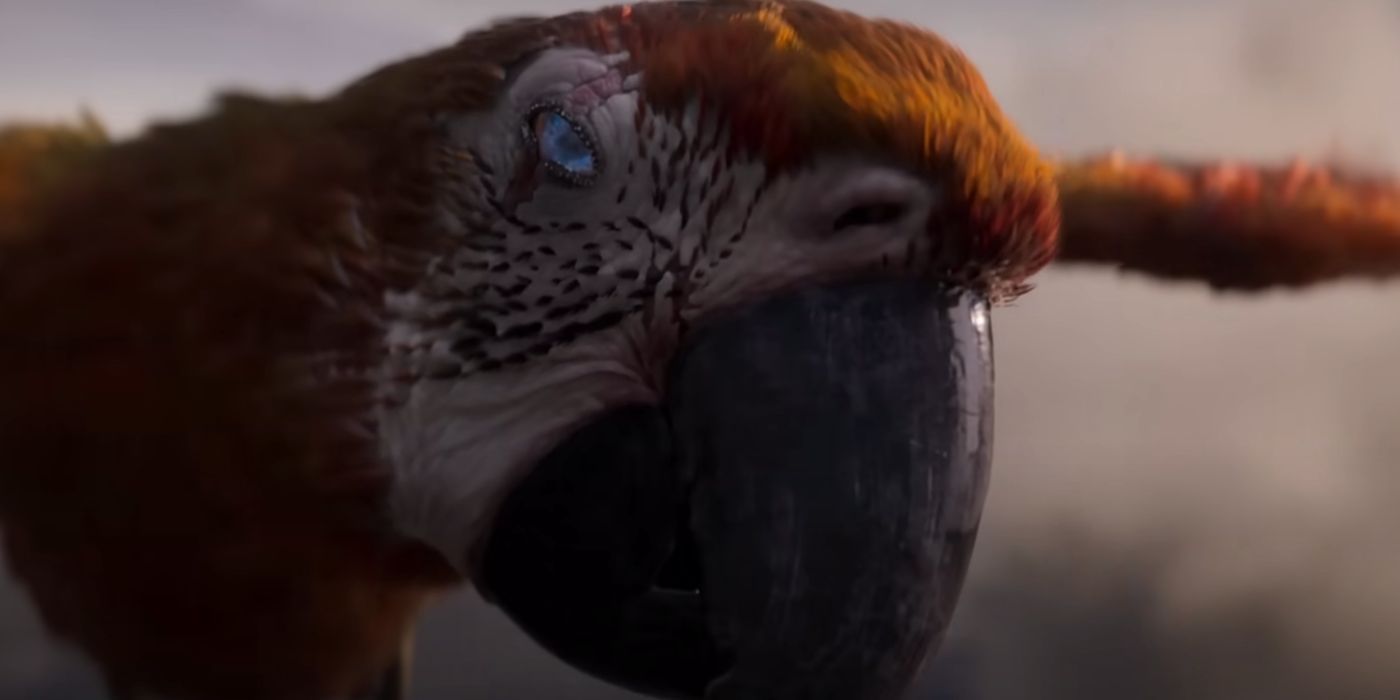
Crucial to the film are its visual effects, especially the macaw. From the first introduction of the bird, one can see its weathered appearance with a damaged right eye and general filth all over its body. It has seen and done it all, bearing the marks of past battles with those who tried to defy Death or those who feared it so much that they lashed out. The effects are impressive throughout, showing some signs of the film’s limited budget, but otherwise believably bringing to life this otherworldly figure as it grows and shrinks in size, flutters about a room, speaks, and engages in various other activities. It genuinely feels lifelike, which is crucial when it comes to its relationship with Tuesday, how Death itself even opens up and feels touched by its experience with her, and in how its appearance changes throughout the film. The best quality of Tuesday’s effects, even its flaws, is that whether it is the macaw, Zora, a deep dive into the world, or even the pit of somebody’s stomach, they all help to make the magic feel real and draw the viewer into this incredible world.
Tuesday’s foundation may be in other stories and familiar themes, but Pusić allows her vision of the messiness, confused emotions, and challenges of death to take the film into these bold new directions, bringing the viewer on this unique spiritual journey. The film, generally, ends up where one would expect it to as it tries to reckon with such profound emotions and situations, but how it gets there is what makes this a film worth experiencing and a very impressive debut feature.
Discover more from Cineccentric
Subscribe to get the latest posts sent to your email.
 Cineccentric
0 comments on “Tuesday ★★★”