

Close Your Eyes is Spanish director Victor Erice’s fourth film. Erice is known best for his films The Spirit of the Beehive and El Sur. A debut and sophomore film respectively, 10 years separated the release of the two. Between Erice’s most recent film Dream of Light and Close Your Eyes, an almost unbelievable 31 years have passed. Each of Erice’s films are set in Spain and are preoccupied with political commentary as well as portraying Erice’s love for and commentary on cinema as an art form. Close Your Eyes leans fully into the latter, beginning with a scene set at a country estate. Mr. Franch has been brought in by the estate’s resident Mr. Levy (José María Pou) to fulfill a request. Mr. Levy is months away from passing and his final wish is to be reunited with his estranged daughter, who Mr. Franch can locate for him. The scene has a strong sense of melancholy, Mr. Levy explaining to Mr. Franch the meaning behind his estate’s name, Triste-le-Roi (“The Sad King”). With Mr. Levy’s death imminent, his distance from his daughter becomes deeply tragic and Mr. Franch resolves to help Mr. Levy.
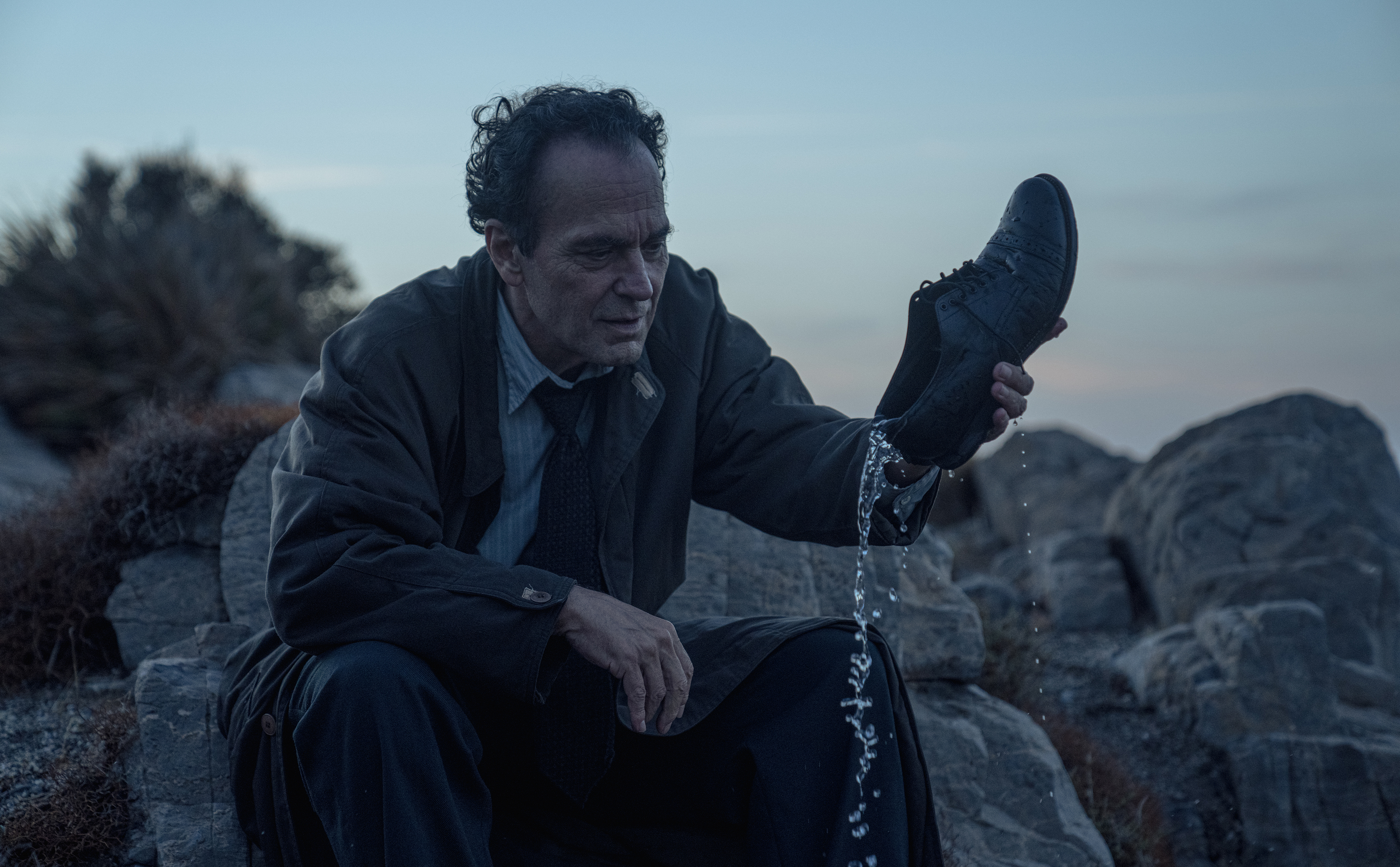 Without reading the plot summary for Close Your Eyes, the scene described appears to lead into a compelling drama in its own right. This is where Erice pulls the rug out from under us and reveals that the scene is part of a movie called ‘The Farewell Look’ which was never released due to the disappearance of Julio Arenas (José Coronado), the actor who played Mr. Franch. Arenas has been presumed dead, but his body was never found. Twenty years later, Arenas’ disappearance remains an interest within popular culture as evidenced by the production of an Unsolved Cases episode about his disappearance. Miguel Garay (Manolo Solo), the director of the unreleased ‘The Farewell Look’, is contacted by the television production for an interview. The interview ranges from Miguel’s retelling of events to the hypothetical as the show’s host Marta Soriano (Helena Miquel) attempts to solicit Miguel’s theory behind Arenas’ disappearance.
As one of the last few people to see and work with Arenas, Miguel remains disturbed about Arenas’ disappearance. The two were friends long before their work on ‘The Farewell Look’, and the unreleased film would end up being Miguel’s last foray into filmmaking. Following Miguel’s Unsolved Cases interview, Marta requests that Miguel share some of the unreleased film footage for the television show and convince Arenas’ daughter to appear on the show for an interview. Marta is persuasive and Miguel attempts to satisfy her requests, meeting with his editor and Arenas’ daughter.
Miguel’s editor, Max (Mario Pardo), believes that Miguel is naive about any benefit Unsolved Cases could bring to Arenas’ disappearance case. He believes that Marta is manipulative, and this hunch is confirmed as Marta reviews another recorded interview for Unsolved Cases with Miguel. In the interview, Arenas is portrayed as a womanizer and it is suggested by the interviewee that Arenas’ disappearance was in fact a hit due to Arenas’ involvement with a married woman. Miguel finds the implication ludicrous though Marta insists it is another perspective that should be included within the show.
Through the characters of Miguel, Max, Marta, and Arenas, Erice commentates on the filmmaking process. Miguel’s naivete is akin to that of a director optimistic of their vision while Max as an editor is more cerebral and understanding that a bad or malinformed edit can be disastrous to a director’s intentions. And Arenas? Erice muses that an actor plays a character in a moment in time. The character then disappears once the camera stops rolling and all that is left is what has been captured by the camera, evidenced by Miguel continuously reviewing ‘The Farewell Look’ footage of the missing Arenas. Erice is also wary of manufactured and sensationalist uses of filmmaking, such as Marta’s Unsolved Cases. Programs like these often distance the audience from the truth, which Erice likely finds a perverse notion.
Close Your Eyes builds to a scene that acts as an ode to cinema. Erice affirms that cinema at its best is a shared experience, one that can be used to discover truth and bring audiences together. If Close Your Eyes is Erice’s final film, it will serve as a thoughtful coda to an influential career. The film is measured in its pace and I would liken it to slow cinema, though with more dialogue than other films of its genre. With a lengthy runtime, this could be off-putting to some audiences though those who have enjoyed Erice’s films will find much to admire here.
Discover more from Cineccentric
Subscribe to get the latest posts sent to your email.
 Cineccentric
0 comments on “Close Your Eyes ★★★”