

It’s the month of Halloween and it’s no better time to feature a number of our favorite Stephen King adaptations. Coming up on half a century of King adaptations starting with the 1976 film Carrie, Stephen King stories retain their stronghold on relevancy to film audiences. Just last month Mike Flanagan‘s The Life of Chuck won the top prize, the People’s Choice Award, at the Toronto International Film Festival and King adaptations from Osgood Perkins, Edgar Wright, and more are highly anticipated. With more than 50 film adaptations of King’s novels released to date, we merely scratch the surface in our feature of five shouldn’t-be-missed King adaptations and will undoubtedly return to this theme in the coming years.
Carrie (1976)
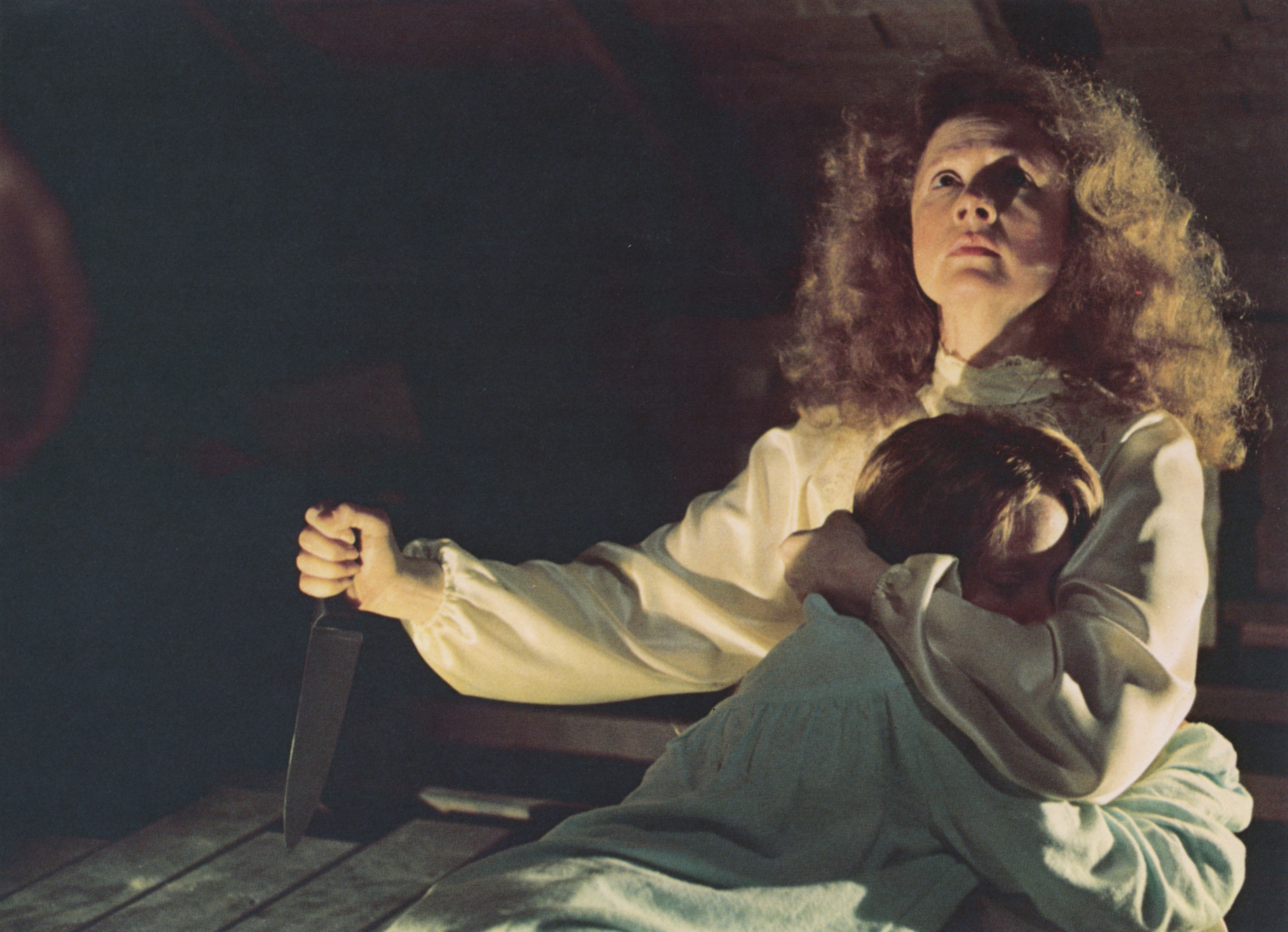
Carrie is where it all began. The first published novel from Stephen King in 1974, Carrie was met with relatively little fanfare, selling less than 20,000 copies when released as a hardback edition. This would change with the release of the paperback edition the following year and the Brian De Palma adaptation that helped propel the novel’s sales into the millions. The film would also become De Palma’s first mainstream hit as well as the first adaptation of a Stephen King novel.
Carrie follows the experiences of highschooler Carrie White (Sissy Spacek) who experiences her period for the first time at the start of the film. Raised by a hyper-religious mother who believes Eve – and by extension women and sexuality – is to blame for original sin, Carrie was not provided with sex education. She is completely unaware of what a period is and is scared that something terrible is happening to her due to the bleeding. Her experience is made all the more traumatic by her classmates pointing and laughing at her. It’s clear that Carrie is regularly bullied at school. This is but one of the many reasons Carrie is an uncomfortable watch and may hit close to home for some audiences.
When Carrie discovers that she possesses telekinesis, the potential for revenge is clearly evident. With an overbearing (and terrifying) mother and an invitation to prom by a popular classmate that Carrie suspects is a ruse, Carrie’s tolerance is stretched thin. Carrie is captivating in large part due to Sissy Spacek’s performance in the lead role. Spacek plays a character who is scared and timid while also maintaining screen presence – an unusual task for a Hollywood actor. Carrie builds to an emphatic, horrific end while not losing sight of Carrie’s character and the underbelly of the human condition. It’s for this reason that Carrie – the novel and the film – continues to resonate. – Alex Sitaras
The Shining (1980)

Following the lukewarm response to Barry Lyndon, Stanley Kubrick needed to find a hit. The story goes that Kubrick pored through horror novels to find his next project, with his secretary hearing a thud from outside Kubrick’s office as each book was discarded by the director. Once the thuds against the wall stopped, his secretary came in to check on Kubrick and saw him engrossed in The Shining.
To Kubrick, filming an adaptation of The Shining represented an opportunity to explore the evil inherent within humanity. Kubrick believed this evil could linger under the surface subconsciously, but could surface in individuals such as Jack Torrance (Jack Nicholson). Jack is an aspiring novelist who becomes a caretaker for the Overlook Hotel during the off-season. He is told that a previous caretaker, Charles Grady, killed his family and himself at the hotel. We come to learn that Jack was previously an alcoholic. He once hurt his son Danny (Danny Lloyd) by accident when drunk and this plants the seed in our minds that Jack could be capable of violence.
Stanley Kubrick’s methodical and ‘cold’ cinematography and approach to filmmaking made it a natural fit for the director to depict a descent into madness on screen. His coldness behind the camera reinforces the distance Wendy (Shelley Duvall) feels from her husband and portrays Jack’s mania as all the more dangerous. Filming using Steadicam shots close to the floor, an innovation at the time, Kubrick and cinematographer John Alcott craft an unsettling atmosphere supported by the confusing portrayal of the Overlook Hotel’s layout and the cold, white winter.
For its emphasis on Jack’s character and key changes to the Torrance family, Kubrick’s adaptation departs from King’s novel. The Shining has infamously been criticized by King and King’s negative view of the film carries to this day. Still though, it’s hard to argue with the results. The Shining is responsible for some of the most memorable shots in horror as well as iconic movie quotes (“Here’s Johnny!”). – Alex Sitaras
Stand By Me (1986)
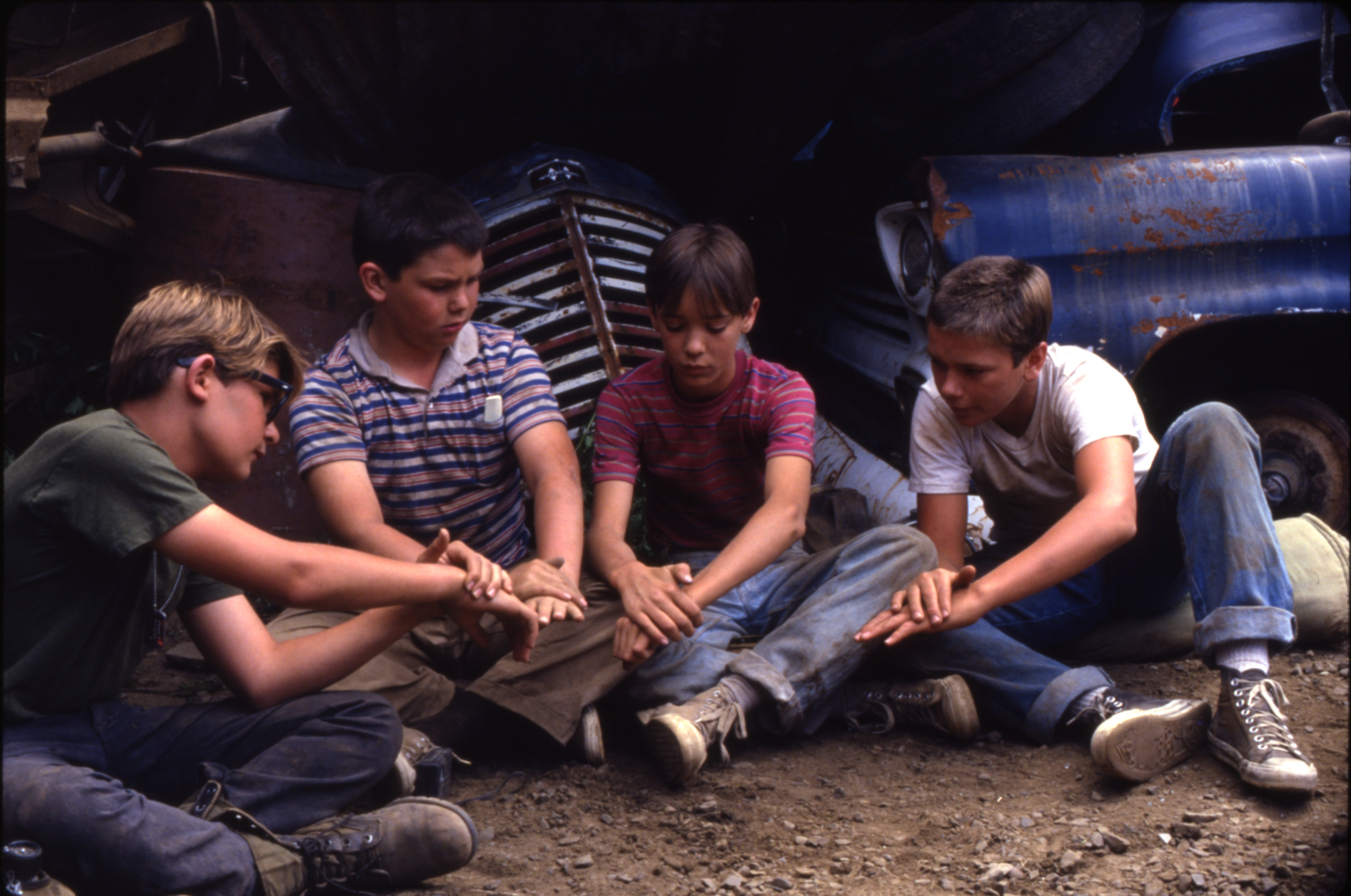 Though Stephen King has earned his reputation as a horror writer, his bibliography stretches all genres and themes. His novella The Body is a great example, adapted into the film Stand By Me directed by Rob Reiner. The opening lines start, “I was 12 going on 13 the first time I saw a dead human being. It happened in the summer of 1959 – a long time ago, but only if you measure in terms of years. I was living in a small town in Oregon called Castle Rock. There were only twelve hundred and eighty-one people. But to me, it was the whole world.” It is the last portion of this that stands out the most in Stand By Me, a powerful representation of how large a kid’s small world can feel, how intense their relationships are, how powerful their feelings can be, and how profound every new event (such as seeing a dead body) can become. It feels like the days last forever and with the wistful narration from an elder Gordie (Richard Dreyfuss) recounting the two days he and his friends trekked to see that dead body, it does feel like this journey amounted to a life-altering event.
It is hard not to be moved by Stand By Me, a coming of age film that feels so intimate and lived in, demonstrating the personal connection to its story and time period for both King and Reiner. Stand By Me blends the recounting of this journey with plenty of 1950s music and iconography, as well as capturing how the ecosystem of this town worked – namely, how these kids talked to one another and dealt with older bullies – to great effect. It benefits from its stellar cast, especially the nostalgic narration from Dreyfuss as well as Wil Wheaton, River Phoenix, Corey Feldman, and Jerry O’Connell as the four friends on this journey, who further help the film come to life in such an authentic way. Few films transport the viewer into the mind and world-view of a young kid like Stand By Me can, which makes it a truly great film and amidst considerable competition, one of the best King adaptations in film. – Kevin Jones
The Shawshank Redemption (1994)
 Oddly enough, it isn’t an adaptation of horror or supernatural fiction that is arguably the best adaptation of one of Stephen King’s works (and even one of the best films of all time): it is the realist drama The Shawshank Redemption. The film takes place in a prison called Shawshank from the late 1940s to mid-1970s, primarily the developing friendship between two convicts, Ellis Boyd “Red” Redding (Morgan Freeman) and Andy Dufresne (Tim Robbins).
In The Shawshank Redemption and another Stephen King adaptation, The Green Mile, Frank Darabont created two of the most highly regarded prison dramas. What helps the film excel is that it has so many interesting characters, and there are so many strong subplots that complement the main narrative. The two central performances from Morgan Freeman as Ellis Boyd “Red” Redding and Tim Robbins as Andy Dufresne are possibly their most career-defining to date, and their on-screen friendship is one the most memorable in all cinema.
The Shawshank Redemption also has an excellent production crew. Many of the team received Academy Award nominations, including cinematography for Roger Deakins and original score for Thomas Newman. It all culminates in making one of the best films of all time. – Ian Floodgate
The Mist (2007)
 Director Frank Darabont built his reputation on Stephen King adaptations, namely, the aforementioned The Shawshank Redemption and The Green Mile, but less celebrated is his lone horror adaptation of a King work, The Mist. Set in King’s beloved Maine, the film follows the events after a heavy storm. It seems like a storm like any other, albeit with plenty of debris, until a strange mist begins to float down from the nearby mountains, over the lake, and eventually engulfs the town. Though nobody can see through the mist, the pained screams of those trapped within make it clear: there is something in there and it is deadly. Many residents are holed up in a local grocery store, having to band together to fight back against this invader. The Mist delivers plenty of small-town horror thrills, mixed in with ideas about military conspiracies, doomsday propagating, and community that paint a stark and painful picture in a post-COVID world. In this case, it is military-caused, but seeing the religious fear mongering, “I have to see it to believe it” line of thinking mixed a fervent non-belief even when confronted with the evidence and the desperate fight for these families and community to survive, make this into a stirring and potent film to this day.
Perhaps most notable is its ending, which I will not spoil. It is a true gut punch, wonderfully performed by Thomas Jane as David Drayton, a man who was in the grocery store with his son and becomes somewhat of a leader in the community’s attempt to escape to find some respite. The Mist can be a somewhat familiar monster/science fiction film with echoes of plenty of 1950s B-movies – when thinking of something otherworldly engulfing a town, it is hard to not think of The Blob, which had a 1988 remake co-written by Darabont – and later horror classics like Alien, but with its ending, it separates itself into being a truly noteworthy film of its own right. It may not stack up with Darabont’s prior King adaptations, but with its powerful display of small-town terror, great creature effects, and strong cast (Marcia Gay Harden’s doomsaying religious woman is especially a standout), The Mist is a thrilling and chilling experience. – Kevin Jones
Discover more from Cineccentric
Subscribe to get the latest posts sent to your email.
 Cineccentric
0 comments on “Stephen King Adaptations”