
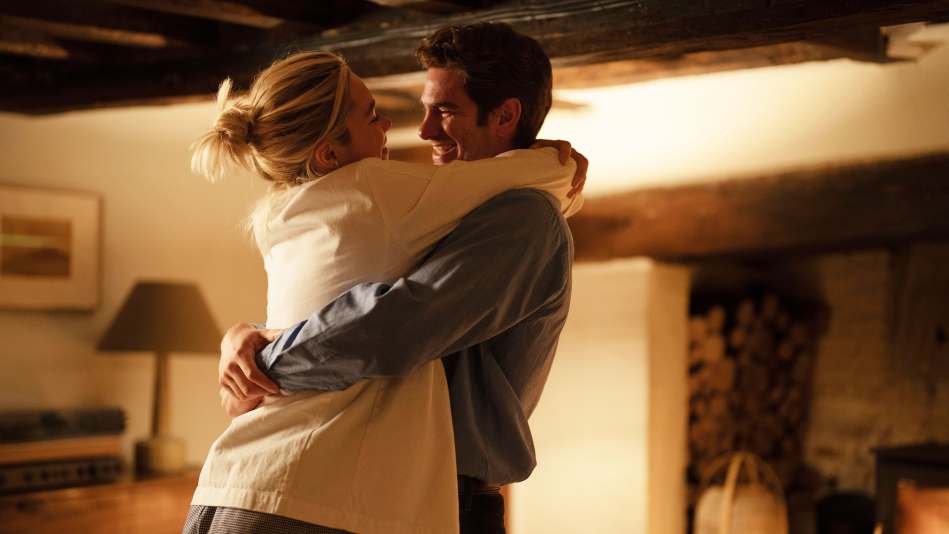
We Live in Time is a film, appropriately, about time. Almut Brühl (Florence Pugh) and Tobias Durand’s (Andrew Garfield) love story is the center of the film with director John Crowley presenting it non-linearly and moving through years of their life together. When Almut is facing a second diagnosis of ovarian cancer, she is torn on whether or not to go through chemotherapy and surgeries again. For her, it is a question of whether she wants to risk fighting, suffering, and (in her mind) wasting time for 12 months before dying or if she wants to prioritize living every moment knowing that it will end in 6 months. How we spend time, either together or as individuals, and how we or others view that time in the years to come are at the forefront of We Live in Time with this tearjerker hitting all the right notes.

We Live in Time’s approach to illness is noteworthy. The word “cancer” is uttered only on a few occasions. Plenty of the side effects of treatment are shown in the film, but as Almut professes to wanting to continue to live as she was and to establish a genuine legacy for herself beyond being sick, We Live in Time embraces the same line of thinking. It prioritizes showing every step of their relationship, the good and bad in equal measure, and finding poignancy in those moments. It eschews some of those traditional tearjerker hallmarks by leaving much of the actual process of loss to implication. The film needs no grand scenes of tearful goodbyes to sell itself as moving. Instead, it is moving in how Almut and Tobias spend a day skating with their daughter. It is moving in a montage of them trying for pregnancy, counting down the seconds until they can check the test, and sharing overjoyed expressions when they finally succeed. The later birthing scene, too, is tremendous and heightened by its unconventional location. It is moving watching these two lovers celebrating themselves with a fun night at a theme park. It is in these humanistic moments that the film excels.
It is no mistake that many of its best scenes feature sparse or no dialogue, instead allowing its cast full reign to express themselves physically and live in the moment. When We Live in Time diverges from the more low-key and understated moments, it can falter with dialogue that feels stilted and over-written. A fight between Almut and Tobias sparked by an off-hand comment she made about maybe not wanting kids is a prime example. The fight itself and, particularly, a scene of Tobias sneaking his way back into a party to talk to Almut about it, feel artificial and trite. It is the kind of grand gesture that one sees only in film that rings hollow in reality with We Live in Time unable to find actual feeling in its larger expressions of emotion.
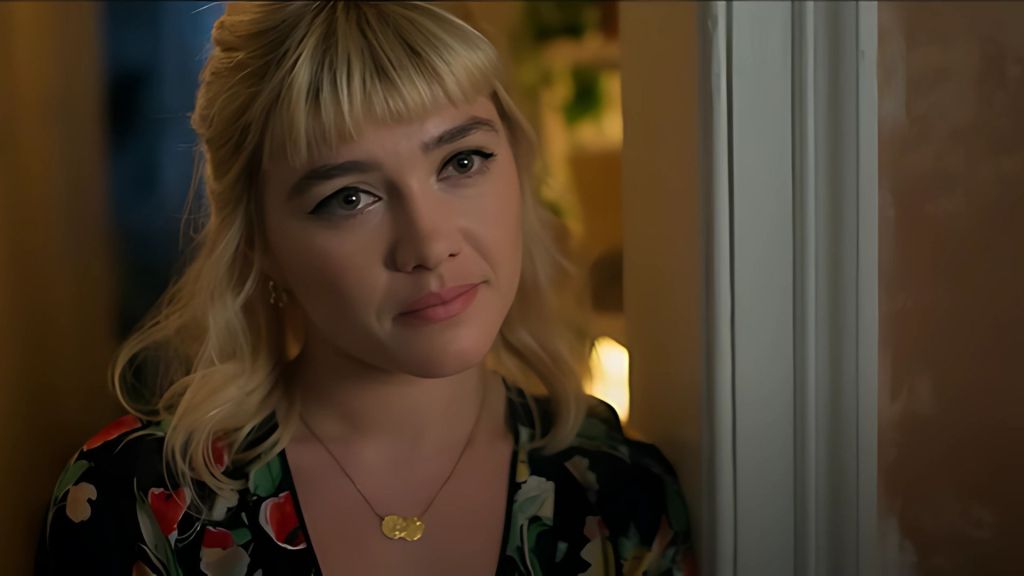
We Live in Time benefits from Andrew Garfield and Florence Pugh’s terrific performances. At every turn, they bring their characters to life. Garfield’s awkward charm and meekness in this role find him striking a great chemistry with the strong, fiery, and steadfast approach by Pugh. Pugh, especially, brings a complex set of to the table, balancing the genuine strength in Almut with the feeling that she wants to project strength in the face of her own fragility and fears over her mortality (also influenced by her past loss of her father). Pugh has established herself as one of the best actresses working today and We Live in Time is no exception, a rich and captivating performance that evokes every conflicted and challenging emotion one can face through this turbulent yet often happy time in their lives. She and Garfield work really well together on screen and bring a shared authenticity to their relationship. They both have a hesitation sometimes in their delivery, as though they were trying to find the right words or, especially in the early days of their relationship, trying to maneuver through their own nerves and awkwardness around each other to begin building this romance. This believability helps not only emotionally, but in creating many naturally funny moments. It is immensely charming overall, allowing the feeling and power of We Live in Time to grow from their dynamic.
We Live in Time’s non-linear structure works to its benefit in presenting its scenes with an appreciation for every small or big moment along the way, in spite of a fatalistic quality that comes with seeing joyful scenes paired with somber ones about cancer diagnoses. Taken in full breadth, it feels like coming to terms with a loss, re-visiting these moments that stand out amongst the sea of daily events as real hallmarks of who Almut and Tobias were together. There is plenty of dramatic irony in the film, especially in showing them with a child early on then backtracking later to show them fighting over whether to have one in the first place. It has an easy feeling of looking back and forlornly thinking about one’s memories, realizing how little they knew about how everything would turn out, and regretting only that the time has passed. Though it can be a bit too familiar and trite in moments that hold it back, director John Crowley’s We Live in Time is a powerful look at how and with whom we spend time and how that time is viewed later on. Andrew Garfield and Florence Pugh deliver typically soulful performances, elevating the film in every moment.
Discover more from Cineccentric
Subscribe to get the latest posts sent to your email.
 Cineccentric
0 comments on “We Live in Time ★★★½”