
The film industry, like most industries, is wary of new technology. Partly due to tradition, partly due to concerns of the impact technology has on ways of working and employment. Both of these factors should not be dismissed as they will play a strong impact not only on the progression of the film industry, but on societal attitudes towards work, purpose, and personal identity as many industries undergo similar transformations.
 Despite reservations towards technology, it has a tendency to advance and in the case of the film industry, cinematic moments that have thrilled us in films such as Toy Story or Avatar are an outcome of these innovations (in other industries, technology advances can harm integrity or quality but for the film industry, I do not believe this to be true). In recent years, the pace of technology development and adoption has rapidly accelerated and there are now feature length animated films created entirely within open-source software such as Gints Zilbalodis’ Flow.
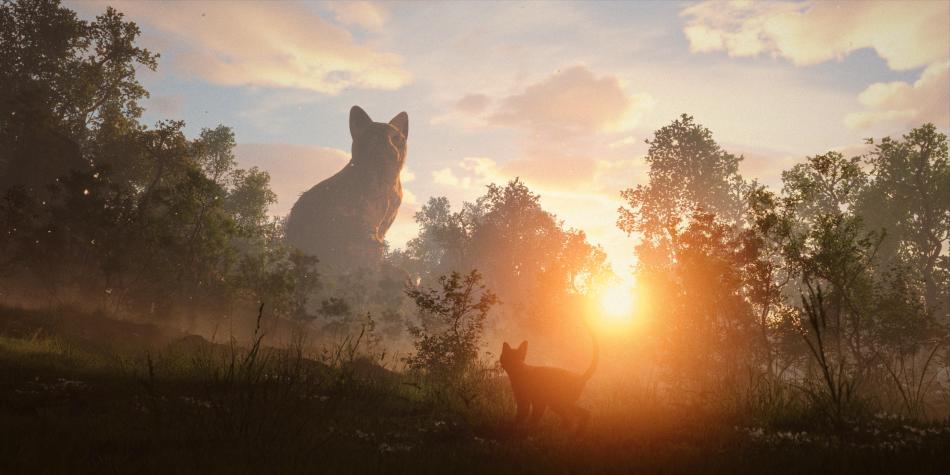
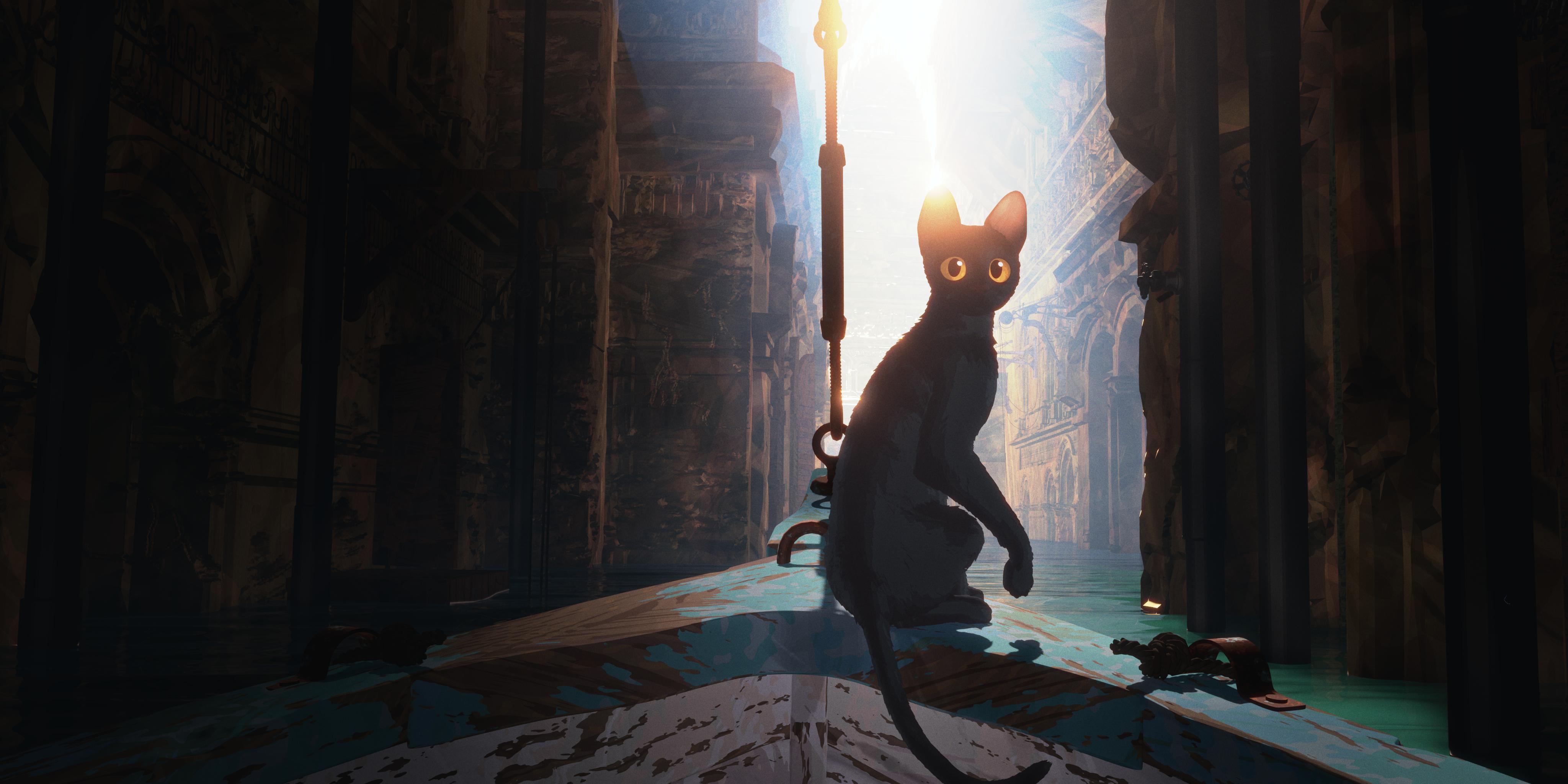
Flow begins with a black cat I’ll refer to as “Cat” looking at its reflection in the water. Cat goes about its daily routine, interacts with other animals including a few scary dogs, and returns to an abandoned house decorated with cat sculptures. This house is evidence that humans were once present; however, we will not see any people within Flow. This house is the first reminder of the consequences for not meeting a basic responsibility towards our planet and the second reminder is the rising of water that sets into motion Flow’s story.
Cat has to climb to higher and higher heights to stay out of the water, but as the water rises to the top of the cat sculpture Cat has climbed, Cat is at risk of being submerged until spotting a sailboat floating by. Cat jumps onto the sailboat but realizes it isn’t the only animal aboard – there is a capybara. Cat is fearful and hisses at the capybara, but soon realizes the capybara will not hurt it. As the sailboat floats along, Cat and Capybara soon meet other animals forced to seek refuge on other floating objects and high heights. Before long, a lemur, secretarybird, and even the scary dogs seen earlier in the film join the Cat and Capybara. Similar to the animal interactions in this year’s The Wild Robot, the animals resist their instincts and work together to ensure their survival. The secretarybird towers above the other animals and becomes the de facto protector and captain of the sailboat.
In Flow, the animals exhibit traits that are representative of their inherent qualities. Cat is adorable and like our own house panthers, a small yet courageous cat. What Cat lacks in strength, Cat makes up for in resolve and grace. The dogs exhibit boredom and an urge to play, particularly at the lemur’s dismay who collects manmade objects that Lemur does not want Dog to play with. Animals’ behavior in Flow are intended to be realistic such as the grooming Cat does, but also humorous – Cat swats at Lemur’s tail when it hangs above it, and knocks down objects from the edge of a surface (also at Lemur’s dismay). A mirror is one of the items that Lemur collects, and the animals’ recurring look at their reflections in the mirror and in the water personifies them and signifies self-recognition. Being able to recognize themselves is part of recognizing their place in their newfound community and in the changing world around them.
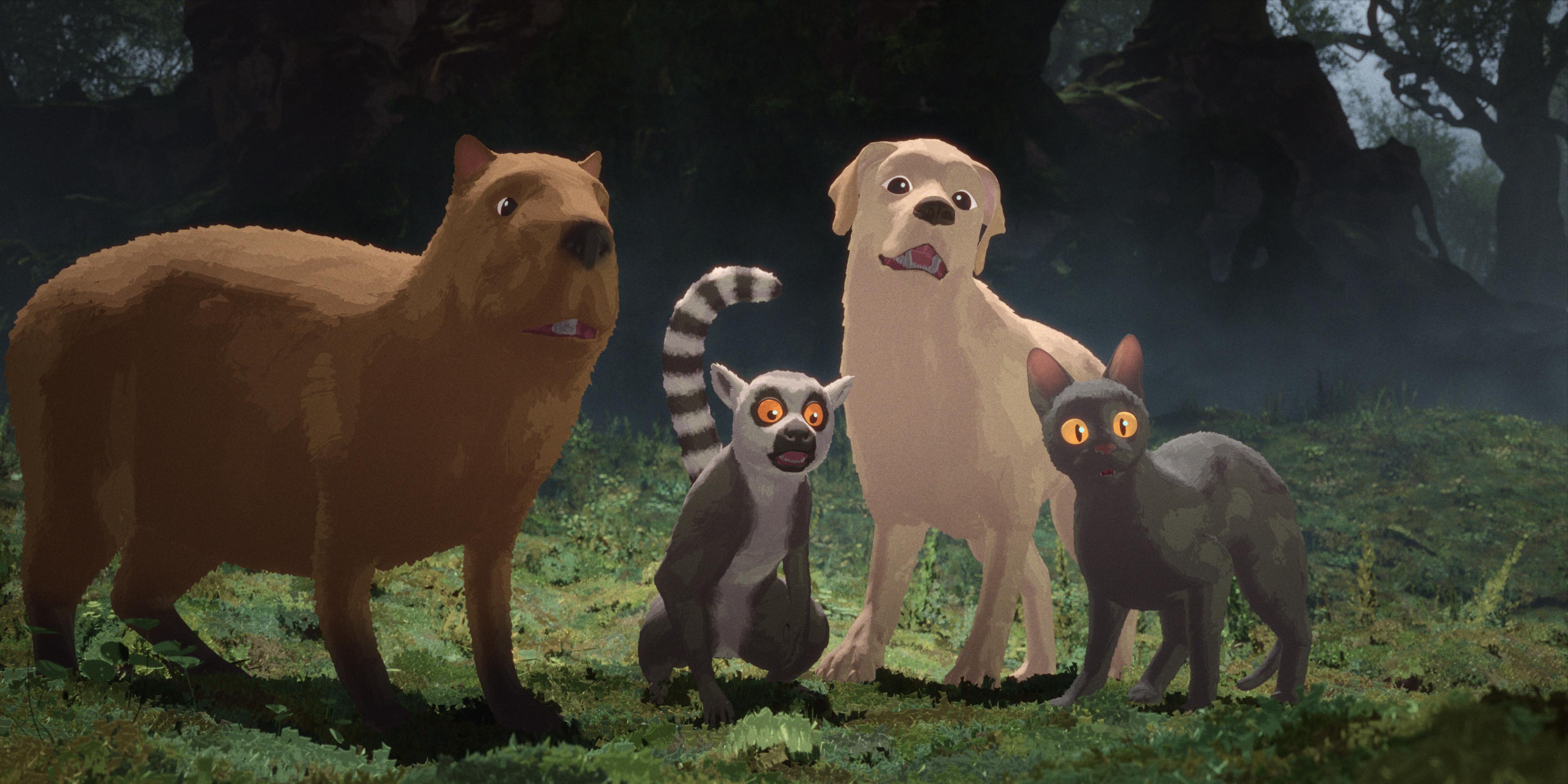 Without dialogue, Flow relies on its animation and sound design to tell a story. The animation style in Flow is not eerily realistic and the film does not stray away from the idea that it is animated and is not live action. Animal fur is not hyper-detailed and the depiction of sky and water is not portrayed in a strictly realistic manner. This style of animation is able to inspire wonder as the animals progress in their journey, and likewise the music within Flow is lush and contributes to the worldbuilding within animation. The design of each scene allows opportunity for each frame to have notable visual splendor and portray the relationships the animals have with each other. Flow ultimately tells a fable significant to the human condition and is an example, along with the works of Studio Ghibli, of animation that will hold more relevance to adult audiences.
Flow is an impressive accomplishment for director Gints Zilbalodis and offers promise for the future of animation filmmaking. Zilbalodis animated, wrote, and scored his debut film Away in 2019 and his entry into animation is another example of up-and-coming filmmakers taking advantage of modern technology to tell their stories. With a larger budget and supporting team, Flow represents a leap forward for Zilbalodis and reiterates that exemplary visual storytelling – what we love about cinema – will continue to exist alongside technological advances.
Discover more from Cineccentric
Subscribe to get the latest posts sent to your email.
 Cineccentric
0 comments on “Flow ★★★½”