
How do you know?
I live in this country. I’ve got eyes.
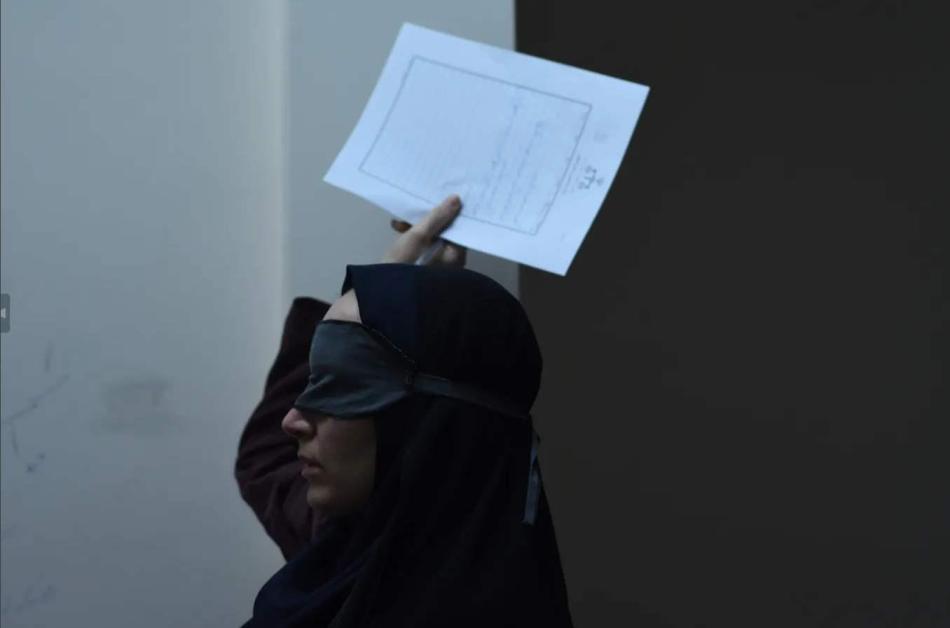
From January to March 2024, The Seed of the Sacred Fig was shot in complete secrecy. Upon selection for the Cannes Film Festival, the cast and crew of the film were summoned by Iranian authorities, interrogated, and director Mohammad Rasoulof sentenced to eight years in prison, a flogging, and confiscation of property. Rasoulof would ultimately flee Iran as would actresses Niousha Akhshi, Mahsa Rostami and Setareh Maleki according to Le Monde. At Cannes, Rasoulof carried photographs of actors Soheila Golestani and Missagh Zareh who remained in Iran and were banned from leaving the country.
 To Rasoulof, the potential penalty of making The Seed of the Sacred Fig was known. Rasoulof had previously been arrested following the release of his film The White Meadows along with editor & director Jafar Panahi (Taxi, No Bears, This Is Not a Film). The White Meadows uses symbolism to conceal its political commentary though audiences quickly interpreted the film’s criticisms of Iran’s theocratic rule. As Rasoulof continued making films, he would continue to be arrested for his films and for his criticisms of Iran’s government. Rasoulof would then direct The Seed of the Sacred Fig in response to the Iranian government’s violent response to the Mahsa Amini protests, and it will likely be Rasoulof’s last film shot in Iran.
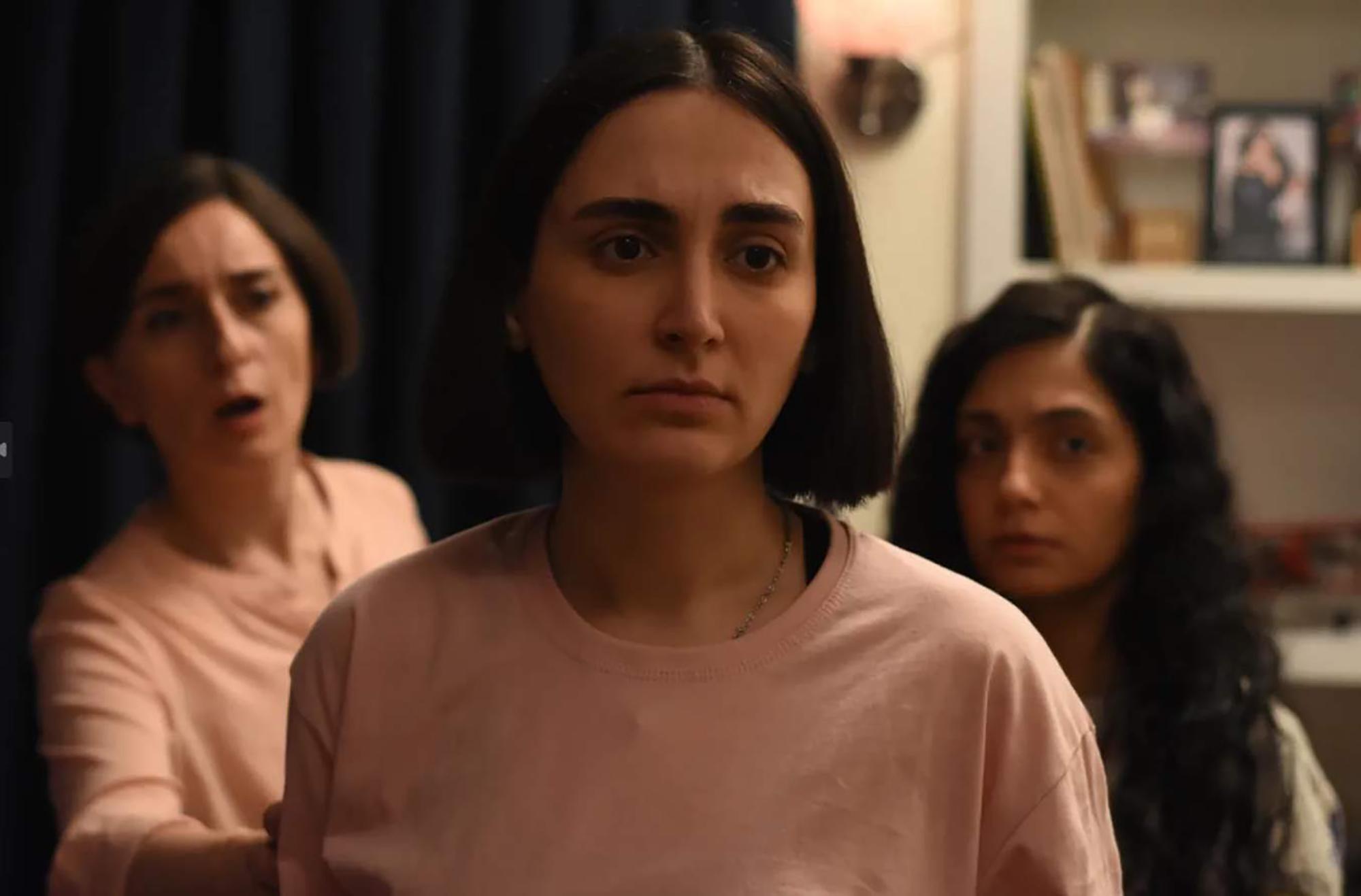
At the beginning of The Seed of the Sacred Fig, Iman (Missagh Zareh) is appointed as an investigating judge in the Revolutionary Court of Tehran. Cases that the Revolutionary Court tries relate to theft and inciting violence, and also blasphemy and insult of Iran’s Supreme Leader. Iman is provided a gun for his protection. Iman is the husband of Najmeh (Soheila Golestani), and father to two daughters Rezvan (Mahsa Rostami) and Sana (Setareh Maleki). He is appointed to his role at the beginning of the Mahsa Amini protests, protests that occurred in 2022 and 2023 following the death of Masha Amini. The Iranian government claims that Amini died of complications following a heart attack after her arrest (she was arrested for not properly wearing her hijab) whereas eyewitnesses of the arrest claim that she was severely beaten and died as a result of police brutality.
Tens of thousands of protestors participated in the Masha Amini protests and Rezvan and Sana’s friend Sadaf (Niousha Akhshi) is shot and arrested during the protests. Meanwhile, Iman is presented with hundreds of death warrants daily as an outcome of the protests and works long hours. He is expected to sign off on indictments without reading them and learns that his predecessor was fired for refusing to sign death warrants. He grows distant from his family and is disturbed by his work, but remains loyal to the regime in spite of this.
Rasoulof shows that Rezvan and Sana are keenly aware of the protests, watching Instagram stories and reels that show the violent response of authorities to the protestors. They see the difference between the way television news reports on the protests and first-person video. Their mother is dismissive of the protests and warns the daughters of the danger in becoming involved in the protests and of associating with Sadaf. When Iman is with his family, he is critical in his comments on the protests when the topic comes up, calling the women protesting the mandatory hijab law “sluts”. Misogyny is shown in The Seed of the Sacred Fig as a means to dismiss the validity of the protestors’ beliefs and cast them in a negative light. Rasoulof shows that Iman is able to reconcile some of the doubt he experiences in his role by dehumanizing the people he signs to death sentences.
Iman develops paranoia and becomes distrustful of his family when he realizes he has misplaced his gun. Iman’s supervisor recommends that Iman bring in his family for interrogation. He warns Iman of the bad optics of losing his issued gun and fosters Iman’s paranoia and impulses. Iman justifies bringing his family into interrogation since he is fearful of his safety. He no longer trusts his family and in a role that has to be private or risk retaliation from the general public, Iman feels pressured to reassure himself that his family is under his control and will not place him or themselves in harm’s way. Despite his inner turmoil, his distrust is unable to be remedied and his fear of losing his job, of being discovered, of being persecuted if the regime is overthrown is overwhelming and forces a wedge between him and his family. Rasoulof shows Iman to be more loyal to the regime than his family and the consequences of this become destructive after Iman’s personal info is posted on social media. Iman and his family are forced to flee Tehran and yet despite facing a common danger, Iman remains determined to get a confession from his family on who stole the gun. Nejmah, Rezvan and Sana at this point are terrified of Iman and Iman’s distrust turns into mania and a desire to retaliate against his family for their predicament. It is almost unbelievable what Iman is driven to do – there is an actual prospect of him killing his family that The Seed of the Sacred Fig builds to.
With the character of Iman, Rasoulof is sympathetic to the immense moral dilemma and pressure that Iman faces. Iman’s family becomes a family divided and Rasoulof is cognizant of the fact that each family member deserves dignity and that families can become divided as an outcome of diverging politics and views. Nonetheless, Rasoulof is appropriately critical of Iman – Iman is shown to take acknowledging obvious truth as a personal affront, and this ultimately contributes to Iman’s actions. Showing real video footage of the brutality experienced by protestors in The Seed of the Sacred Fig is effective in building tension – there is little question of the capability of characters in the film to resort to violence. The titular sacred fig alludes to the strangulation of another plant that occurs by a species of fig as it grows – a symbol Rasoulof argues represents the impact of Iran’s theocratic regime on the country’s legislation and people.
The Seed of the Sacred Fig is directly critical of Iran’s Islamic Republic and little besides its title is abstracted behind symbolism. Watching this film and knowing of the consequences faced by the cast and crew illustrates clearly the impact that cinema and art has. Rasoulof would not go to the trouble of making films, of smuggling the film’s footage out of Iran and facing exile if his films weren’t impactful and Iran wouldn’t be so adamant in their censorship if art did not have the capability to prompt change. In the Cannes press conference for the film, Rasoulof notes that censors fear artists. Censorship from a government occurs when there is no freedom of speech, and to defy censors is to proclaim the freedom of speech. As a film, The Seed of the Sacred Fig is immense – both as a political thriller and as a proclamation of the importance of independent thought and its protection.
Discover more from Cineccentric
Subscribe to get the latest posts sent to your email.
 Cineccentric
0 comments on “The Seed of the Sacred Fig ★★★★”