
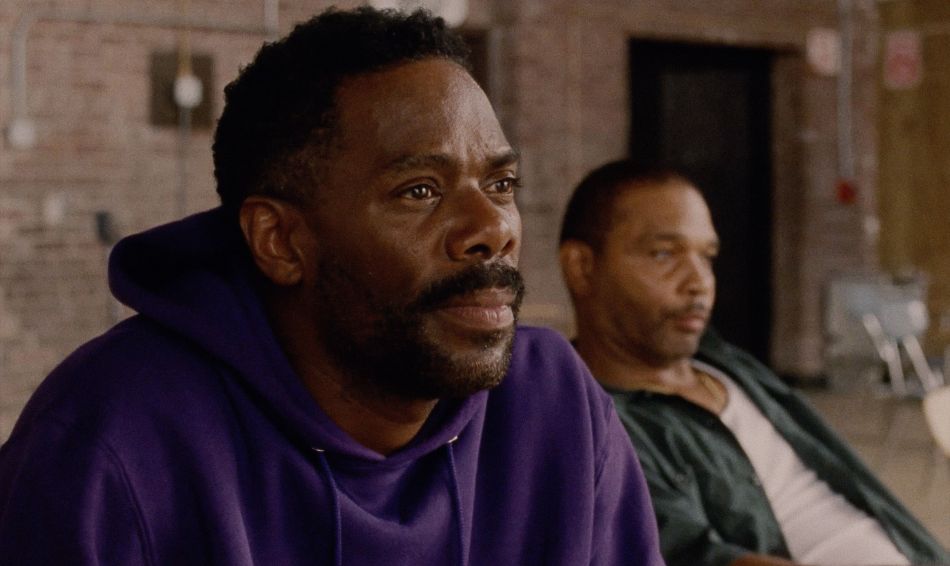
When we think of acting, we usually think of celebrities. Acting can be lucrative and grants the performer with fame and recognition for their work in addition to providing creative fulfillment. For the actors who participate in the Rehabilitation Through the Arts (RTA) program at New York’s Sing Sing Correctional Facility, the former is not a motivation for their acting. Inmates at the prison act because performing provides a means of self-reflection and, for those wrongfully convicted, a means for catharsis and a way to counter feelings of helplessness.

Sing Sing begins with John “Divine G” Whitfield (Colman Domingo) delivering a monologue from A Midsummer’s Night Dream. Divine G excels in dramatic performance and has definite talent as an actor. He is seen by his fellow inmates as a leader in their acting program and along with theatre director Brent Buell (Paul Raci), the two have truly formed a community within the prison walls. After the success of their latest performance, the program considers what play they will perform next. A few of the actors want to play a comedy, noting their tendency to perform Shakespeare and other dramatic works. Divine G recognizes that acting in itself is a challenge while making people laugh is an additional challenge, but there’s an eagerness to perform something different that he doesn’t interfere with. Brent gathers that the actors are interested in performing in a play with uncommon characters and settings such as gladiators, Robin Hood, and ancient Egypt, and is open to the lofty task of writing a play that incorporates time travel to make this all possible. Sing Sing portrays some of the creative process that the actors take in telling this unusual story and the inclusion of the earnest yet ridiculousness of the audition process for such a play lends to the humor and sincerity of the inmates.
While rehearsals for the play occur, Divine G has a parole hearing. After years in prison, he has found evidence that exonerates him and is eager for his freedom. He wants nothing more than to be able to live outside the prison walls again and to be reunited with his family. For him, acting is a refuge and a means to distance himself from his predicament. But when he is asked in his hearing whether he is acting in response to the questions asked, Divine G is caught off guard and his prospects for freedom are dimmed.
Sing Sing takes little risk in its filming and editing, though the film is novel in its financing with cast and crew receiving the same daily salary along with a percentage of equity based on their contribution to the film. This approach helped to ensure the film’s story could be told with a lower budget needed to begin filmmaking. Given that the film is based on the real story of the inmates of the Sing Sing Correctional Facility and casts a number of the inmates who participated in the RTA program, Sing Sing is genuine in its intentions. The film portrays the camaraderie that develops between the actors and is evidence of the healing potential of acting.
Discover more from Cineccentric
Subscribe to get the latest posts sent to your email.
 Cineccentric
0 comments on “Sing Sing ★★★”