

Truth. Loyalty. Devotion. All are imperative to a good marriage, but as expressed in Steven Soderbergh’s Black Bag, are all complicated in the world of spies. George Woodhouse (Michael Fassbender) and Kathryn St. Jean (Cate Blanchett) are an anomaly. In a trade built on deception, their marriage has stood strong. They, as with any of their counterparts, have things they cannot share with one another – “black bag” being the tradecraft short-hand for such material – but where others allow their daily lies to bleed into their daily lives, they are wholly committed to one another. George, a man who has garnered a reputation for how he wields the weapon of the polygraph and his own mind to see through all lies, is tasked with finding a mole in MI6 and is given a list of suspects. Kathryn is one of the names. Now, George must decide between his wife and his country, all while deciphering through the facts and misdirections to discover the mole’s true identity.

Black Bag is a sleek, classy, and elegant experience. It is never in a hurry, a film focused less on classic spy action scenes than on what is said, what is not said, how it is said, who is saying it, and why it is said. It shares plenty in common in its approach to espionage with the work of John le Carré. Thematically, it has echoes of Soderbergh’s debut Sex, Lies, and Videotape in its approach to truth and sexuality, except, rather than a videotape used to extract honesty, George comes at it through other means. He will eventually use the polygraph, but first tries a couple of dinner parties where only the suspects are invited with provocative games intended to elicit some uncomfortable truths from his guests/suspects. The list of suspects includes his own wife Kathryn, plus two other couples in the agency, Freddie Smalls (Tom Burke) and Clarissa Dubose (Marisa Abela) and Col. James Stokes (Regé-Jean Page) and Dr. Zoe Vaughan (Naomie Harris). George’s provocative questions towards all flip between sexual and treasonous angles with the two going hand-in-hand in helping to work out where the truth lies, as well as in sorting out the motives involved.
On a few occasions, George goes out to fish. It is the place where he can think and sort through what he has learned. Soderbergh uses this as a parallel to his attempts to lure out the mole, as well as the pitfalls he encounters in having to be patient and wait for his target to take the bait. All the while, George himself is the bait for other angles and misdirections with seemingly everyone in Black Bag having some ulterior motive for their actions. It is a fascinating and enthralling chess match of a film, one in which George is the audience’s entry point. Opening with a Soderbergh favorite, a tracking shot following George from the streets to a nightclub, through the dance floor, and out into an alley where he meets with a man named Meacham (Gustaf Skarsgård) to receive the suspect list, Black Bag places the viewer in George’s shoes. We do not know everything he is up to as even the viewer is deceived in some ways, but it is his actions, reactions, and interpretations of what he is told that tell the story and build suspense. His eyes are always studying and his mind churning. Even when he has glasses or hides his face from the camera, DP Peter Andrews and Soderbergh keep the camera close enough for even the wrinkles on Fassbender’s forehead to tell a story on their own.
Fassbender’s great, often stoic and steely cold delivery make for a fantastic foundation. He is well paired with Cate Blanchett who always delivers and Black Bag is no exception. There is a deviousness in some of her line deliveries that makes one wonder whether she could be the mole, creating enough reasonable doubt that keeps even George guessing. They have a formal grace about them in their time alone, mixed with genuine sensuality as their flirtations and deep, longing stares take center stage. For as much as this is an espionage whodunnit, Soderbergh builds the film on this romance. It is not their country they are loyal to first, but one another. Fassbender and Blanchett make this bond feel real, while Soderbergh makes this investigation less about familiar suspense than self-preservation and the lengths one will go to in order to protect those they love. Amongst the supporting cast, it is Marisa Abdel who stands out. As Clarissa, she has a genuine spunk and charisma about her with plenty of laughs to be had in how she approaches her role in this situation. Her almost flirtatious toying with George and his need for truth and honesty, her fiery encounters at the dinner table with both her boyfriend Freddie and with the more judgmental James, and her everywoman appeal as someone caught way in over their head and not interested in learning more than necessary make Clarissa into a consistently fun figure. Everyone in the cast is in sharp form, bringing both class and authenticity that makes every moment of Black Bag really pop.
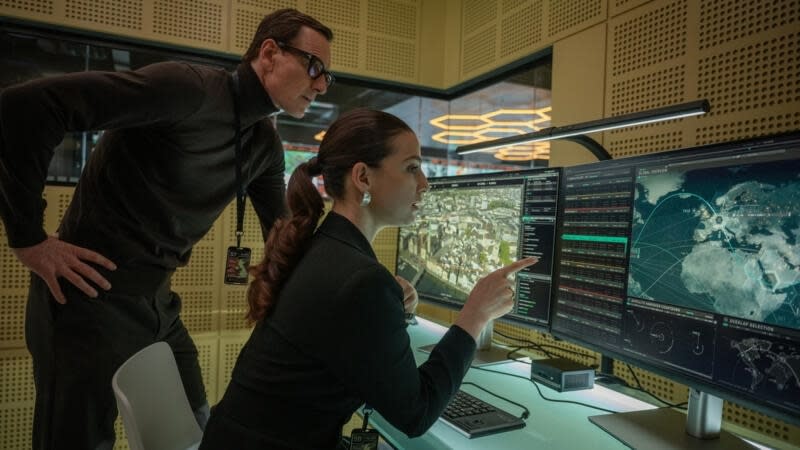
The opening tracking shot from DP Andrews is, of course, show-stopping but his work throughout is wonderful. How the film is lit and how close-ups are framed stand out the most. The first dinner scene is especially evident of this with the table covered in lights with strong reflections. There is a clear artificiality to it with no attempt to hide the reflections on the camera, while these table lights offer all the lighting in the scene. It creates a yellow, orangish warmth, casting all of these characters into revealing underlighting that draws out much of their subtle inflections. The close-ups have a similar effect, even in simple two-shots such as one of George and Clarissa looking at a computer screen together with the light of the screen creating clear reflections on George’s glasses. The polygraph scene cut together with close-ups on the screen measuring the heart rates of every subject, and slightly oblique, low or high angle, and off-center close-ups of the subjects, strikes an interesting note as well with the editing and shot composition creating much of the tension and suspense. The interpretation of it all is still obscured, left for an explosive finale, but Soderbergh is not afraid to call attention to the camera with these placements and compositions. It allows the audience to not get lost in the dialogue but to instead follow every other bit of expression in their face and vocal tone. Together with this striking cinematography, Black Bag benefits from great production design, whether George and Kathryn’s striking home – the warm and tight interiors of their bedroom where their bond is tighter versus the stark and almost disorientingly bright and open kitchen where George tries to determine her loyalty – or their office with plenty of cool gadgets bringing authentic spy appeals, to make it an overall visually exciting and detailed work.
Steven Soderbergh has been busy of late, releasing the experimental Presence earlier this year and now comes the more classically entertaining yet still formally brilliant Black Bag. Finding him more in Ocean’s Eleven crowd-pleasing mode, musing on similar ideas from Sex, Lies, and Videotape, and still finding places to transgress, toy with, and manipulate audiences with the camera, Black Bag is an exciting and engrossing film. Offering espionage intrigue, romance, and comedy, it is a well-rounded and thoughtful film and yet another rousing success from Soderbergh.
Discover more from Cineccentric
Subscribe to get the latest posts sent to your email.
 Cineccentric
0 comments on “Black Bag ★★★½”