
In most circumstances, I would not begin a review by defining a word, but for Misericordia, it bears noting that the title of the film is defined as “mercy” in Latin. To offer misericordia is to offer grace and sympathy.
Arriving in his hometown of Saint-Martial for the funeral of his former boss, Jérémie Pastor (Félix Kysyl) finds himself in a troublesome position. He is close with the widow Martine (Catherine Frot) and stays with her while he is in town. Martine’s son Vincent (Jean-Baptiste Durand) has a shared past with Jérémie that is left untold by director Alain Guiraudie, but is clearly contentious and perhaps romantic. Vincent is hotheaded and his verbal barbs with Jérémie quickly become physical. Jérémie, the smaller of the two, has to be defensive otherwise risk physical harm. In a twist of fate, when he has the upper hand in a fight, he ends up killing Vincent – perhaps out of desperation, perhaps for a more insidious reason that Vincent suggests before he is killed.
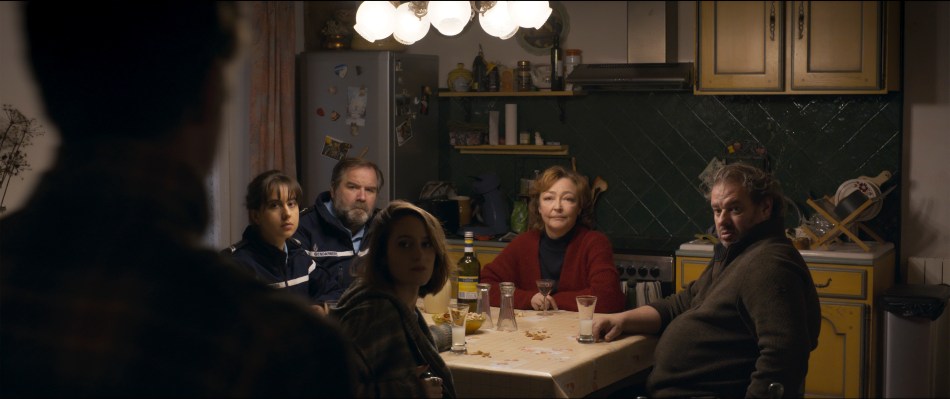
Returning to Martine’s home at a suspicious time, Jérémie feigns innocence. It becomes obvious to her as well as to the police that Jérémie’s alibi holds little ground despite the local priest’s insistence. The priest is attracted to Jérémie, and therefore provides Jérémie with misericordia by not reporting Jérémie as the murderer, though this decision is ultimately self-serving for the priest. The priest sees the sexual desire that Jérémie’s friend Walter (David Ayala) and even Martine has for Jérémie, and is motivated to act against his religion to satisfy his lust and earn Jérémie’s affection. In a sense, Misericordia is Guiraudie’s take on Pier Paolo Pasolini’s Teorema where the inhabitants of Saint-Martial all experience temptation and are spellbound to act against their best interests when around Jérémie.
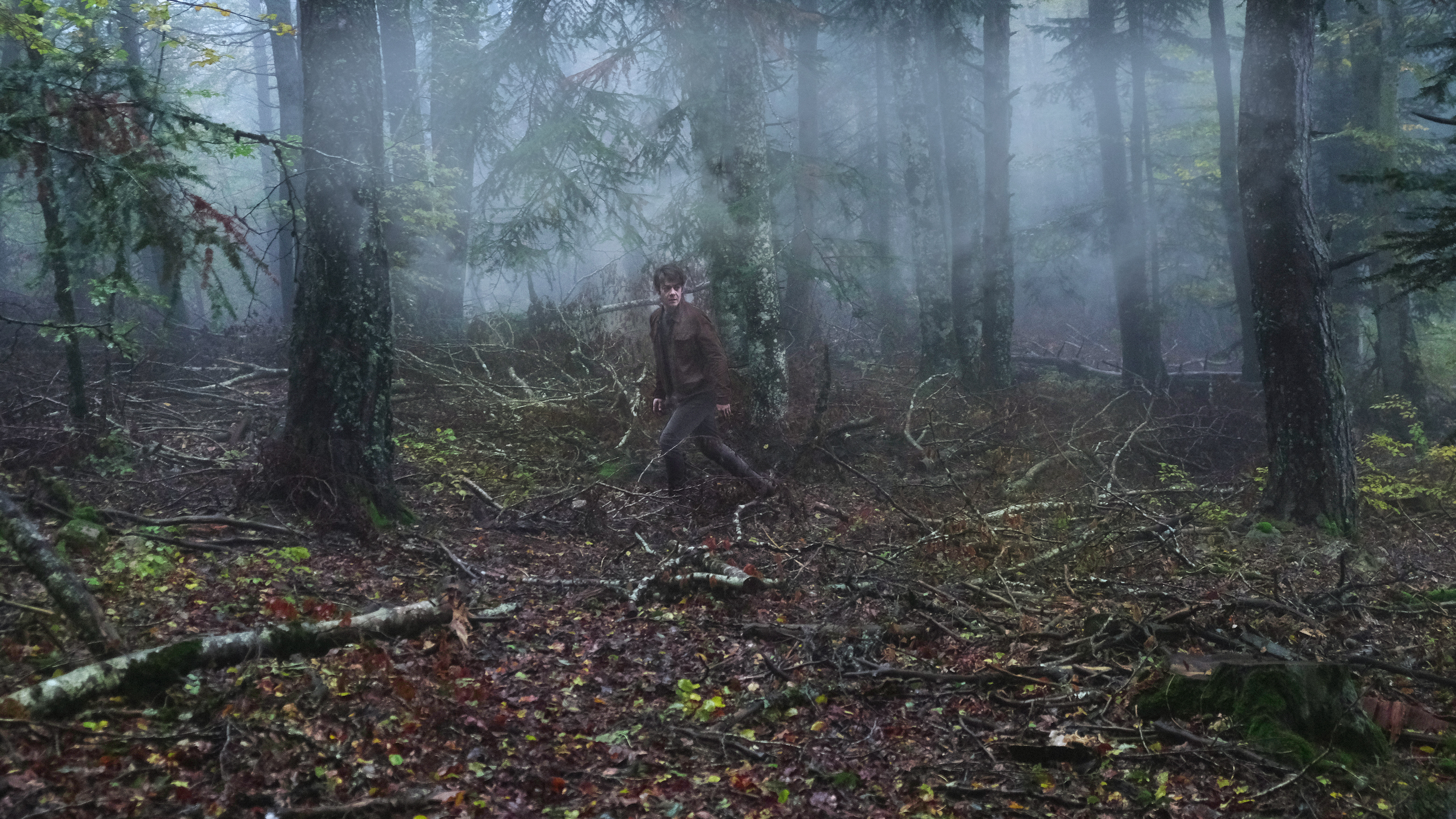
Misericordia continues Guiraudie’s exploration of themes such as sexual desire and violence, the film occupying similar territory as Stranger By the Lake. Falltime in the woods of Saint-Martial fills the trees with yellow leaves, picturesque and a visual expression of the theme of envy. The contrast between the homeliness and beauty of the town with Jérémie’s entry and actions makes his stay seem all the more perverse. Everyone seems to know that he murdered Vincent, yet his punishment is felt internally rather than inflicted on him through imprisonment or retribution. This requires some suspension of belief, particularly in scenes where the police are involved.
Where Misericordia struggles is in Kysyl’s performance as Jérémie. Kysyl portrays Jérémie as hapless, and it is difficult to connect with his character since he bears a singular expression for much of the film and we feel none of the fervor towards Jérémie that the townspeople feel. Jérémie has an uncanny capability of making people act with hypocrisy, yet this is conveyed in greater effect through Misericordia’s writing rather than through Kysyl’s acting.
In total, Misericordia is a provocative film that proves less measured than Stranger By the Lake. Justice is secondary in Misericordia to exploring the murky morality of characters, and it is left open whether Jérémie’s fate is truly dictated by insidiousness or, rather, cowardice.
Discover more from Cineccentric
Subscribe to get the latest posts sent to your email.
 Cineccentric
0 comments on “Misericordia ★★”