
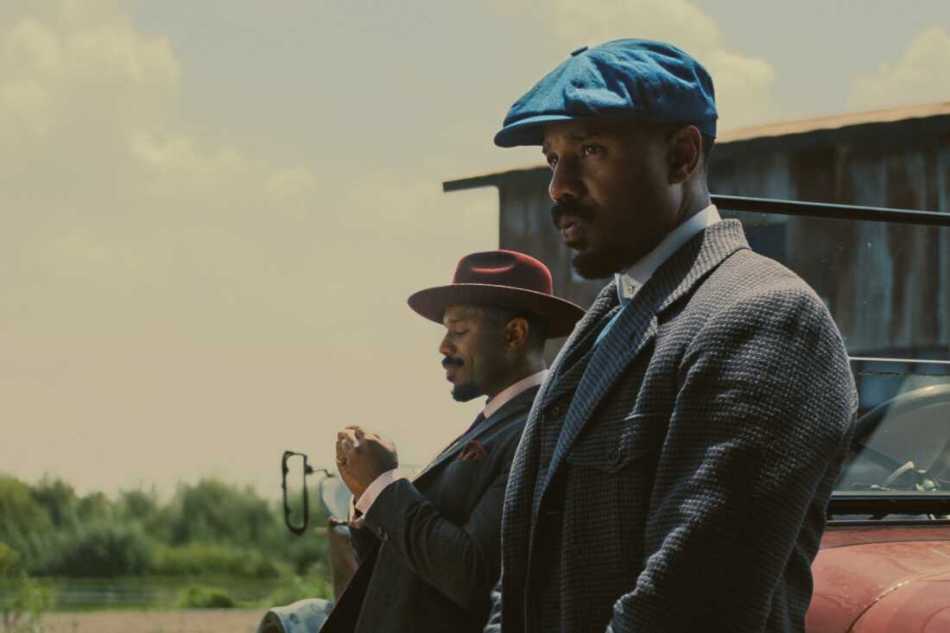
Sinners is alive. From its establishing shot to the final scene, writer and director Ryan Coogler’s film rarely feels like just a film. It has an energy, a lifeblood that courses through every scene and that weaves through it to create an environment that feels both distinctly lifelike and larger than life. It is a folk story committed to celluloid, a story akin to the tales of Robert Johnson selling his soul at a Mississippi crossroads to wield the power of music. Sinners tells a story rich in Black history, expression, and community that exposes its characters and their world’s beating heart for all to see. Set deep in the Mississippi Delta, Coogler’s sprawling film follows the events that occur after brothers Elijah “Smoke” Moore and Elias “Stack” Moore (both portrayed by Michael B. Jordan), colloquially known as the “Smokestack twins”, return to Clarksdale, Mississippi from Chicago with an idea to open a juke joint for their people to feel free.
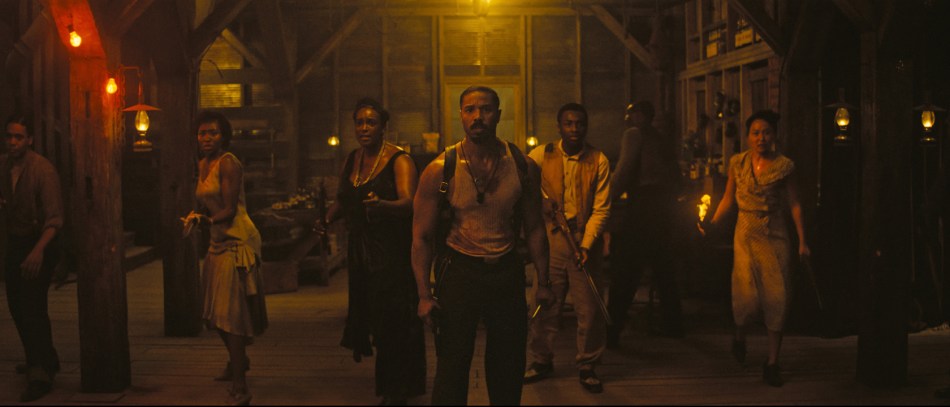
Every element of Sinners is working in lockstep with one another. The music of composer Ludwig Göransson sets the mood throughout, the cinematography of Autumn Durald Arkapaw matches it with a visual ambiance and splendor that creates striking images from beginning to end, the editing of Michael P. Shawver splices it all together, and the stunning vision of Coogler ties it all together into a soulful, bloody, and haunting experience. As Smoke and Stack come back to town, they start to round up everybody they need to make the juke joint a reality. They buy an old saw mill from the racist Hogwood (David Maldonado) and pick up their cousin Sammie (Miles Caton) to use his soulful voice to transport the customers to another musical realm. Smoke visits town and gets food from old allies Grace (Li Jun Li) and Bo Chow (Yao), while Stack visits the train station to grab blues musician Delta Slim (Delroy Lindo) and to start spreading the word about the juke joint before grabbing Cornbread (Omar Miller) to be the bouncer. Wherever they turn, the brothers find ghosts from their past with Smoke’s visit to Annie (Wunmi Mosaku) bringing him to the grave of their son and bringing these two lovers back to a physical and emotional place that their souls could never shake. Stack finds Mary (Hailee Steinfeld), his now-married lover from before. How Coogler weaves these characters’ backgrounds, their natures, and their worlds into every moment using the cinematography, costumes, constant symbolism, and easy, non-obtrusive exposition is where Sinners finds so much of its power. It is a film where the characters truly feel real, allowing the emotional arcs, the passionate flirtations, and the feelings of the night at the juke joint strike a chord that elevates Sinners to feeling like a entire experience, a true snapshot of the life, spirit, and heart of these figures.
As the brothers’ dream of a juke joint becomes a reality, it becomes a place of community and freedom. It is a light that burns bright and for just a short time, but for the Black people of Clarksdale, it is a place where they can feel accepted and surrounded by love and energy. Off in the distance is a threat to come, but until then, Sinners can be a righteous and joyful experience. The music is bouncing off the walls, a performance by Sammie is the centerpiece of the film with soulful lyrics and an insane resulting sequence that blends together history, expression, and future into a symbolically rich, emotionally stirring, and awe-inspiring moment. Pearline (Jayme Lawson) gives a performance, too, that lights up the room with a raw and physical energy that is contagious, while the dialogue given to her and Sammie in their romantic flirtations, the sexually charged scenes between Stack and Mary, and the sensuality and passion between Smoke and Annie, as well as the physically-inclined choreography gives Sinners’ night of camaraderie and revelry an intoxicating allure. It is a night one never wants to end, but there is a danger, a demonic presence that is beyond lured in by the music and dancing.
In the opening scene of the film, Sammie races home to his father’s Church, opening the door and holding a mangled guitar. His face is scratched and his father urges him to throw it down and accept God. The film then takes a step back to the prior day, while telling legends about musicians capable of piercing the veil between life and death and Sammie’s father warning about “dancing with the devil.” It is a warning worth heeding, but one that Sammie does not pay any mind as he goes to the juke joint and plays that guitar. Unwittingly, he summons Remmick (a brilliantly devious Jack O’Connell), an Irish vampire carrying his own trauma and a bloodlust for turning more people into vampires, cursing them with the same affliction he endures. This sets the stage for the film’s main draw: a stand-off between Remmick plus two local KKK members he has turned into vampires and the Black people enjoying themselves in the juke joint. It is bloody and action-packed, at times funny in the dialogue surrounding the vampires, and always spiritually perilous. The evil threat outside and the thin threshold keeping them out offers little hope for the remaining humans to withstand the siren song of the vampires. The final half-hour of Sinners is non-stop brilliance from the showdown between the humans and the vampires to a sunrise sequence that is both beautiful and haunting to a climactic action scene between Smoke and Hogwood’s KKK members. Flipping between horror, action, and haunting Southern gothic poetry, Sinners is a bloody, thrilling, symbolically rich, and emotionally poignant film that sends chills down one’s spine and has tears welling up in one’s eyes in the same moment.
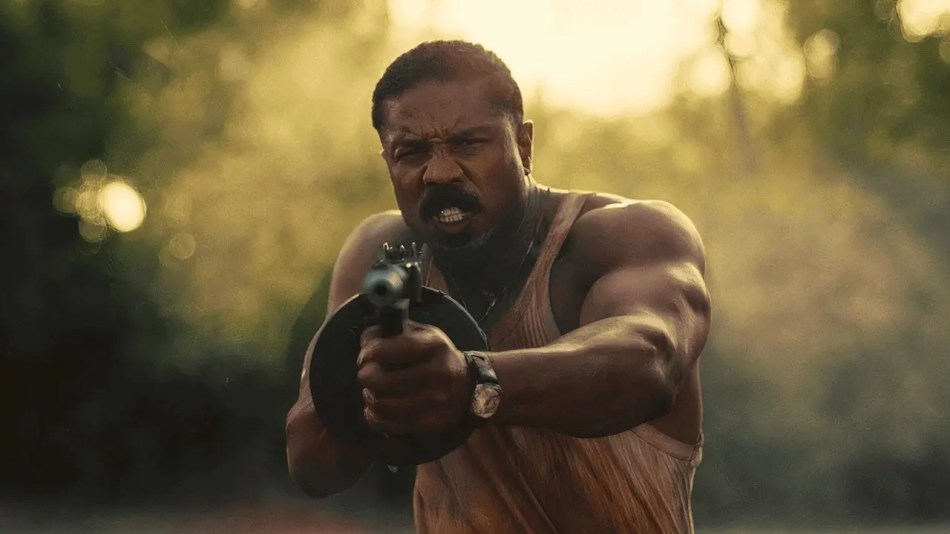
The performances are all remarkable. As noted, O’Connell’s villain turn is tremendous, but Sinners is built on the shoulders of Jordan who creates two distinct personalities for Smoke and Stack, giving both brothers a larger-than-life demeanor that matches the reputation for both in Clarksdale. It is perhaps the best performance of his career, a rich and nuanced dual performance that creates a bond and individuality for these two men that is the foundation of Sinners. Wunmi Mosaku, given a character who believes deeply in mysticism and hoodoo, could turn it into a caricature-type performance but she keeps Annie grounded at all times and lends her belief genuine credibility and believability that grabs one’s soul. Delroy Lindo often steals the show as blues musician Delta Slim, a man with ties throughout the South who feels like a living Black history book and possesses an energy on stage that turns him into a folk legend all his own. It is a tremendous performance, one that adds color and style to the picture. Hailee Steinfeld brings style and charisma to Mary, her chemistry with Jordan being one of the film’s strongest assets and her screen presence demanding attention at every moment. Omar Miller is naturally funny at times, giving the film a genuine levity. Miles Caton is remarkable in his acting debut, though it is his musical chops that often make him a presence hard to look away thanks to his deep vocals and deeply felt performances.
Ryan Coogler’s Sinners is a one-of-a-kind experience. It is a sprawling vision rising out of the Mississippi Delta with blues in its soul, a Southern gothic vibe a la Eve’s Bayou, influence from plenty of vampire films like Ganja & Hess, rich religious symbolism, and a emotional core that underpins its bloody vampire action with genuine heart and pain. It is filled with characters who feel truly real and have the arcs to match, while benefiting from stunning imagery, and a brilliant score that makes it a wholly well-rounded and striking journey. Sinners feels both human and like folklore, a stark warning about temptation and sin and a celebration of love, community, and Black history and future that makes it truly strike right at one’s spirit.
Discover more from Cineccentric
Subscribe to get the latest posts sent to your email.
 Cineccentric
0 comments on “Sinners ★★★★”