
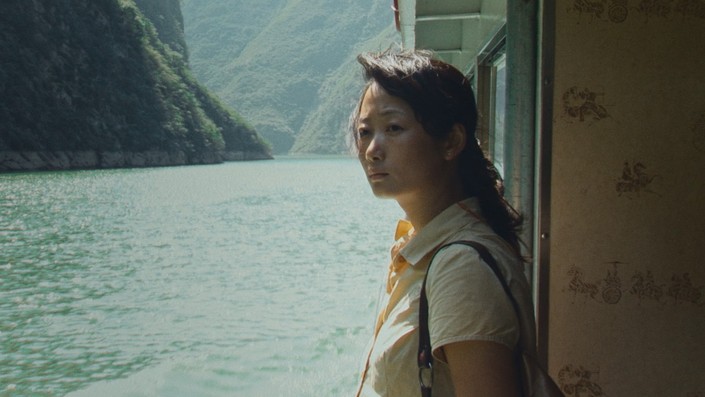
During the COVID-19 pandemic, China had one of the strictest responses to the virus. Through implementing community screening, quarantines, and lockdowns, they aimed to prevent the transmission of the disease as soon as it was detected. Such an approach made it challenging for filmmakers to be able to film as a lockdown could disrupt a filming schedule. Along with an idea to piece together various footage shot over the years, China’s COVID-19 response forms the context of Jia Zhangke’s tenth film Caught by the Tides. The film is a product of adaptability and stitches together 22 years of footage ranging from grainy 1.33:1 aspect ratio photography in the early years of digital video to that captured with modern Arri Alexa cameras. Even so, Caught by the Tides, which also uses footage from Jia’s previous films, is remarkably cohesive, supported by the recurring casting of Jia’s wife Zhao Tao in his films and a keen directorial presence behind the camera even when unknowingly filming footage that would make its way into a film. The result, like Jia films Ash is Purest White and Mountains May Depart, is a decades-spanning love story that illustrates the changing of times in China and within a romance.
More so than in Ash in Purest White, Jia is focused on depicting the lives of Chinese citizens, often filming gatherings of friends. There is a bustling sense of community and closeness between people. No less than eighteen songs are used in Caught by the Tides, often sung by characters or diegetic within scenes. These song excerpts are typically 30+ seconds of music rather than snippets, declaring the tone for a scene and often involve storytelling within the songs’ lyrics describing working class life in China.
Qiao Qiao (Zhao Tao) takes on various gigs as a singer and model. She is romantically involved with her manager Guao Bin (Li Zhubin) though Bin leaves her to try and make a living in another province. He notifies her of this by text message and says he will come back for her once he has enough money. A few years pass without evidence he will return, so Qiao decides to look for Bin. Her journey takes her from Datong in northern China to Fengjie County and finally to Zhuhai in southern China. Caught by the Tides is the story of Qiao’s venture across China and her experiences over the years observing the continued industrialization of China. In Fengjie County, an area affected by the Three Gorges Dam, she sees a worker declaring his patriotic duty to his work, and the ample steel, concrete, and construction materials visible can’t be missed.
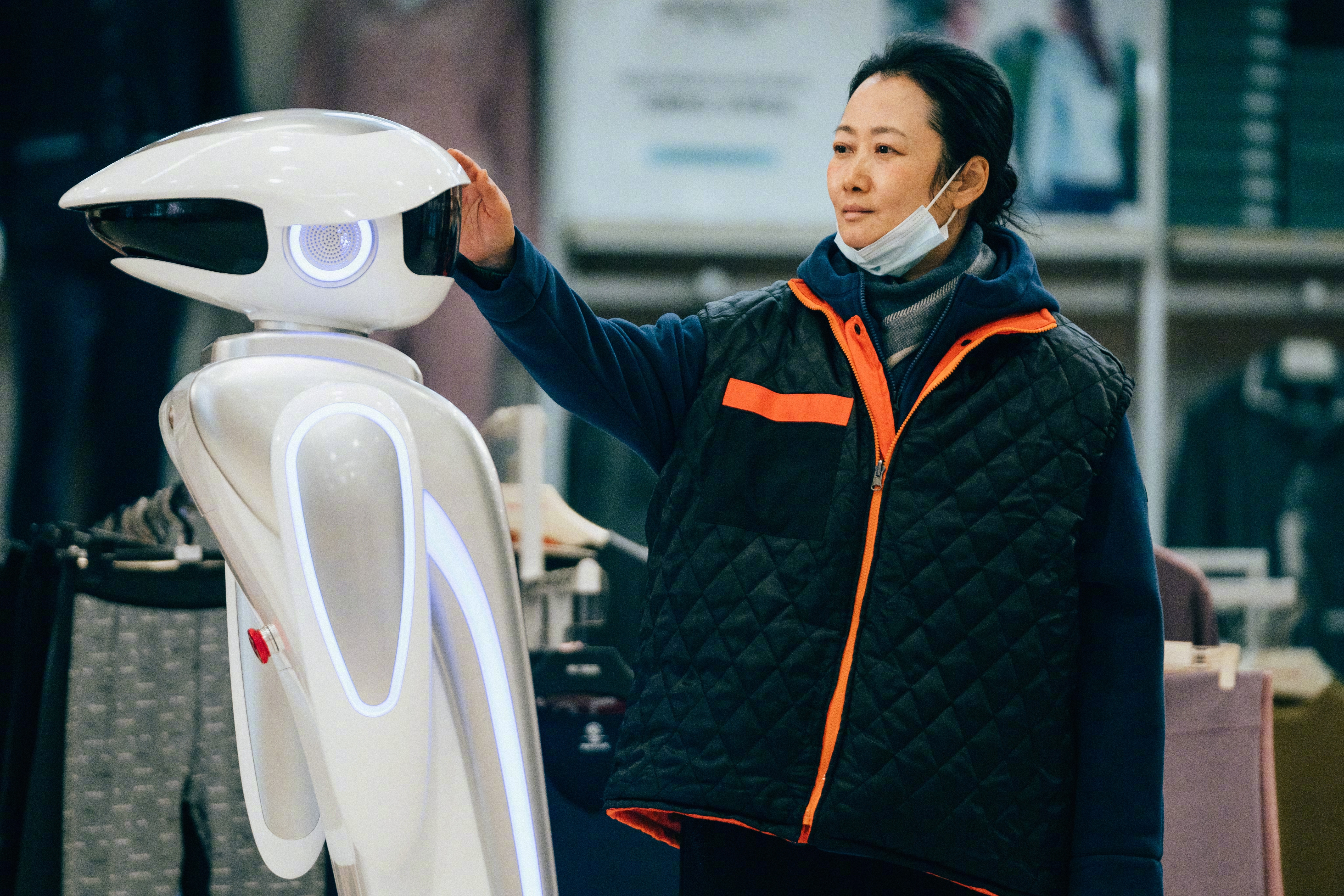
Qiao interacts with others mostly in silence, her facial expressions conveying everything she needs to. Yet, it isn’t readily noticeable she barely speaks – it is impressive the extent of communication that Zhao expresses using only her face, and even with half her face (face mask). Zhao acts almost exclusively in Jia’s films and given the breadth of expression she conveys as an actress – from sadness to curiosity to acceptance – it makes me wonder what roles she would take if she were to appear in other directors’ films. Her character Qiao bears a deep sadness in her unrequited love, and over time her journey transitions from a search for romance with Bin to an internal mission to find herself and understand where fulfillment can be found within a changing China. Jia portrays the passing of time through different filming techniques for the scenes set in contemporary China, opting to include shots that involve pans and zooms akin to that of a user-controlled security camera.
There are stark differences in depictions of the surrounding community in the scenes filmed in 2022. Where there would have been a busy crowd watching a local performer in an earlier year, there are now only a handful of people, their gathering seeming more representative of isolation than of togetherness. The dourness of the pandemic is also expressed in a conversation that Qiao has with a store assistant robot that involves the robot detecting her sad facial expression and sharing uplifting quotes from Mother Teresa and Mark Twain. The scene is representative of the time we live in with increased robotization and conversational AI and also conveys the mental state that Qiao is in. Still, Jia offers Qiao a moment of tenderness that points towards her next direction in life.
Caught by the Tides reaffirms Jia Zhangke as one of the most noteworthy directors working today. His preoccupation with themes of love and fulfillment continue to resonate while Jia portrays the changes in China and its communities. His interest and dedication to filmmaking resulted in this film being made at a time that otherwise would have been challenging to make while enabling Caught by the Tides to be a very different take on the ‘pandemic movie’ that we have seen released in the years following COVID-19.
Discover more from Cineccentric
Subscribe to get the latest posts sent to your email.
 Cineccentric
0 comments on “Caught by the Tides ★★★½”