
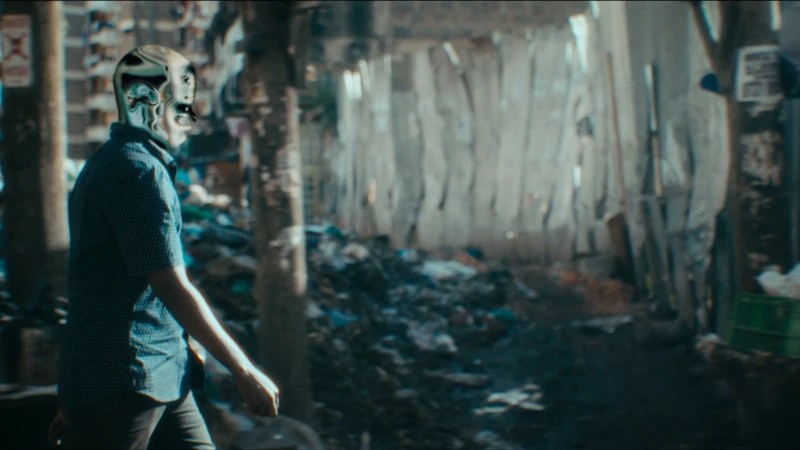
Directed by Henri Poulain and co-written with Antonio Casilli and Julien Goetz, the 75-minute documentary In the Belly of AI aims not to unveil the future so much as exhume its consequences. Beneath the polished rhetoric of progress, it excavates the human toll left behind by artificial intelligence. What it reveals is not innovation’s triumph, but its shadow: an economy of extraction where both landscapes and lives are ruthlessly consumed. The film dissolves Big Tech’s illusions layer by layer. Beneath the polished language of optimization and efficiency lies a reality as bleak as it is banal: data centers that dry out rivers, and an invisible workforce whose labor powers artificial intelligence at the cost of their own psychological erosion.
Poulain resists sweeping shots of glossy tech campuses or utopian sales pitches. Instead, his camera remains still, dwelling in the silences of depleted soil, in the mechanical exhalations of cooling fans, in the lined faces of exhausted workers. Wide shots of industrial scars, choked waterways, and hollowed-out terrain speak louder than any narration. The focus of this uncomfortable combination of investigation, talking heads interviews and observation is the so-called data partners, outsourced laborers tasked with making AI systems smarter, faster, and “more human.” Their names are often withheld, but their presence is searing. They sit in narrow rooms under flickering lights, eyes fixed on screens, parsing thousands of images for pennies, building a future that will never include them.
The film’s target is longtermism: a Silicon Valley doctrine that sanctifies a hypothetical future while discarding the present as collateral. Yet, the excavation only goes so far. At just over an hour, the film’s gaze is bound on the aftermath, but not the architects. Poulain recalls reaching out to the gatekeepers of the algorithmic age—requests met not with dialogue, but with silence or a door quietly shut. The refusal is telling. It doesn’t just shield power; it defines it. What makes this monetary and media force of tech tycoons all the more dangerous is its increasing political influence. During the last US elections, Elon Musk acted like a running mate to Trump, as archival footage reminds the audience.
Just like certain political figures, the self-declared designers of tomorrow act increasingly as if they were above everyone and everything, including the law. In the Belly of AI’s absence of tech representatives and AI supporters leaves accountability curiously diffused within the film. Still, the documentary delivers in form. Josselin Bordat’s metallic, elegiac score hums beneath the surface, not guiding emotion but echoing it. The cinematography by Nils Ruinet, Juliette Faÿsse, and Maxime Maujean is exacting in its restraint: the cracked geometry of a cooling tower, the slow tremor of machinery, the hunched silhouette of a worker mid-keystroke. Each frame is a meditation on what progress leaves behind—and who. Less an exposé and more a document of loss, In the Belly of AI deconstructs the postmodern myth of free algorithmic labour.
Everything has a price. In this case, it is the dignity, mental and physical health, presence and future of an invisible workforce. With unpretentious urgency, the film critiques the ideologies powering AI and reveals what its future vision chooses to erase.
Discover more from Cineccentric
Subscribe to get the latest posts sent to your email.
 Cineccentric
0 comments on “In the Belly of AI (documentary) ★★★”