
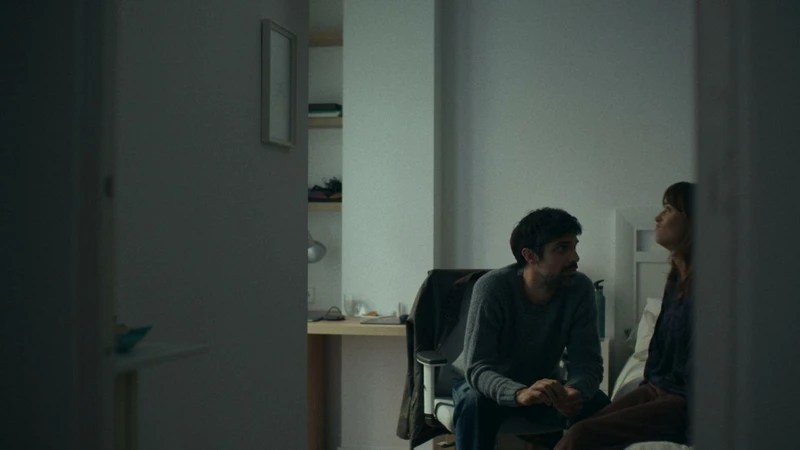
With a strong performance at its center and a sense for the subtle dynamics of family obligations, Ana Lambarri Tellaeche debut feature turns its subdued focus on the corrosive long-term effects of disillusionment, and the fragile process of self-reclamation. While the strong core performance has the potential to create a profound portrait of a woman at a professional and personal crossroads, both the Spanish director-writer and her protagonist linger far too long over the decisions that drive the understated events. At their center is thirty-something engineer Laura (Susana Abaitua) whose once-promising tech career abruptly collapsed when her project lost funding. Stripped of her professional identity, she slowly suffocates under the accumulated weight of minor compromises.
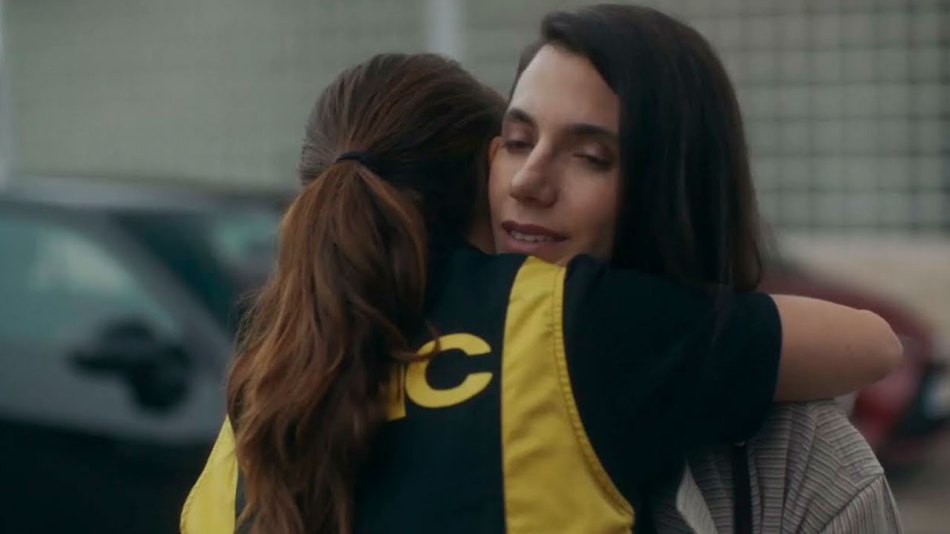
After years of being trapped in a drab existence as a retail worker, personal care for her ailing father (Ramón Barea) and an unsatisfying on-off affair with her partner Marcos (Pol López), she suddenly gets a second chance at a career. Abaitua’s performance grounds the narrative as she embodies Laura’s exhaustion and flickering resilience and hesitant attempt at reinventing herself. Living in a shared space, dragging herself to an unfulfilling job far below her intellectual and educational capacity, and balancing the demands of her partner, her father, and a self-centered younger sister (Natalia Huarte), Laura has literally no space of her own. Her tedious routine is disrupted when a former colleague invites her to revive her old tech project.
Accepting means choosing herself over others for the first time in years. Though hesitant about the lack of a secure salary and afraid of her family’s reactions, Laura accepts. The ripple effects are profound as she realizes how much those around her take her unconditional support for granted. Every step Laura takes towards independence generates cracks in the relationships around her. Her family resents her new priorities, Marcos is jealous at her newfound objective, and her role as her father’s unpaid household caregiver grows increasingly strained. A fundamental weakness of this milieu study is the narrative’s failure to admit that Laura’s economical struggle is, in fact, the subjective poverty of the intellectualist bourgeoisie striving for more.
Susana Abaitua delivers a restrained but forceful performance that sustains the personal drama’s brittle balance. Endlessly exhausted from her old life, her Laura embodies the contradictions of someone both fearful of change and desperate for it. Opposite her, Javi (Francescio Carril) embodies a partner whose half-hearted affection and neediness underscore her own insecurities. Cinematographer Carlos de Miguel’s muted palette, dominated by pale grays and browns, and closed compositions reinforces the aura of tiring tristesse. These visual choices amplify the core tension between self-imposed confinement and the vague possibility of starting over. The looping structure mirrors her sense of inescapable stasis. Scenes return to familiar settings in variations that highlight how a loveless routine can stifle ambition and autonomy.
However, the purposeful repetition also slows down the pacing considerably, making the inertia somewhat too palpable. At almost two hours, though, the circling of inner conflict sometimes risks redundancy. A modest but promising premiere at San Sebastián’s Made in Spain section, Tellaeche’s quiet drama is most engaging when it dares to address how traditionalist family structures and conservative social expectations suffocate a woman’s potential.
Discover more from Cineccentric
Subscribe to get the latest posts sent to your email.
 Cineccentric
0 comments on “Everything I Don’t Know ★★½”