
Once again, Berlin’s cinematic high holidays are upon us, with the 76th edition of the Berlinale film festival set to begin on February 12th, with the opening night selection of Shahrbanoo Sadat’s No Good Men. This film is, in a way, indicative of this year’s festival – one that is light on star power and heavy on deep cut names in the international auteur handbook.
Sadat is a Hamburg-based Afghani writer-director, and No Good Men is the third movie in her planned five-part semi-autobiographical series. The previous entries, Wolf and Sheep and The Orphanage were part of the Cannes Director’s Fortnight, so Sadat is stepping up with this spotlight position in the 2026 program.
This being Tricia Tuttle’s second outing as Festival Director, one might think that this is the year she’s purposefully staking out new relationships with filmmakers whose best movies may still be ahead of them. For instance, this year’s Competition lineup includes At the Sea from the director Kornél Mundruczó, who made a splash in 2014 with White God and has since done some English-language work that includes Pieces of a Woman, starring Vanessa Kirby, which ended up on Netflix in 2022. This time he’s working with Amy Adams, who plays a recovering alcoholic trying to rebuild trust among her family and regain a healthier sense of self.
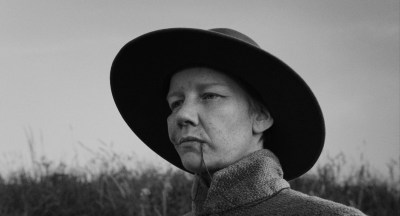
There’s also Markus Schleinzer, an Austrian actor and director, and the former casting director of Michael Haneke, whose third film Rose stars festival favorite Sandra Hüller in the intriguing role of a seventeenth century soldier returning home and laying claim to a family manor. Shades of The Return of Martin Guerre with a gender twist. And then we have Anthony Chen, who won the Camera d’Or at Cannes with his debut Ilo Ilo in 2013 and might take home some more prizes with We Are All Strangers (Wo Men Bu Shi Mo Sheng Ren). This capper to his “Growing Up” trilogy is remarkably the first Singaporean film to earn a spot in the festival’s Competition section.
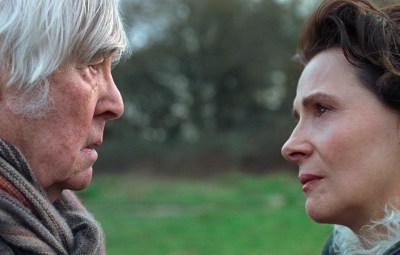
The marquee lineup also includes the long-awaited (eighteen years!) second feature from the American director Lance Hammer. This film, Queen at Sea, has quite the cast, headlined by two living legends: Juliette Binoche and Tom Courtenay. They play the daughter and husband of a woman succumbing to dementia, who are divided on what to do. The most star-studded cast in the Competition section belongs to Rosebush Pruning, the latest film from the Brazilian filmmaker Karim Aïnouz (he of the eye-popping Hotel Destino and Invisible Life), which has Callum Turner, Riley Keough, Jamie Bell, Elle Fanning, Pamela Anderson, and Tracy Letts turning up to play parts in this dark comedy about a wealthy, toxic family and its secrets.
There are a few other familiar names in the Competition this year, like the German maestra of enigmatic arthouse fare Angela Schanelec, who’s back at Berlinale with My Wife Cries (Meine Frau Weint) and İlker Çatak, the German-Turkish director, whose newest film Yellow Letters (Gelbe Briefe) is his follow-up to the 2022 movie The Teacher’s Lounge, which was something of an unexpected international hit. We also have a carryover from this year’s Sundance in Beth de Araújo’s Josephine, a tense drama starring Channing Tatum that has divided audiences, much like Araújo’s 2022 mindbender Soft & Quiet. And there’s a new one from the Australian director Warwick Thornton, another Camera d’Or winner, whose in the Competition with Wolfram, a tale of three kids on the run in the 1930’s Outback.
There are more films from France (Alain Gomis’ Dao and Mahamat-Saleh Haroun’s Soumsoum, the Night of the Stars), Tunisia (Leyla Bouzid’s In a Whisper), Belgium (Anke Blondé’s Dust), Canada (Geneviève Dulude-de Celles’ Nina Roza), Mexico (Fernando Eimbcke’s Flies) another one from Turkey (Emin Alper’s Salvation) and one more each from both Austria (Tizza Covi and Rainer Frimmel’s The Loneliest Man in Town) and Germany (Eva Trobisch’s Home Stories). So there’s a strong, diverse lineup, with a good representation of women filmmakers in the main section this year. But the ones I’m most interested in are the less expected entries, like the Finnish genre oddity Nightborn (Yon Lapsi) from Hanna Bergholm, the new anime from Yoshitoshi Shinomiya entitled A New Dawn, a curious documentary that has snuck in called Yo (Love is a Rebellious Bird) by Anna Finch and Banker White, and a wildcard biopic in the form of Grant Gee’s Everybody Digs Bill Evans.
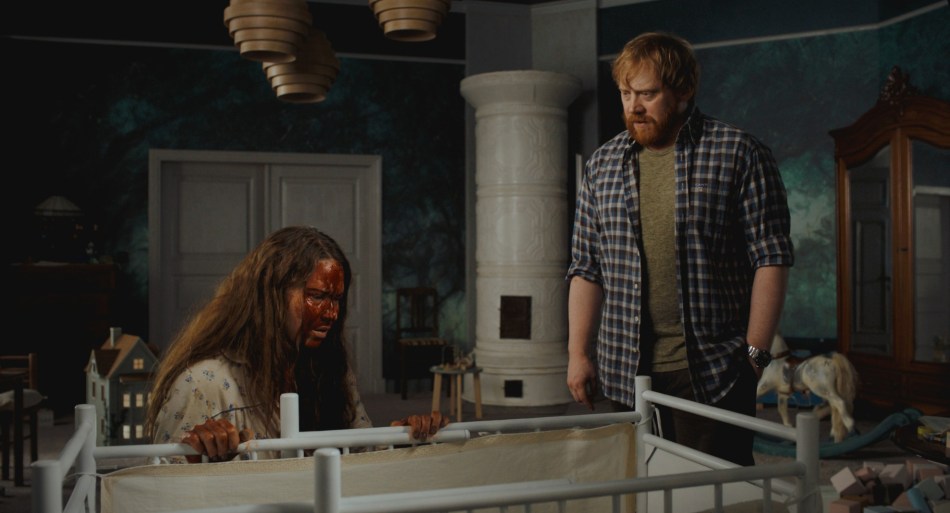
Horror aficionados might recognize Bergholm’s name from her 2022 feature debut Hatching, wherein a young girl brings home a crow’s egg to take care of, from which emerges a half bird-half human creature. Complications ensue. In Nightborn, a couple played by Rupert Grint and Seidi Haarla move to the wife’s childhood home in the Finnish woodlands to start a family, only to find out something is seriously, seriously wrong with their newborn kid. The Berlinale has had a history of lacking in what you’d call the midnight movie department, but when these movies show up, as they have lately with Cuckoo and Flux Gourmet, they tend to be real gems – even more so when they creep into the Competition, as with the fantastic Reflection in a Dead Diamond from last year’s edition.
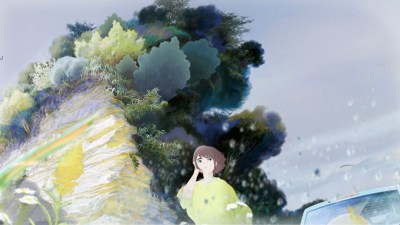
Animated features in Competition also aren’t unheard of. Berlinale gave a Golden Bear to Hayao Miyazaki’s Spirited Away in 2002, and Makoto Shinkai’s Suzume was in the running during the 2024 edition. Speaking of Shinkai, this year’s contender, A New Dawn, comes to us from Yoshitoshi Shinomiya, who worked as an art director on Shinkai’s modern classic Your Name. A New Dawn involves a man working obsessively in a fireworks factory that is about to be closed down, trying to replicate his lost father’s mythical creation, called the Shuhari. (In a future dispatch I’ll likely talk more about a theme running through a good number of Berlinale films this year – that of people returning to their hometowns and/or dealing with the troubling legacies of departed parents.)
And then there are the docs. Documentaries have had some success at Berlinale lately, with Mati Diop’s Dahomey taking home the Golden Bear in 2024, and (much more surprisingly) Nicolas Philibert’s On the Adamant doing the same in 2023. This year, Anna Finch and Banker White’s Yo (Love is a Rebellious Bird) tells the story of the relationship between Finch and her dearly departed friend Yo, who was about fifty years older than her. After her passing, Finch recreated a ⅓ scale version of Yo’s home – a place where Finch could keep Yo’s spirit and stories alive. It brings to mind a more heartwarming version of the 2010 doc Marwencol, about a damaged man who built a ⅙ scale replica of a WWII-era fantasy land in his backyard.

Last up is perhaps my most anticipated Competition feature, Everybody Digs Bill Evans by the British documentarian Grant Gee. Over the years, Gee has made some topshelf quality music docs, with his 1998 Radiohead movie Meeting People Is Easy, and 2007’s definitive Joy Division. This time around, however, Gee is dramatizing history and taking a chapter out of the life of the troubled, drug-addicted jazz pianist Bill Evans, who faced an existential crisis when his bass player unexpectedly died in 1961. Playing Evans is the Norwegian actor Anders Danielsen Lie who’s been having quite the moment since capturing hearts in The Worst Person in the World. He’s backed by Bill Pullman and Laurie Metcalf – all of which adds up to making Everybody Digs Bill Evans an extremely alluring proposition.
Thankfully, I won’t have to wait long for Gee’s film as it’ll be screening on Friday, which is likely when I’ll send my first proper dispatch from the festival, catching you all up on the early Competition screenings and filling you in on some highlights from the other sections. Until then…
Discover more from Cineccentric
Subscribe to get the latest posts sent to your email.
 Cineccentric
0 comments on “Berlinale 2026: Previewing the Competition”