
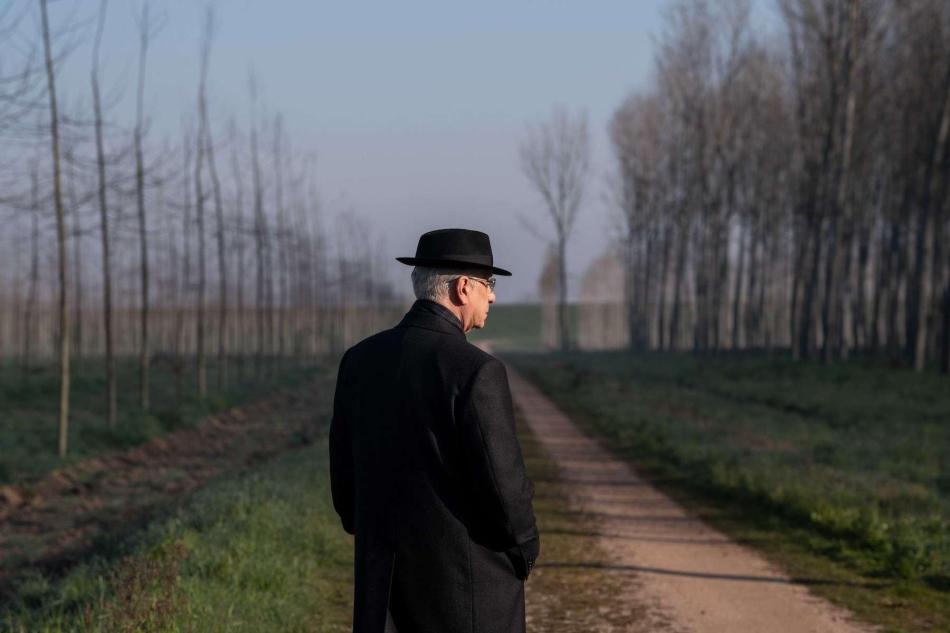
La grazia is a political drama of a bygone era (a less jaded one). It is set in the last months of President Mariano De Santis’ (Toni Servillo) term. This weighs on De Santis as his decisions now will be his final acts as president. In his purview is a bill on euthanasia and decisions on whether to pardon two individuals.
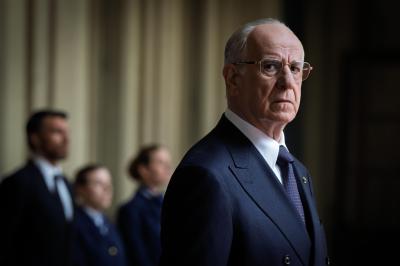
De Santis is an introspective man. He is known by nickname as “Reinforced Concrete” and he is disheartened by this. He doesn’t see himself nearly as rigid or rough as his nickname suggests. At his core, De Santis is a quiet, thoughtful man who, as his previous occupation as a judge suggests, thinks critically and in depth before acting or making decisions. He does have a goofy side to him however as scenes of him listening to and rapping rap music display an unexpected side to his character, one that Servillo portrays with humor. De Santis, at his core, is an everyman and this is shown not to be an act. For this, De Santis is revered by the citizens of Italy and any of his interactions with the public illustrate their admiration for him.
De Santis is aware of the role that public perspective will play on his legacy should he make the ‘wrong’ decision regarding the euthanasia bill or the pardons. We get the sense that he is opposed to euthanasia by principle, but knows that the decision and its morality extends beyond his personal views. De Santis is influenced by the Pope who is not in favor of passing the euthanasia bill for religious reasons while De Santis’ daughter attempts to influence him in favor of passing the bill.
Being that De Santis is in the final months of his presidency, he is reflective towards his life and accomplishments. He knows he achieved the highest success at a political level, yet he is personally burdened by thoughts of his late wife’s affair. Unknowing of who his wife had the affair with, De Santis believes his wife’s lover is present within his close circle of friends and peers and he has a paranoid fixation on the identity of her lover, and therefore who had hurt him. This sense of pain, De Santis’ introspection, and his indecision regarding the euthanasia bill and pardons contributes to a sense of lost and wandering that Sorrentino often explores in his films. Sorrentino conveys more than any director that one’s surroundings shape an individual and their decisions, and La grazia recalls the sense of personal discovery in The Great Beauty in its casting of Toni Servillo as a man who is finding his way. Much of Servillo’s acting in La grazia is ‘quiet’ acting where Servillo expresses with his face the weighty thoughts of De Santis.
La grazia could be considered a minimalist film given the specificity of its character study and narrative focus, though magical realism flourishes and scenes with an astronaut and robotic dog contribute to the film’s expressiveness. De Santis is envious of the astronaut and the experience of weightlessness, wishing he could experience the sensation in his dreams. Light, peaceful, and calming, illustrating the story of a man who thinks before he acts, La grazia evokes the same sense of floating that De Santis aspires to feel.
Discover more from Cineccentric
Subscribe to get the latest posts sent to your email.
 Cineccentric
0 comments on “La grazia ★★★”