
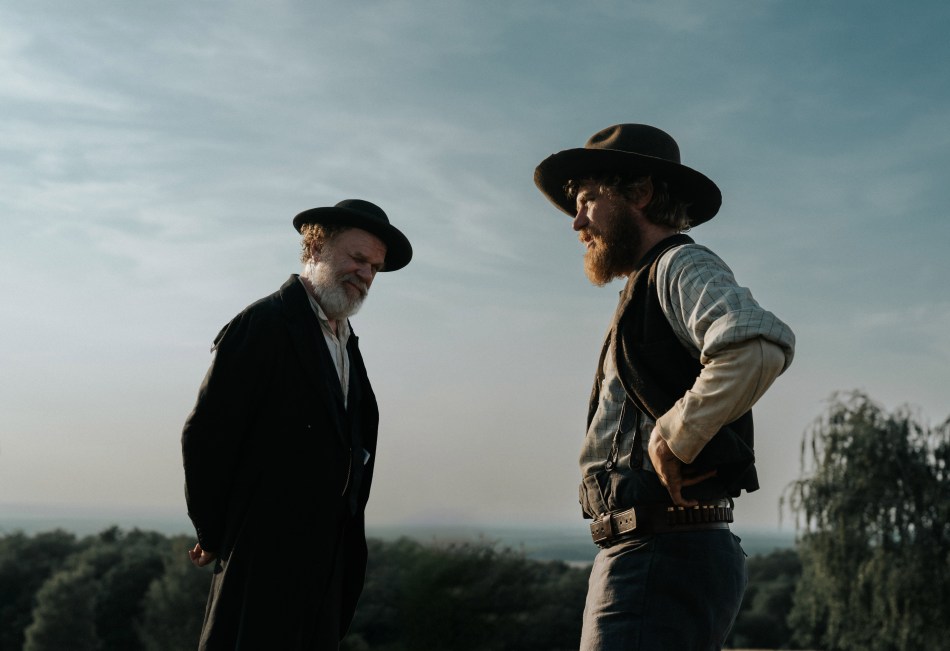
Within the sprawling festival program, the Berlinale Special section isn’t an easy one to pin down. Over the years it’s maintained its status as a high-profile part of the lineup, often showcasing big movies with big stars that may have recently premiered elsewhere but are making their German or international debut at Berlinale (such is the situation for The Testament of Ann Lee at this year’s fest). But it’s also morphed in recent editions to include television shows and now, for the first time, a Berlinale Special Midnight section that has all of three movies in it. One of those movies is Sleep No More, directed by the mononymous Edwin, who started out making comedies and dramas about modern Indonesia but has lately been popping up with Netflix movies like 2021’s action-heavy throwback Vengeance Is Mine, All Others Pay Cash and 2024’s spooky Borderless Fog.
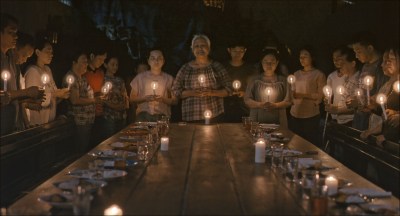
Sleep No More is the rare movie that has too many ideas rattling around. It doesn’t surprise me that there are five writers credited since it plays like five different movies fighting for survival. Unwieldy tonal shifts are kind of a hallmark for Indonesian movies. It was there in Joko Anwar’s Ghost in the Cell, which bounces from slapstick comedy to heartfelt drama to gleeful gore in a way that can give the unseasoned viewer a severe case of whiplash. Sleep No More does exactly that as well, but instead of a ghost in a prison it’s a ghost in a mannequin factory. When workers become exhausted they become susceptible to possession, which can result in the worker committing suicide or going homicidal on whomever’s nearby.
If you’re like me and appreciate some clear and consistent rules about your supernatural setup, you may get more than a little frustrated with Edwin’s freewheeling fairy tale. While it’s got a fairly straightforward message about the crushing toll of capitalism and factory work, it also takes place in an unrecognizable fantasy land where a guy who can regrow any part of his body that gets lopped off is treated as almost commonplace. It’s unclean, broad strokes storytelling, resulting in a mystery that never grabs you and characters that never garner much sympathy.
I had a lot more fun with another film in the Berlinale Special section, which could have easily fit in with the Midnight group, though due to it’s star power is featured in the Special Gala section. I’m referring to Ulrike Ottinger‘s The Blood Countess, starring Isabelle Huppert as Erzsébet Báthory, a real figure from Hungary history whose legend, like that of Vlad the Impaler, has become entwined with vampire lore. But this ins’t some history lesson. The Blood Countess is a campy, candy-colored, anti-realist romp that often verges on becoming an extravagant musical comedy.
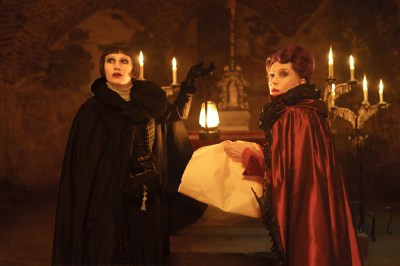
Ulrike Ottinger is an important figure in German cinema, having been given an honorary award at the 2020 Berlinale for films such as 1979’s Ticket of No Return. With The Blood Countess, she’s also brought along the Nobel Prize-winning author Elfriede Jelinek (The Piano Teacher) as co-writer. And in addition to Huppert, we also have the formidable acting talents of Lars Eidinger and Thomas Schubert along for the ride. It’s a mind-boggling experiment of a movie that will leave many people scratching their heads. All this talent in the service of a goofy vampire comedy that climaxes with a song by Austria’s Eurovision winner Conchita Wurst?
To quote Ottinger’s Wikipedia page: her films “reject or parody the conventions of art cinema and search for new ways to construct visual pleasure, creating various spectator positions usually neglected or marginalized by cinematic address.” That absolutely hold true with The Blood Countess. Ottinger has no use for realism or even giving her characters normal names. The cinematography, with its bright colors and sharply lit interiors, proudly sets itself apart from popular cinema’s current trend of dim digital dreck. The plot of the movie, which has everybody running around trying to find a book that can turn vampires back into humans, is secondary to creating a movie that acts more like an absurdist mood piece about the history of Vienna and the bloodthirsty rulers of Central Europe. The Blood Countess looks and moves like nothing else out there, and while that’s proved frustrating to some critics, I had a total blast.
While the vibes are quite different, plenty of blood is also spilled in A Prayer For the Dying, an intriguing inclusion in this year’s Perspectives section, which is reserved for debut features. Dara Van Dusen’s film is an adaptation of the eponymous 1999 novel by Stewart O’Nan, which takes place in the ironically named town of Friendship, Wisconsin, just after the end of the Civil War. Johnny Flynn (who was impressive in the recent Ripley miniseries on Netflix) stars as a veteran soldier who acts as both the town’s sheriff and its preacher. He cares about his flock in more ways than one, and his purpose is put to the test when Friendship is hit with a diphtheria outbreak and an encroaching wildfire. John C. Reilly does a fantastic job playing the weary town doctor, and much of the drama stems from these two pillars of the community trying to figure out the best course of action. Stay and try to contain the epidemic while risking the fire, or leave and avoid the fire but risk killing many others by spreading the plague?
Van Dusen, an American-born filmmaker who studied at the famous film school in Łódź, Poland, could benefit from giving her film a little more propulsive energy and a little bit less of the slow cinema sheen. But she’s also got Kate McCullough (from the Oscar nominated The Quiet Girl) as the cinematographer and there’s no denying that the framing, lighting and movement is often captivating. A solid debut. It has some flaws in the pacing department, but when it captures the doomed insanity of the situation, where every choice is a painful compromise, it strikes an effective, existential note that sticks with you. Van Dusen’s talent is plain to see.
Okay for now. Next time it’s back to the Competition titles, and I’ll make good on that promise to talk about the fascinatingly relevant Yellow Letters as well as the dismal At the Sea, the beguiling Nina Roza, and two nearly flawless films: Queen at Sea and Rose.
Discover more from Cineccentric
Subscribe to get the latest posts sent to your email.
 Cineccentric
0 comments on “Berlinale 2026: A Prayer for the Dying, The Blood Countess, Sleep No More”