
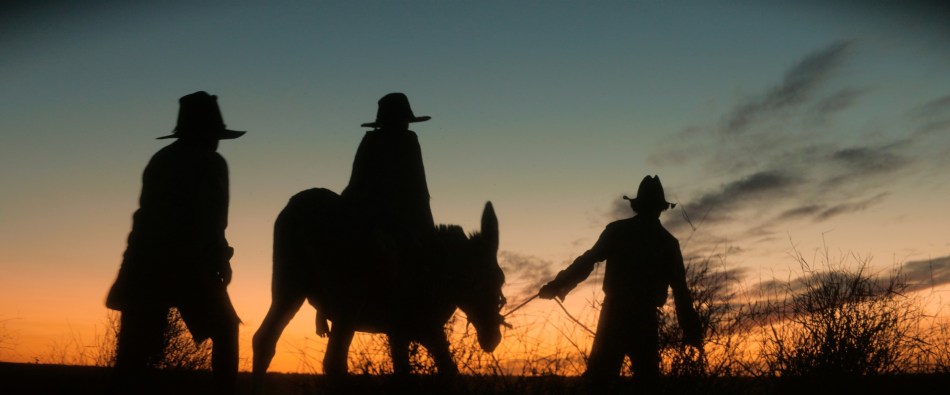
Almost a decade after his highly regarded Sweet Country, Warwick Thornton returns, not only to the genre, but to the very same narrative cosmos, shaped by racism, colonialism, and capitalist expansion. Contrary to the assumptions of many viewers at the 76th Berlin International Film Festival, where his episodic road movie premieres in competition, the title refers not to a character’s name, but to tungsten. In early 1930s Australia, the metal is more valuable than gold, as one clunky line of expositional dialogue informs. This profitability draws the sinister pair of antagonists into the interwoven storylines that mark family ties forcibly separated by patriarchal violence, white supremacy, and greed.
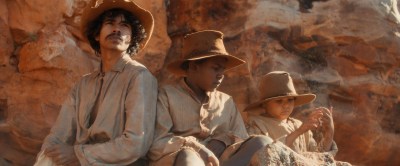
The opening sequence underlines the historical drama’s parallels to the present, where child labor and ecological destruction are part of the devastating cost of precious metals. In the middle of nowhere, pioneer Billy (Matt Nable) has set up his mine, using his young kids Max (Hazel May Jackson) and Kid (Eli Hart) as unpaid laborers. They are lowered into the poorly secured pit to extract the metal for their father as the narrative shifts to the threatening new arrivals Casey (Erroll Shand) and Frank (Joe Bird). They seem to be looking for Billy, who promptly dies from a snake bite. When the villains take Max with them, Kid follows them.
Meanwhile, Indigenous Pansy (Deborah Mailman), mother to a newborn baby, and her kind Chinese partner Zhang (Jason Chong) are on their way to Queensland, but make a detour upon Pansy’s request. Because there’s always room for one more curious side plot, Casey and Frank invite themselves to the shack of mentally unstable loner Kennedy (Thomas M. Wright), who appears to be a distant relative. He lives with his son Philomac (Pedrea Jackson), whom he treats as a servant as well. Thornton and his screenwriters Steven McGregor and David Tranter are clearly pointing out a pattern of abuse: White men taking their children from Indigenous mothers to exploit them as workers.
However, since the legal basis of slavery-like labor conditions such as Aboriginals Ordinance No. 9 is never mentioned, its systemic roots and extent are hard to grasp. Though the scenario apparently intends to show the brutal effect of metal mining within the larger context of colonialism and racist repression on Indigenous families, the fable-like tale turns overly optimistic. Thornton can’t decide between raw personal drama and an allegorical tale where characters embody systemic positions. The result is a jumbled plot full of deus ex machina moments. The events turn from unlikely to unbelievable as Kid and Max unite with the support of a dear donkey and two friendly Chinese miners.
This pair also doesn’t mind child labor, but they are somehow good guys because they serve dinner and allow for breaks. While these interludes are important as acknowledgments of Australia’s multicultural history, they come off as naively idealized and dramatically contrived. Thornton’s own cinematography bathes the harsh environment in a palette of rusty browns and faded yellows, evoking historical atmosphere through landscape shots with minimal use of set pieces. Acting is convincing throughout, with Mailman making the most of her part despite her scarce screen time. Maybe Wolfram was meant to be an imaginary counterweight to the historic trauma of abduction, exploitation, and systemic violence: a fairy tale western where good and evil are clearly defined.
But this kind of escapist fantasy where love triumphs and, as A.P. Carter‘s theme song says, the circle can be unbroken, is also uncomfortably close to the white western romances it tries to deconstruct.
Discover more from Cineccentric
Subscribe to get the latest posts sent to your email.
 Cineccentric
0 comments on “Wolfram ★★½”