
After the critical and commercial success of Yusuke Hirota‘s Poupelle of Chimney Town, which took the whimsical characters of Akihiro Nishino‘s illustrated children’s book to the big screen, it was only a question of time until the story’s second part would also find its way there. Though sequels rarely live up to the first part, Hirota’s ambitious return to the steampunk town with a smoke-covered sky is almost too keen to fulfill audience expectations. Its simple but tender story begins not long after the first film ended. While knowing the events of the first lends depth and complexity to the familiar tale of love and letting go, the universal plot also works on its own.
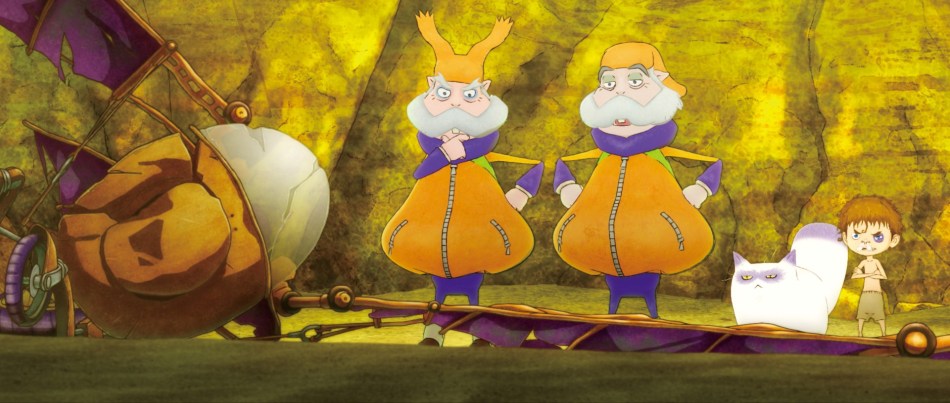
In the fantastical Chimney Town, named after its countless chimneys looming into the sky, little Lubicchi (voiced by Yuzuna Nagase) is one of the many chimney sweeps. Though his dream of seeing the stars in the night sky obscured by smoke was fulfilled in the first film, his magical friend Poupelle (Masataka Kubota) gave up his life in the process. The young protagonist still misses his friend, the loss of whom mirrors the death of Lubicchi’s father. A bracelet that was once a memento of his father now reminds him of Poupelle’s passing as well. Lubicchi’s clinging to this heirloom symbolizes his holding on not only to a memory, but to the past in an obsessive way.
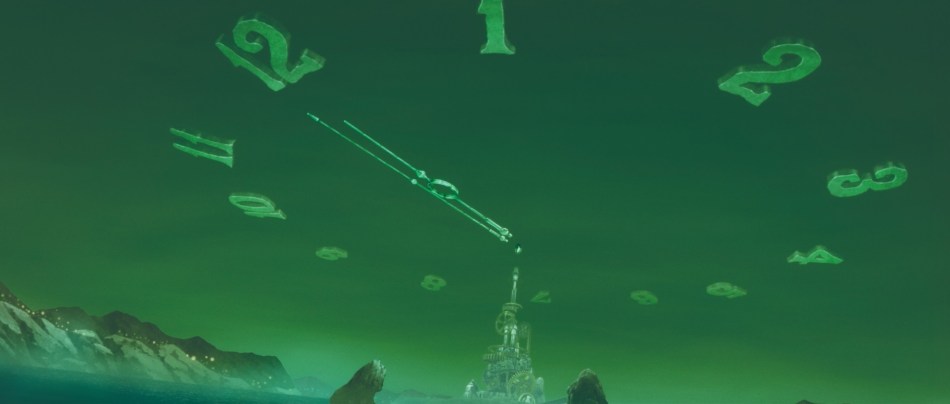
Exploring the hazy line between remembrance and regression, the colorful images find imaginative allegories for his inner stasis. Through fateful intervention and with the help of the talkative cat Fluff, Lubicchi enters a mystical realm where time itself has stopped. This bizarre world, populated by grotesque creatures and animated objects, is a manifestation of his inner state. While some of its dark red corridors resemble arteries and bone structure, others look like a giant clockwork. To return home and thereby take part in life again, he must reactivate a colossal clock tower. Trying to unravel the mystery of the tower, Lubicchi meets a kindred soul in Gus, who also hopes to reconnect with a lost loved one.
Seeing his own denial of ultimate loss mirrored in Gus’ story allows Lubicchi to recognize it. Conventional coming-of-age elements transform into a tender exploration of grief and the courage it can take to confront it. Hope, though essential to not despair, is also dangerous as it lulls both characters into waiting forever for what might never be. It is here that the mechanical metaphors reveal their limitations, leading to some uneasy implications. Grieving is aligned with “being broken” and in need of repair. Beneath the optimistic surface hides the problematic idea that recognizing depression and wanting to heal would be all it takes to get better.
Worse, the ending performs an emotional and subtextual U-turn that feels unbelievable, even within the narrative’s phantasmal parameters. This sugar-coated ending contradicts the gentle message of acceptance, feeling hollow and calculated. It’s a disappointing conclusion to a technically impressive work that shares its predecessor’s positive qualities as much as its flaws. Highly detailed CGI animations retain an aura of artifice that extends to the characters, many of whom are variations of repertoire figures, like the droll animal sidekick or the ethereal female love interest. Strongly inspired by Ghibli, Studio 4°C’s aesthetic excels in handcraft. But, just as with the replica of Poupelle the little hero builds, it lacks soul.
Discover more from Cineccentric
Subscribe to get the latest posts sent to your email.
 Cineccentric
0 comments on “Chimney Town: Frozen in Time ★★”