
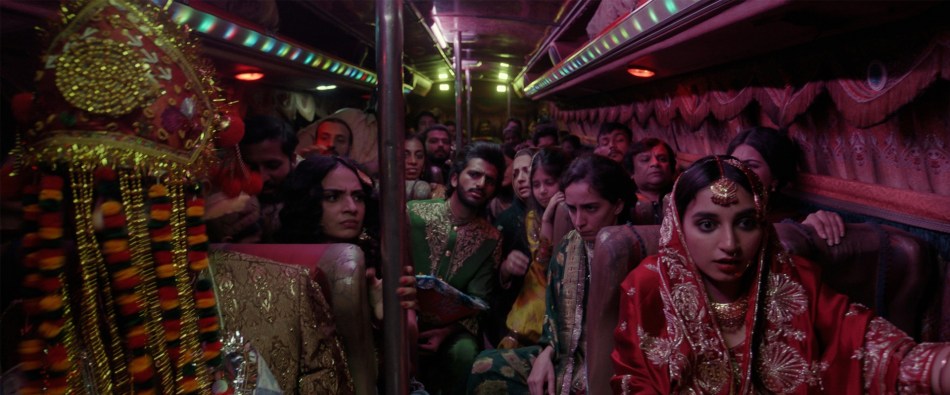
Making its own little bit of cinematic history as the first fully Pakistani production to be selected for Berlinale’s Panorama section, Sarmad Sultan Khoosat‘s supernatural satire combines black comedy, melodrama, and psychological horror into a visually arresting, if occasionally opaque, cultural critique. Set in the administrative capital Sahiwal, the scenario opens at a Punjabi wedding where sinister rumors undermine the exuberance. Young bride Zeba (Mamya Shahjaffar) is said to be cursed, as each of her three previous fiancés died a mysterious, untimely death. Her new husband Sajawal (Channan Hanif) has a striking facial birthmark that some see as a sign of evil fate. In this atmosphere of unspoken mistrust and superstitious tension, the psychological plot examines how belief systems, reputation, and gender dynamics collide in social institutions.
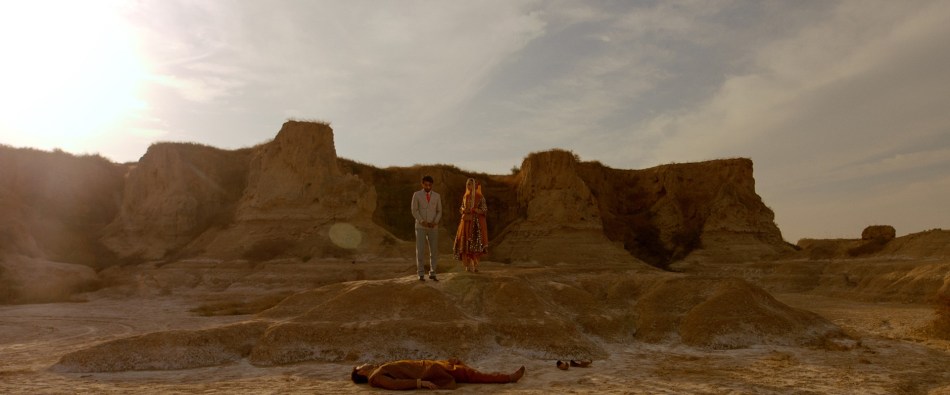
The ambivalent tonal architecture begins with a vibrant depiction of Punjabi wedding culture, filled with music and joyous chaos. From this treacherously lighthearted affirmation of tradition, the story sneaks into darker territory where laughter is stifled by dread. Comic gestures undercut violent outbreaks and intimate scenes morph into eerie encounters. This atmospheric fluidity mirrors the dynamic between the central couple. When Sajawal’s mother is accidentally injured by a gunshot from a rogue pistol, the mood shifts to suppressed anxiety. Toying with elements from folklore and fairytales, Lali reverses their classical—and often historically grounded—gender dynamic where murderous husbands dispose of one wife after another, by making the bride the source of male paranoia.
Social expectations, inherited trauma, and rigid traditions are at the core of the highly aestheticized narrative where psychosexual and paranormal facets blend into each other. As Sajawal’s jealousy slowly gets out of hand, Zeba turns to her friendly neighbor Bholi (Rasti Farooq). Scenes oscillating between seduction and suspicion evoke the young couple’s burning chemistry, but their emotional consequences often seem contradictory. Expressive visual language reinforces the confounding structural shifts. Khizer Idrees’ cinematography bathes the narrative in a saturated palette of reds and earth tones, echoing both the film’s title, a Hindi word for blushing cheeks, and themes of lust, violence, and rage. Involuntarily or not, the characters’ emotional volatility becomes a mirror for the dramatic detours.
Vivid imagery, paired with Abdullah Siddiqui’s suggestive score, frequently elevates dramatically uneven scenes. Still, the rich visuals can never fully mask the loose ends of the fraying screenplay. Part of this unevenness stems from the supernatural elements ranging from demonic possession to hauntings, which boast dramatic flair but strain the plot’s inner logic. In his interrogation of patriarchal anxieties, Khoosat seems more interested in flashy surfaces and provocative gestures than sociological analysis and psychological nuance. The profound influence tradition and patterns of belief have on gender roles, which in themselves are a form of social mythology, is never fully examined. Beyond its internal intricacies, Lali resonates most as a hybrid of genre film and cultural drama, materializing the violent forces of social pressure and conformity in intimate life.
Discover more from Cineccentric
Subscribe to get the latest posts sent to your email.
 Cineccentric
0 comments on “Lali ★★½”