
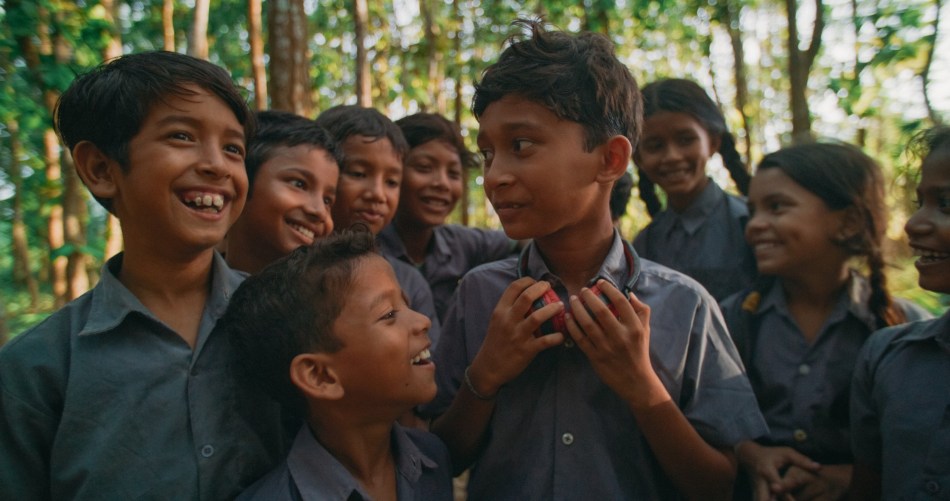
After Village Rockstars in 2017 and the following year’s Bulbul Can Sing, Rima Das returns to Berlinale’s Generation section—dedicated to films for children and teenagers—with another tender observation of the bonds and ruptures of growing up. The Indian director-writer’s newest story seems especially close to her heart, as many of its lively vignettes, reaching from the playful to the softly painful, sprung from watching her nephew. He was the mold for eleven-year-old Mivan (Bhuman Bhargav Das), whose comfortable city life is interrupted as his father decides to send him to his home village. While his parents are away for work, Mivan has to stay with his young aunt Pahi (Sukanya Boruah), who isn’t happy about the arrangement either.
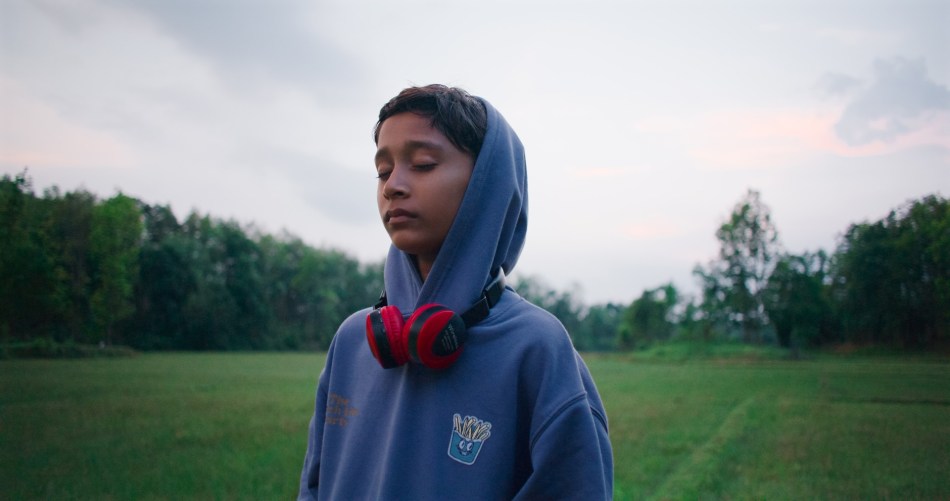
Of course, the two first grate on each other’s nerves before getting to know the other one better and growing close. And of course, the spoiled city boy first hates the boring village life before learning bit by bit to appreciate nature and a close-knit community. But despite these familiar narrative beats, Das finds small moments of resonance and relevance in the class hierarchies and financial tension among the kids. Seemingly minor details, like a loan Mivan’s parents discuss, point toward an economic reality much harsher than his protected childhood world. This world becomes simultaneously larger and subjectively smaller as he moves in with his aunt. Though not much older than he, Pahi is constantly working and on her own.
While the pair is clearly similar in temperament, their attitudes and sense of responsibility are diametrically opposed. Unfortunately, Das never develops the initially distant Pahi beyond her function as a begrudging caregiver. Her relationship with Mivan’s parents remains vague and her own life situation seems simply a given. A similar pattern of seeing without dramatic interrogation marks the scenes between Mivan and his classmates. His gadgets and brand clothes put him instantly above the other kids, some of whom have no proper shoes or can’t afford all the stationery items needed in school. A handful of fleeting scenes shows in a non-preachy manner how important it can be to share and how the young protagonist starts to consciously realize class differences.
His growing understanding of social hierarchies and awareness of his own privilege could provide rich material for this cursory coming-of-age tale. However, the narrative just wanders from one little episode to the next, often losing itself in the moment, much like the children it scouts. There is a tender charm to this spontaneous storytelling, more guided by atmosphere and emotion than a clear-cut storyline. However, this intuitive approach also leans toward idealization, shunning the less idyllic aspects of childhood displacement and rural life. There appears to be an unspoken gender separation among the children, which is never addressed. Patriarchal structures and traditionalism can be glimpsed, but remain without impact. Structural corrosion and economic decline are basically absent.
Das’s characteristic naturalist style, relying on natural lighting, immersive soundscapes, and unhurried pacing, adds to the unpretentious scenario’s realist touch. The multilingual dialogue in Assamese, Hindi, and English underscores the cultural transitions at play, but this remains just one more issue that’s too little explored. While Das’s commitment to portraying the emotional realities of her young protagonist feels genuine, her tentative tale rarely pushes beyond whimsical vignettes into a more compelling interrogation of children’s inner worlds and the socioeconomic structures that shape them.
Discover more from Cineccentric
Subscribe to get the latest posts sent to your email.
 Cineccentric
0 comments on “Not a Hero ★★½”