
Dream, drama, and documentary intertwine in Lorenzo Ferro and Lucas A. Vignale‘s ambitious, though often arcane coming-of-age tale, premiering at the 76th Berlinale’s Perspectives section. The festival’s platform for debut features with an unusual or innovative style becomes a perfect showcase for the deceptively straightforward premise, connecting a set of suggestive scenarios that waver between symbolism and surrealism. Magritte and de Chirico seem among the many stylistic inspirations for the somnambulist story of 9-year-old Milo (Milo Barria), who escapes his stifling routine as an aspiring Malambo dancer on a train to Buenos Aires. The ride is initiated by an overheard conversation from which Milo catches the sentences “I’m going to Buenos Aires to work as an artist.”
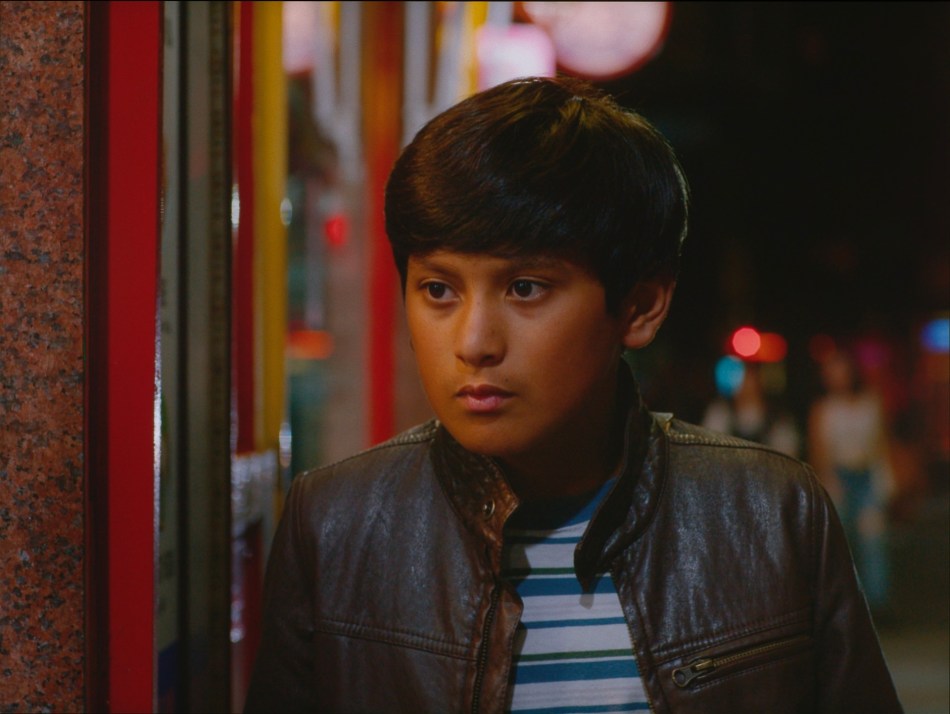
Whether the young protagonist actually goes on this journey full of mysterious encounters, budding sensual tension, and silent wonder remains one of the abstract narrative’s intentional riddles. Realism fades into the background as soon as Milo leaves his rural home. The latter is quite literally shaped by the rigorous rhythm of dance practice under the eyes of his strict father. Stripped of any element of free expression and spontaneity, music and movement are turned into an almost militaristic exercise. When Milo’s father advises him to just act without thinking, this underscores the mind-numbing authoritarianism, harking back to Argentina’s repressive past. Milo’s escape to the capital frees not only him, but the narrative form.
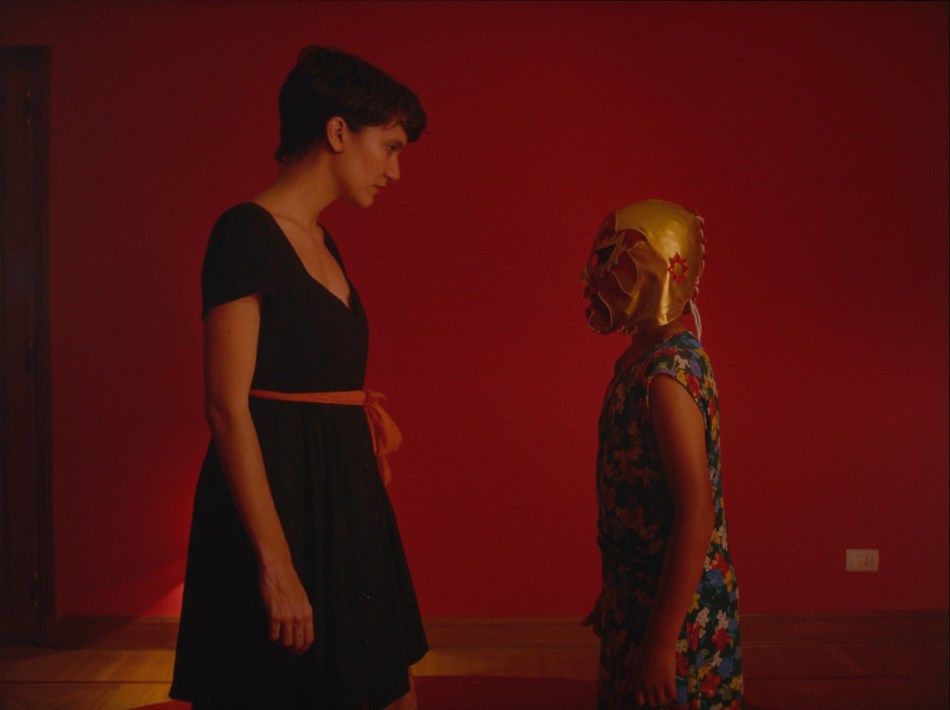
With little dialogue and limited visual exposition, his urban odyssey leaves the audience with the same curiosity and confusion Milo feels. His solitude and longing for connection lead him to a series of bizarre interludes, wavering between languidness and restlessness. In Buenos Aires, he encounters an eclectic set of characters, among them a struggling theater director and the professor (Rita Paul) who manages an audition for a theater show. Captivated by her colorful dress, Milo follows her to her apartment. When he puts on her dress and lucha libre mask, it’s a bizarre mix of fetish fantasy and childlike dress-up play. Even weirder is a football game with a saint-like figure wearing a crown of thorns.
Cinematographer Thomas Grinberg’s use of a boxy 4:3 frame, bold colors, and accent lighting turns the static shots into modernist paintings. Passing landscapes glimpsed through the moving train’s window seem almost too wide for the aspect ratio, while the confines of a train compartment become claustrophobic. These contrasting visual impressions underline the psychological counterpoints of his tour: tradition, repetition, and obedience on one side; on the other, progress—literally and figuratively—independence, and imagination. The titular train is an almost magical vehicle, an uncertain vector between youth and maturity, belonging and estrangement, home and the wider world. This uncanny ability to seamlessly move from naturalism to magic realism and absurdist comedy is certainly engaging.
Yet, these thematically rich and visually striking episodes never amount to a compelling arc or psychological insights beyond the protagonist’s obvious hunger for new experiences. Surplus symbolism undermines the emotional tension, and the characters are more personifications of social or structural concepts than individuals. Their interactions with Milo come out of nowhere and drift away, true to the story’s dreamlike structure, but dramatically detached. Still, The River Train possesses a rare imaginative confidence and aesthetic atmosphere. It’s a weird cinematic ride, much more interesting than so many predictable dramatic destinations.
Discover more from Cineccentric
Subscribe to get the latest posts sent to your email.
 Cineccentric
0 comments on “The River Train ★★★”