
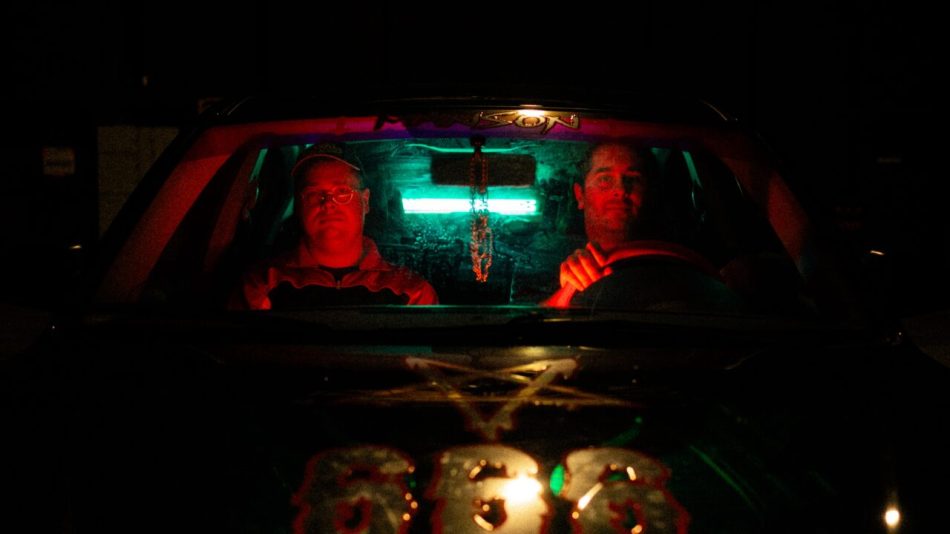
For those less into cars than the two tech-savvy heroes of Emil Langballe‘s unlikely underdog story: the Honda Civic is not exactly a rare nor especially remarkable car. Rather, the accessible vehicle popular with commuters is something like the gray suit of cars: perfectly normal, perfectly blending in. This perceived normalcy is exactly what one of the titular characters longs for. Being diagnosed with a number of challenging medical conditions makes being seen as normal an almost unachievable task for Martin. A pudgy guy with glasses, he seems like the quintessential nerd; the typical side character in movies who’s there to be made fun of. Not so in Langballe’s affectionate story of cars and camaraderie.
With his best friend Caspar, whose mullet and vintage leather jacket turn him into the perfect buddy movie sidekick, Martin spends his days driving around the Danish countryside in search of a Honda Civic, preferably used to be more affordable, and the 1994 edition incarnating Martin’s dream of normality. If you see it, you can be it – or so he believes. Caspar is determined to help him get behind the wheel and steer his lackluster life in a brighter direction. As someone who justifiably feels excluded from ordinary social life, Martin finds a tiny safe space in a car, which for him is more than a material asset or mode of transportation. It’s a wheeled world, the intricate mechanics of which he understands in every detail.
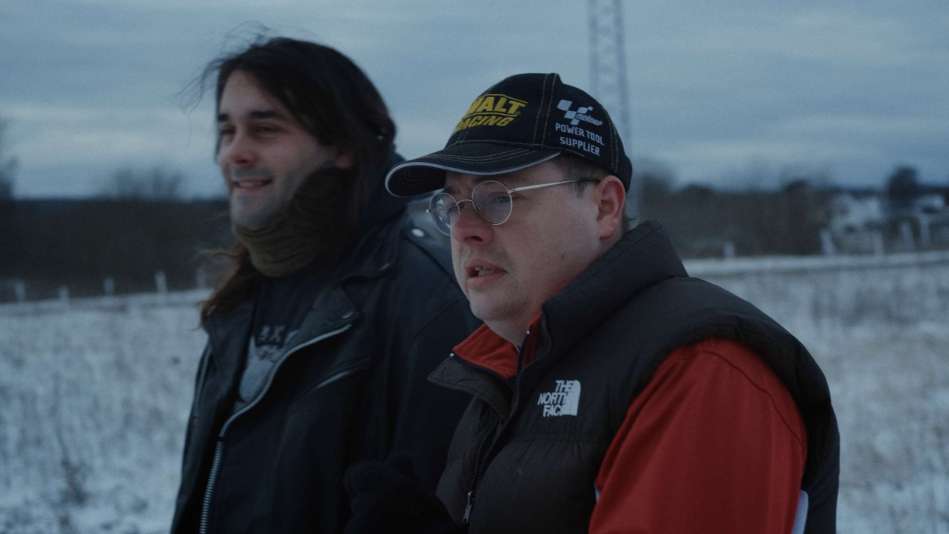
The director’s comradely camera takes on the protective perspective of an older brother, which the director is to Martin in real life. This increased level of familial trust contributes to a special layer of intimacy. Observing both with tenderness and trust, Langballe takes the passenger’s seat to his Petrolheads, whose car-themed conversations underline long drives through the Danish countryside and relaxed domestic moments. During one of the latter, Martin reluctantly reveals he’s been the victim of identity theft, a dilemma threatening to destroy his goal, just like a dangerous accident. Unplanned events like these support both the classic buddy movie and road movie structures wherein a pair of pals overcomes all kinds of obstacles to ultimately—and often predictably—achieve their destination.
For the Petrolheads, however, success is never that certain. A shared trip to a used-car dealer in Germany seems the road to success for the friends, but soon enough, harsh realities get in the way. Much to the unpretentious story’s advantage, Langballe is never so naive as to pretend being seen as normal wouldn’t matter in today’s society and everyone could just embrace their unique being. For how should they if the people around them are far from embracing it? Like a documentary diary, the narrative moves through ups and downs, making the friendships its emotional anchor rather than the car. With its muted colors and patient shots, the cinematography finds a strange beauty in industrial outskirts and garages stuffed with modified car parts.
These spaces reflect the protagonists’ slightly disheveled and melancholic mental landscapes. Still, the drab aesthetic and measured editing can occasionally test viewers’ patience. In its awkward sentimental moments, this tale of horsepower and late-night drives comes dangerously close to being just another inspirational story. It’s saved by the scenario’s willingness to accept the main characters’ personal contradictions. They can be funny and foolish, overly cautious and reckless, but always caring for each other. As a symbol of autonomy and acceptance, the Honda Civic becomes something larger than a motorized MacGuffin. In the same way, Petrolheads manages to turn its auto adventure into a warmhearted account of the delicate construction of human connections.
Discover more from Cineccentric
Subscribe to get the latest posts sent to your email.
 Cineccentric
0 comments on “Petrolheads (documentary) ★★½”