
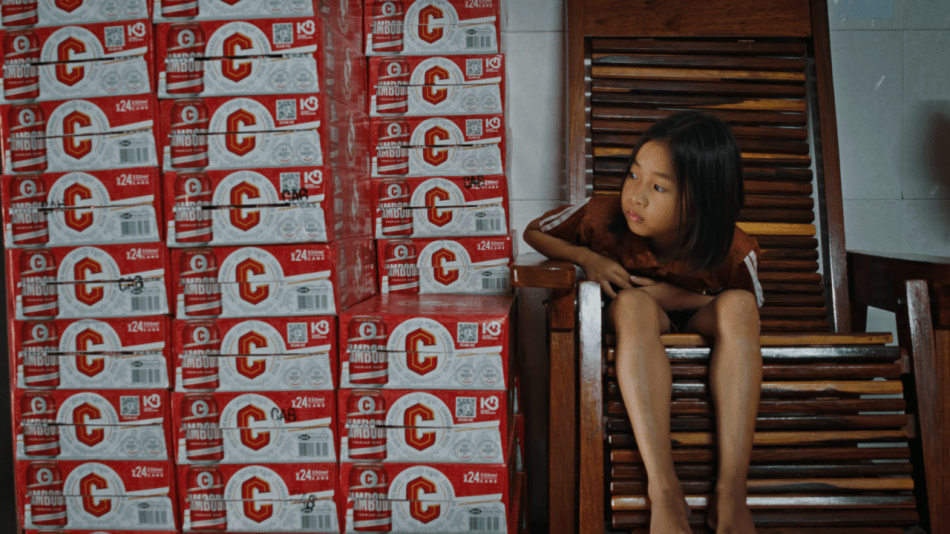
“There are so many beer advertisements that you can’t even see the road signs,” says Cambodian activist Kim Eng in Laurits Nansen‘s unmasking documentary Cambodian Beer Dreams, premiering in the F:ACT section of Copenhagen’s CPH:DOX festival. A lone campaigner against alcohol overconsumption in a country with no regulations whatsoever regarding high-percentage drinks, Eng isn’t exaggerating. Huge billboards, from big breweries like Heineken and Carlsberg to smaller local brands, beckon to drivers and passersby, literally signposting the nation’s serious problem with alcohol. Eng’s comment becomes an unfortunate metaphor for a country ignoring every warning sign in regard to alcohol abuse. The latter is alarmingly common among a population targeted with aggressive advertising and baited with prizes.
Win a brand-new scooter, a big car, or one of the many cash prizes with which a number of lucky winners fan themselves on a stage. The promoter hopping around them shouts to the audience that they, too, can be up there, enjoying the rewards of these so-called ring-pull games. All it takes to join is a beer. Customers look at the bottle cap or the underside of their beer can tab where numbers signify the prize. Accessible smaller prizes are free beers, which give you another chance at winning big. Those who don’t can drown their disappointment in the beverage they just purchased. Cynical as it seems, advertising slogans in this vein are not unusual.
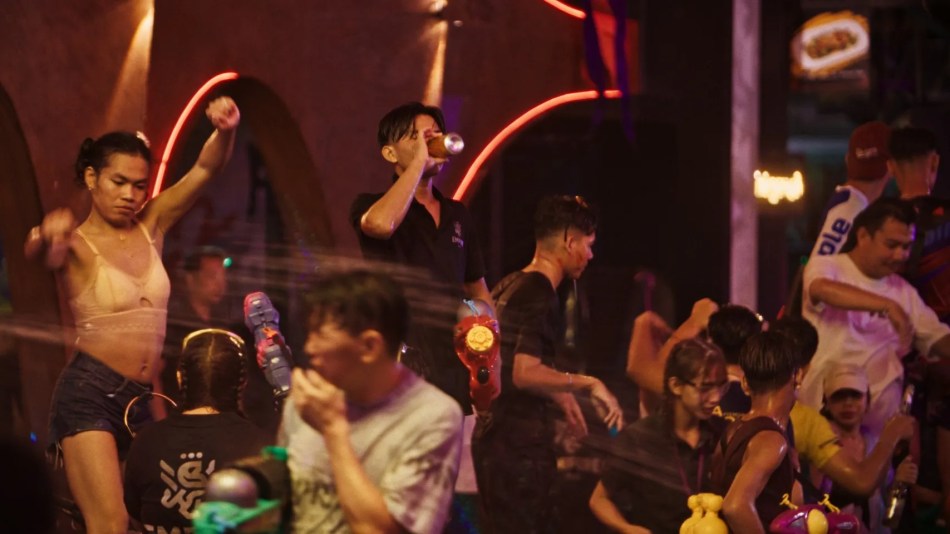
The handheld camera watches wide-eyed the loud raffles and countless independent street vendors among whom it’s a popular practice to advertise beer’s side effect of numbing sorrows. That this emotional ease is only temporary is usually not mentioned, just like the multiple problems which excessive alcohol consumption creates. Alcoholism, as well as methanol poisoning from home-brewed rice wine which is sold as a cheap substitute for beer, are on the rise since beer was reintroduced to Cambodia after the end of the Khmer Rouge. For a people traumatized by years of terror and genocide, alcohol became not only a symbol of collective joys and consumption ruthlessly repressed by the totalitarian regime, but a way to forget the gruesome past.
Affordable, accessible, and accepted, beer has become a popular drug, figuratively and literally. In the absence of a minimum legal drinking age, everyone is a target of the aggressive tactics employed by multinational and local breweries, competing for dominance over a market among the fastest-growing in Southeast Asia. Neocolonialism meets Wild West capitalism in a system resistant to reform. Many of the people see alcohol as an economic opportunity or depend on it on an existential level, like aspiring singers touring bars, street sellers, or “beer girls”. Young women in obligatory revealing outfits are hired by companies and venues to encourage the male clientele to buy drinks. Flirting is part of the job; rebuffing handsy customers is basically forbidden.
Nansen’s background in investigative journalism is evident in his meticulous attention to details, from advertising strategies to corporate influence to the promise of upward social mobility. This kaleidoscope of perspectives mirrors the subject matter’s complexity. Neon-lit beer advertisements dominating urban landscapes create a surreal visual saturation. Loud, crowded scenes of Phnom Penh’s busy nightlife convey the latent aggression palpable among an intoxicated majority. International corporations operating within the regulatory vacuum effectively reshape local consumption patterns and social norms. The bitter undertone of empathy mixed with dejection stems from the personal experience of the Danish director, whose father died from alcohol abuse. A sobering reminder of the issue’s international scale and the personal price of unchecked capitalist control.
Discover more from Cineccentric
Subscribe to get the latest posts sent to your email.
 Cineccentric
0 comments on “Cambodian Beer Dreams (documentary) ★★★”