
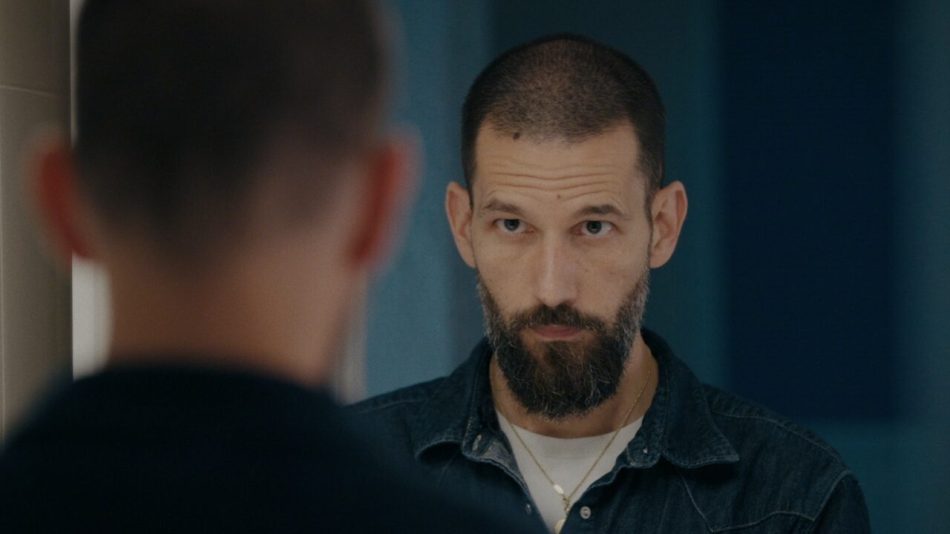
“It was the drugs,” wrote Marcel Wyss‘ brother in his last note before taking his own life. So it’s understandable that the Swiss director is at first hesitant to try the experimental treatment his personal documentary explores. But eventually, he gives in to his fears of the fears haunting him and also to a need for attention, as suggested by the self-centered nature of his chronicle, premiering at CPH:DOX in a number of sections—Brainwaves, Science, Special Premieres—as if the program coordinators didn’t quite know where to place it. Brainwaves is certainly a good choice, as this is also a real-life drama about the human brain and its reactions to lysergic acid diethylamide.
Commonly known as LSD, the substance was discovered in 1938 by Albert Hofmann, who tested it allegedly unintentionally five years later on himself. His experiences when riding home from work on his bicycle paved the way for the counterculture’s endorsement of the substance and the scientific term “psychedelic” entering standard vocabulary. Ideas to use LSD for therapeutic purposes are not new, but Nixon’s somewhat paranoid policies around drugs halted all medical research. In recent years these have been rediscovered, but, as psychiatrist Peter Gasser tells Wyss, medically prescribed LSD is for severe cases of PTSD and depression. But Wyss is dealing with thanatophobia, an acute irrational fear of death, since his brother passed.
Symptoms of this phobia are hypochondria, insomnia, and losing control, which a ton of therapies, from solo to couple with his then-wife, couldn’t cure. Luckily, at least for him, he is not afraid of sharing his rather mundane troubles with a major audience by filming his endeavors with psychotropic substances. These go rather slowly. Several years pass while he goes to Basel to try mescaline, meets a friend who microdoses mushrooms, and finally drops some acid with a bunch of other people and a guide before visiting the inevitable ayahuasca ceremony in Ecuador. All this is narrated by his own voice, which makes his near-omnipresence even more obstructive.
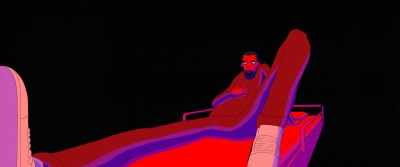
The narrative focus is so fixed on him that it leaves hardly any room for scientific insights. A lack of personal development makes this solipsism even more frustrating. Apart from the death of his brother, who struggled with heroin, there is nothing particularly dramatic about Wyss’s life. In fact, he appears to be quite privileged and his complaints are reminiscent of a post-mid-life crisis with his personal stakes akin to melodramatic scaffolding. This conformity is reflected in the conventional visuals which stick to plain exposition, apart from a few comic-style animated sequences by Lorenz Wunderle. While it laudably doesn’t sensationalize the use of drugs like LSD or shrooms, the egocentric essay also fails to reveal anything.
There are a few glimpses of Switzerland’s relatively progressive approach to psychedelic treatments but unfortunately no more detailed information. With its aura of self-indulgence and indecisive position on different forms of therapy, Open My Mind never lives up to its title. No minds are opened in the process; it seems not even that of Wyss, who remains plagued by his ailments. This could be an entertaining and mind-expanding journey – if it came with an actual tab of acid.
Discover more from Cineccentric
Subscribe to get the latest posts sent to your email.
 Cineccentric
0 comments on “Open My Mind (documentary) ★½”