
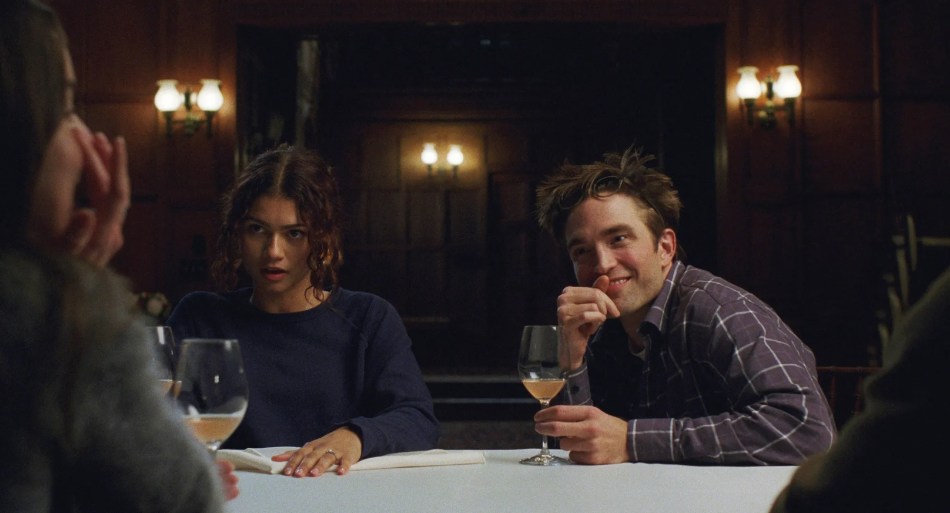
The Drama is about the drama that occurs after a surprising reveal in the days before a wedding. Writer and director Kristoffer Borgli’s The Drama is somewhat about this reveal – which is best left unspoiled and the exact nature will not be mentioned in this review – but it is more about the reaction to it from everyone in the social sphere of Emma (Zendaya). She is rather meek and gentle in life, confessing to maid of honor Rachel (Alana Haim) that her fiancé Charlie (Robert Pattinson) is both her first crush and first love. She is sweet and charming, almost innocent. Thus, when she is gathered with Rachel, Charlie’s best man and Rachel’s husband Mike (Mamoudou Athie), and Charlie for a food and wine tasting for the wedding menu, and confesses to almost committing a heinous act as a teenager, everybody is shocked. It is a hot button issue with plenty of sensitivity around it, while the reveal of her proximity to such an act shakes the foundation of her relationship with Charlie and with Rachel and Mike. A congenial evening turns antagonistic and hostile with everybody around Emma trying to make sense of this new information.
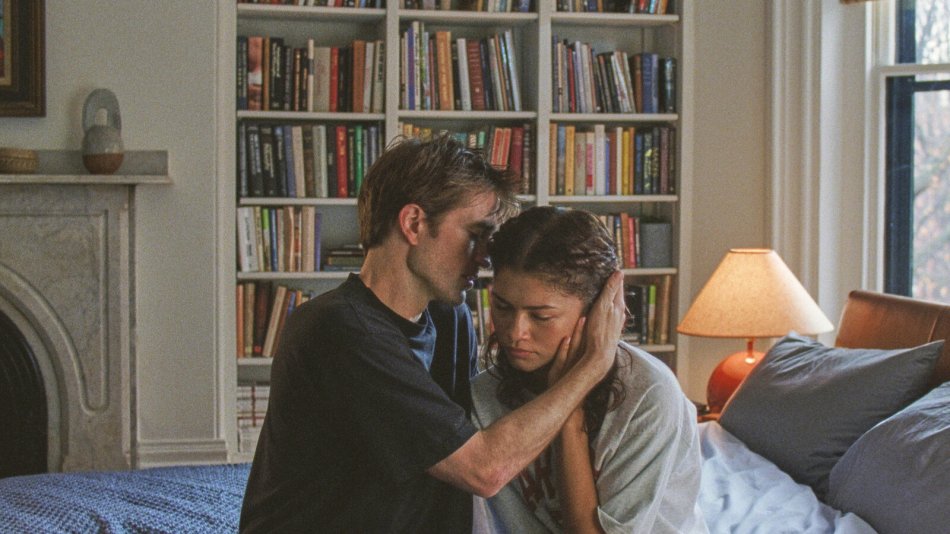
The Drama is complex. It is multi-layered and thought-provoking, all arising from this dinner table discussion. A postmodernist spin on the romantic dramedy, Borgli aims to deconstruct and analyze accepted social norms around this topic with elements of race, class, and gender, and a larger examination of modern romance and public perception. The reveal of Emma’s past thoughts and actions comes amidst a discussion of everyone’s “worst thing they have ever done.” It is something Mike and Rachel had shared with one another before their wedding and Rachel proposes the topic as a fun one for the group. What is immediately striking is how when Rachel, Mike, and then Charlie share their story, they downplay what they claim to have done. They rationalize it and try to laugh it off, couching it in logical loopholes and waving away their own guilt, despite their own personal “worst things” revealing plenty of genuine (potential) past character flaws. Once Emma reveals hers, their shock turns into anger and self-righteous indignation. How could she ever have thought about this? Emma has a shame and trepidation in even offering it up, knowing how it will be received. It is a deep, dark secret that she was not ready to have everybody know, but trusts these people and loves them, hoping that she will be accepted for everything she is now and not for the thoughts she once had.
Much of The Drama is built on self-image and public perception. One thinks of Borgli’s prior feature Dream Scenario in which a college professor Paul (Nicolas Cage) appears in everybody in the world’s dreams, often committing acts of violence and behaving abominably. That is not Paul, but it becomes how people perceive Paul and he must grapple with this shift in public perception from being an odd social phenomenon to being seen as a true villain. The same applies to The Drama. Charlie’s image of Emma has changed. Emma herself has not changed. Now, he has to grapple with this shift in perception. As Charlie learns about what happened to Emma, it becomes about himself. The inertia of his life is obvious. The wedding is about to occur and as much as he is torn on whether to proceed with it, he is overwhelmed with the thought that his family is flying in. His friends are coming. Everything is paid for. This wedding is happening and the thought of stopping it now is so much that he seeks to rationalize and come to terms with what Emma has confessed, while lacking much conviction or personal belief in the fact that the Emma he loves and would describe as “empathetic and kind” could have ever been this other person before she grew up. How he reacts to Emma’s reveal is rarely about her, more about himself, how he will be perceived for being married to someone that thought about this violent act, and how he will be perceived for calling off his wedding so suddenly. Whether Emma will accept him after all that he does and does not do for her in this moment, is a sub-question within The Drama, one largely left off-screen with Emma allowing him to work through his emotions, then going off on her own to confront her own shift in perception of Charlie (especially after he commits an offense that one would classify as his true new “worst thing”).
For Rachel, particularly, it is about looking morally superior. Her own confession is also violent in its own way, while murky enough in details that one wonders where the truth lies in how it turned out. However, once she learns about Emma’s past, she gets fixated on Emma now being a bad person, irredeemable, and contemptible. Rachel seeks to absolve herself of guilt for ever being around her and being Emma’s maid of honor, calling in her cousin who has previously experienced violence as a selfish means of exploiting her cousin’s past to forgive her own perceived Emma-related transgressions. Borgli holds a mirror up to society and the reflection is not a kind one. The Drama portrays our society as one filled with “glass houses” and people yearning to throw the first stone – even Emma is not innocent of hypocrisy here, seeking forgiveness for her own past then later caving to peer pressure to cast judgment on their wedding DJ Pauline (Sydney Lemmon) who she and Charlie may or may not have seen smoking heroin in the street – in order to be perceived as superior, more empathetic, and righteous, with some other person cast down as evil, inferior, and to be rejected for ever having such a personal failing.
In the tradition of producer Ari Aster’s often provocative works and Borgli’s own filmography, The Drama is a study of society, of our present culture, our relationship to violence and outrage, and our need to persecute instead of understanding our complex pasts and selves. The Drama is a film about shame and guilt, forgiveness or the lack thereof. In a true sense, The Drama is a purely romantic film. Can you accept the person you are about to marry entirely and without exception or are you not able to? With this reveal and later ones, there are no grand secrets between Emma and Charlie. As she tells Charlie, she was more attracted by the “aesthetics” of her near act then, when confronted with the reality, she shifted her perspective entirely and, essentially, matured in her views. Her feelings of ostracization, isolation, and loneliness, were so profound that it drove her teenage self to dark thoughts. Is this too much to accept? Is she being entirely truthful? As Charlie himself will note, this highly violent act is a common one in modern society. If so many have been committed, how many others have merely been thought about or planned but not acted upon? How are the people who just thought about it to be treated by society for these thought crimes? It is a fascinating moral dilemma, one that Borgli richly and thoughtfully presents. There are no easy answers and, for the audience, we are left to mull not only how we would respond to this specific admission, but to what this response reveals about ourselves. By the end of The Drama, both Emma and Charlie have immense character flaws in their past, ones they may have grown past or may have not. Can they look at one another with eyes anew and understanding, move past it and start over, or will this be the end? It is fascinating and endearing, particularly in a closing sequence in a diner that gets one swooning at the charm of Zendaya and Pattinson on screen together with their energies mixing together in a wonderfully realistic and powerful portrayal of the vulnerability of love.
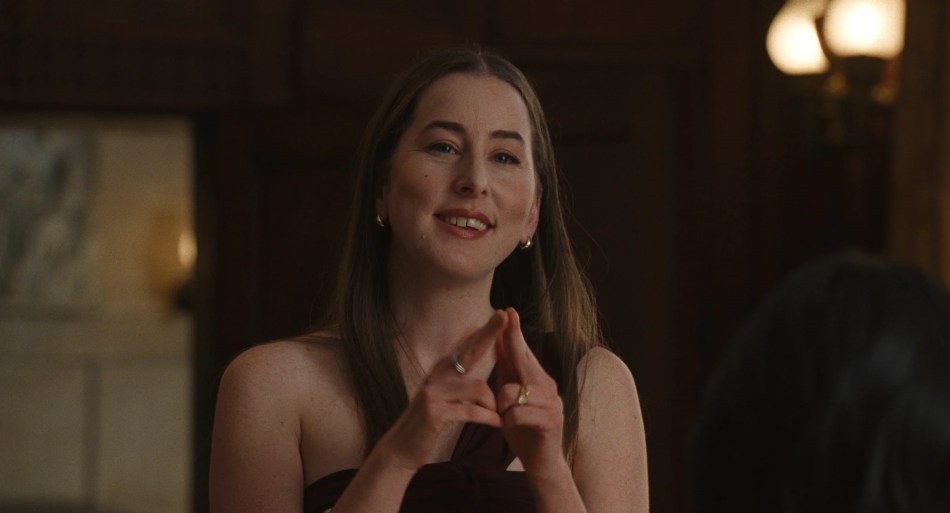
As it explores all of these complex sociological and psychological themes, The Drama is wildly funny. The editing of Joshua Raymond Lee is excellent, crucial in punctuating The Drama’s awkward, often cringe comedy. A cut from the reveal by Emma and her discussion with Charlie about it to a meeting with their photographer Frances (Zoë Winters) is particularly hysterical with a smash cut to the conversation and quick cuts throughout as Frances uses a word that now has a triggering nature for the couple. The editing frequently adds to the seat-squirming nature of The Drama, while Borgli leans on his own tricks from Dream Scenario with plenty of unsettling, oddly hysterical, and emotionally stirring dream sequences intercut with reality that blurs the line between the two a bit. Borgli writes a wonderfully comedic script with plenty of wry deadpan and cringe comedy, turning The Drama into a sharp comedy of manners. Even scenes around the past violent thoughts and actions, shown in flashback, are incredibly funny with some little technological and punchy jabs about its patent absurdity that work wonders (Jordyn Curet shines as young Emma in her delivery and demeanor).
Terrific performances across the board are a further asset. Pattinson has the right chaotic nature to his performance, genuinely earning empathy at times as he pores over this sudden reveal dropped into his lap. Borgli does well drawing us into his mind both in those daydream sequences and in surrounding him with imagery that evokes Emma’s reveal. He is losing his grip with reality, driven mad with uncertainty and disquiet, all while the audience is around for every beat and Pattinson sells every big swing of anxious energy. Zendaya captures a quiet grace to Emma, a kindness that is immediately evident and a charm that shines on screen with Pattinson. Alana Haim often steals the show, standing as an audience surrogate of sorts (though, by the end, many audience members will undoubtedly deny they have ever agreed with her in the first place) then turning into a hateful adversary of judgment and self-righteousness. Rachel is a very complex character in her own right, a mess of hypocrisy and contradictions that she herself is likely aware of and riddled with guilt about, all of which Haim exudes in her falsely self-assured demeanor and often revealing public gaffs (especially in a scene with Mike and Charlie where she makes some inaccurate assumptions about Mike’s childhood or in her cringe-inducing mean girl wedding speech). Haim is terrific, providing the exact opposite energy of Zendaya and adding to The Drama’s thematic depth.
The Drama is uncomfortable and provocative. Kristoffer Borgli aims to make the audience squirm and feel unsettled. The Drama aims to challenge and to have the viewer be left thinking not just “what would I do” but “why do I feel the way I do.” Borgli has crafted a wonderfully thought provoking work, while also delivering one of the funniest romantic comedies released in years with two wildly charismatic and charming lead actors with great chemistry together working through a complex set of relationship issues with no easy or inexpensive answers. Sharp, awkward, and exciting, The Drama is a richly textured film that only grows in stature as one sits with its many layers, emotions, and ideas.
Discover more from Cineccentric
Subscribe to get the latest posts sent to your email.
 Cineccentric
0 comments on “The Drama ★★★½”