
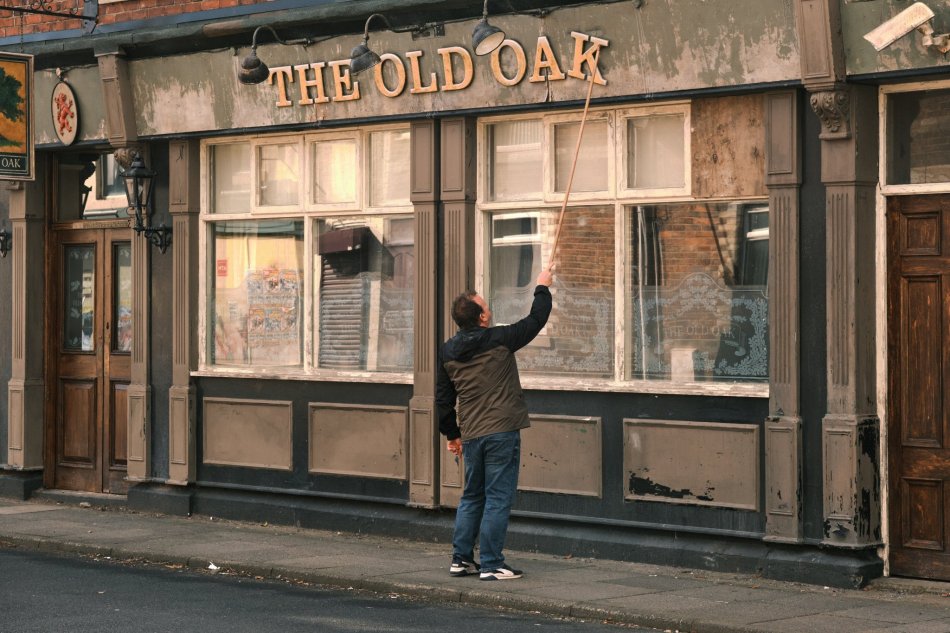
The conclusion of a life’s work is a sobering thought, and that sentiment sets the tone for Ken Loach’s self-proclaimed final film The Old Oak. The residents of a former mining community in County Durham feel disheartened about the direction their village has taken over the years, and one by one businesses have closed and left. Private companies have purchased real estate for pennies on the dollar, and the village’s residents bemoan their circumstances at The Old Oak, a pub managed by TJ Ballantyne (Dave Turner) and one of the last places open for the villagers to gather. The Old Oak begins not there, however, but in the street as a bus transports a family of Syrian refugees into the village. Their arrival was unannounced, and you can imagine the friction that immediately occurs – how can the village support an additional family when they are ill-equipped to help themselves?
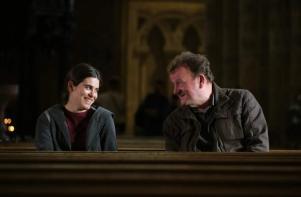 The Syrian family – Yara (Ebla Mari), her mother, and her younger siblings – do their best to assimilate, but do not receive grace or kindness from most of the village. They are talked about disfavorably behind their backs and these talks move to whispers as the family is nearby. Walking into The Old Oak “like she owned the place” (Yara entered via the front door to speak with TJ), one woman is critical of Yara’s mere presence. We also hear “I’m not racist, but…” and you can guess the kind of comment that follows. Many of the pubgoers scapegoat Yara and her family for their troubles; the refugees are present but the powers that be that should be the subjects of derision are not. Only TJ is welcoming to Yara and her family, but this comes at a cost to TJ who is harassed for his kindness and his regulars threaten to boycott The Old Oak.
As we come to know TJ, we see a man who carries the weight of personal and community tragedy on his shoulders. It is from these hardships that TJ has forged a heart of gold, but he lacks the know-how of how to reverse the course of his village’s decline. Only after meeting Yara and having discussions with her does he regain confidence and inspiration from hearing the stories of her family and their perseverance through life under the Assad regime. Loach’s continued collaboration with screenwriter Paul Laverty continues to show its strength through naturalistic dialogue in The Old Oak.
After TJ experiences a personal loss, Yara and her mom visit and offer TJ food and their company. This act of kindness has a twofold impact – for TJ, it inspires him to renovate the back room of the pub to provide free meals to children in their village, and for us, Loach emphasizes the human condition: everyone enjoys food and everyone experiences loss. The Old Oak proposes that this can be sufficient to bring people together in solidarity and peel back contempt.
Despite its English setting and its depiction of the European refugee crisis, The Old Oak is very relevant to international audiences. Anyone in their 20s has seen the gradual reduction of third places that the residents of County Durham have seen, and prospective renters and homebuyers are keenly aware of privately-owned real estate driving prices skywards. Loach has made The Old Oak a universal story while injecting his auteur sensibilities into the film, such as his commentary on filmmaking through Yara’s passion for photography, her camera a gift from her father. Yara tells TJ that the camera allows her to choose how she views her life, which is a powerful and defiant statement given the hardships she has faced.
At its core, The Old Oak is optimistic about our ability to resist forming prejudices and acting on ill intent towards others who are less familiar to us. Loach’s final note to cinema audiences is a reminder that hatred is a choice, and that it can be countered through shared experiences that form empathy.
Discover more from Cineccentric
Subscribe to get the latest posts sent to your email.
 Cineccentric
Great review! I enjoyed The Old Oak, like you say, it’s not just relevant to the UK, but for a lot of audiences internationally at the moment. Show’s how far one act of kindness, no matter how small, can impact the lives around us.
LikeLike