
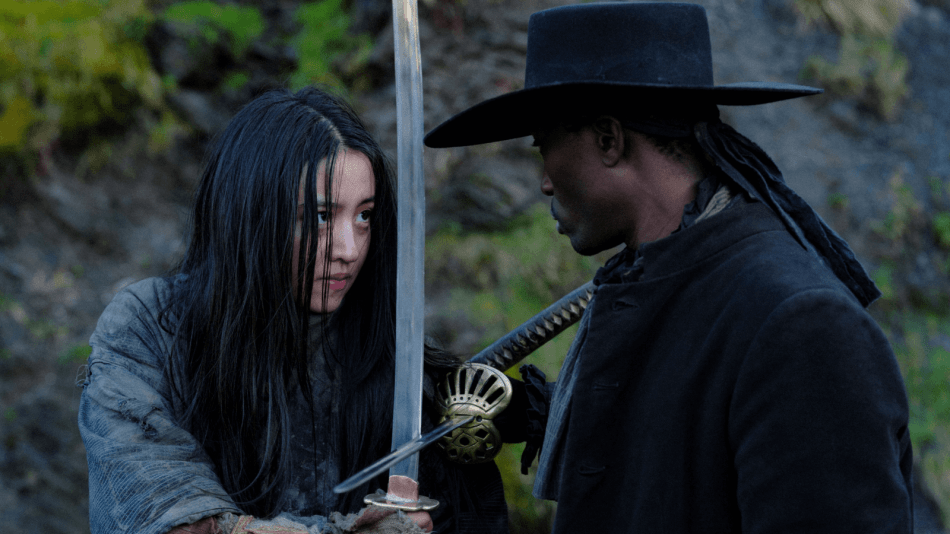
It is hard to believe that it has been 10 years since writer/director John Maclean’s debut feature film Slow West. It was a great debut, a classically-inclined and poetic Western that heralded Maclean as a name to watch in the coming years. However, it was not until the recently released Tornado that Maclean would helm a new feature film. It may have been a long wait, but it was well worth it with Tornado delivering another impressive, refined, and thrilling experience. Though it has plenty in common with a classic Western, Tornado is not set in the American West. Rather, it finds itself on a windswept British isle where a ruthless criminal named Sugarman (Tim Roth) lords over the isle and dare not be crossed. When he and his band of thieves, including his son Little Sugar (Jack Lowden), steal two bags of gold from the local church and then, in turn, have this gold stolen from them, they are in hot pursuit of those responsible.
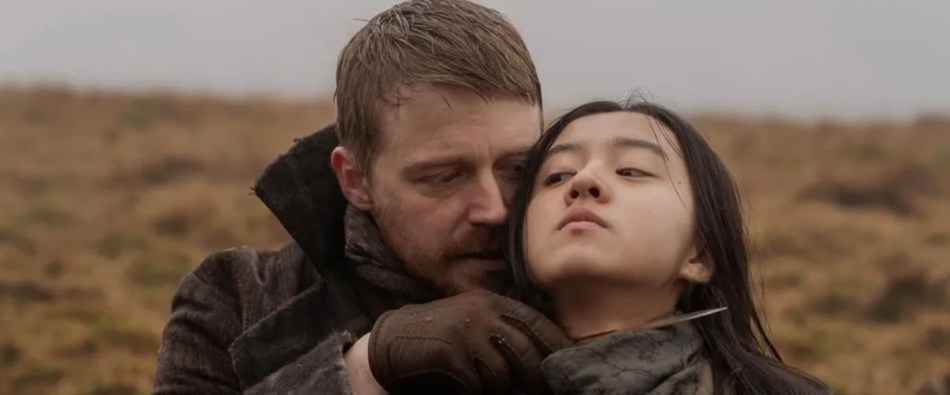
Tornado opens with young Tornado (Kōki) being pursued by Sugarman and his crew, charging her with having stolen their gold. She races through the forest, contending with the whipping wind and the rolling terrain to find an old English estate. Taking cover within its expansive layout, even the homeowners have no idea Tornado is there and when Sugarman’s men come knocking, they have no luck uncovering her… until Little Sugar hangs around just long enough for Tornado to come out of hiding. However, with designs of getting only his hands on the gold and to usurp his father’s tight and tyrannical control over his life, Little Sugar briefly lets Tornado go, believing he knows where the young girl will run off to next. Soon, Tornado will backtrack and show the scheme that did indeed deliver Sugarman’s gold to Tornado but also cost the life of her father Fujin (Takehiro Hira), with whom Tornado operated a traveling samurai show. As foretold in the show, this is a story of revenge with Tornado trying to secure both the gold and the annihilation of Sugarman’s gang for slaying her father. While she, at first, must run, she will soon be forced out into the open where she can put to use all of the samurai training she has received from Fujin.
With these gold thefts, a roving band of criminals, scenic and sweeping cinematography from Robbie Ryan, and a revenge plot, Tornado shares plenty in common with the classic American Western even if it is a 1790s British-set work. Blending this feeling and thematic focus with the traits of a classic samurai film, it plays like a combination of John Ford with Akira Kurosawa or, something like Terence Young’s spaghetti Western Red Sun with Toshirō Mifune as a samurai in the old west. The explosive violence created by a sword-wielding dynamo like Tornado could further draw comparisons to films like Lady Snowblood or Kill Bill. Armed with these influences, Maclean creates an elegiac and, as with his prior film Slow West, poetic work. It is a film that hangs on the air, floating and finding harmony in the slice of a sword and in the thrill of a chase. It is a film about parenthood and what children learn with Sugarman’s violence begetting more violence from Little Sugar, while Tornado’s early scenes are marked with her youthful insolence and her later are marked by the grace, poise, and character taught to her by Fujin.
What really helps Tornado throughout is how alive it all feels. Wherever Sugarman goes, his reputation precedes him. Maclean never wastes time with exposition laying out who he was or how everyone around the area knows him. They just know him. He seems to have a history with everyone and whenever he is around, they only feel safe enough to peek through windows behind locked doors to see what he is doing and to pray that he leaves them alone. Tim Roth captures this wicked energy wonderfully, delivering the most evil lines with such casual indifference that one sees the darkness in his soul seeping out at every moment. In Fujin and Tornado’s samurai show, they have an evil samurai that, in the opening, is revealed to have killed a man’s family for the “most evil reason: no reason at all,” a precursor for some of the actions that Sugarman and, especially, his crew will inflict. There is a randomness to the violence in Tornado, a common trait of many Westerns where unruly and devilish men cause havoc for the sake of it, with ruins always seemingly left in Sugarman’s path. And yet, he is not comically evil. He commits these acts for no reason and yet, with some of his crew, there is tenderness. There is an understated humanity in his final encounter with Little Sugar and, later, with Tornado. He seems to have respected Fujin even if their paths crossed in a violent stand-off. It is a fascinating character and one that Roth gives such a magnificent aura that it makes him hard to look away from.
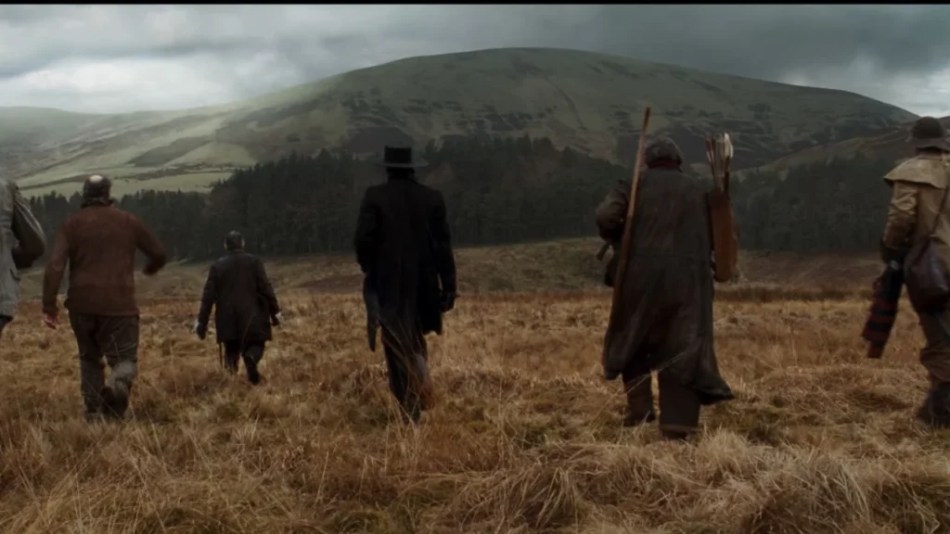
Maclean adds to this with startling action and gorgeous visuals. The juxtaposition of Robbie Ryan’s sweeping vistas, brilliant long shots, and stunning silhouettes with the generally muted and downcast color palette sets the tone visually. Tornado is in peril from the very first moment to the last, caught up in fighting for vengeance for her father and for a little boy who also stole the gold with her. The action is often cartoonish and over-the-top – especially one encounter between Tornado and two of Sugarman’s henchmen on a mountainside – with blood spurting and body parts slicing off. Even the traveling samurai show has it with startling blood effects on little puppets. It is a film capable of so much beauty and grace, but it never shies away from the brutality of its world. It is like the shimmering beauty of a sword that is unsheathed and lathered in blood. It makes for a haunting mood, matching its classic Western and samurai action with the poignancy and tone of its artistic influences.
It has been a long ten years waiting for John Maclean’s next film and Tornado was well worth the wait. Fitting nicely alongside Slow West in his filmography and offering impressive work from star Kōki as the titular Tornado and a devilishly brilliant Tim Roth as her antagonist, Tornado is an enrapturing and beautiful film. Drawing inspiration from countless Westerns, samurai films, and even period dramas, it is an artful and often stirring work with great cinematography and strong direction from Maclean. The only hope with Tornado is that we will not need to wait so long for Maclean’s next film.
Discover more from Cineccentric
Subscribe to get the latest posts sent to your email.


0 comments on “Tornado ★★★”