
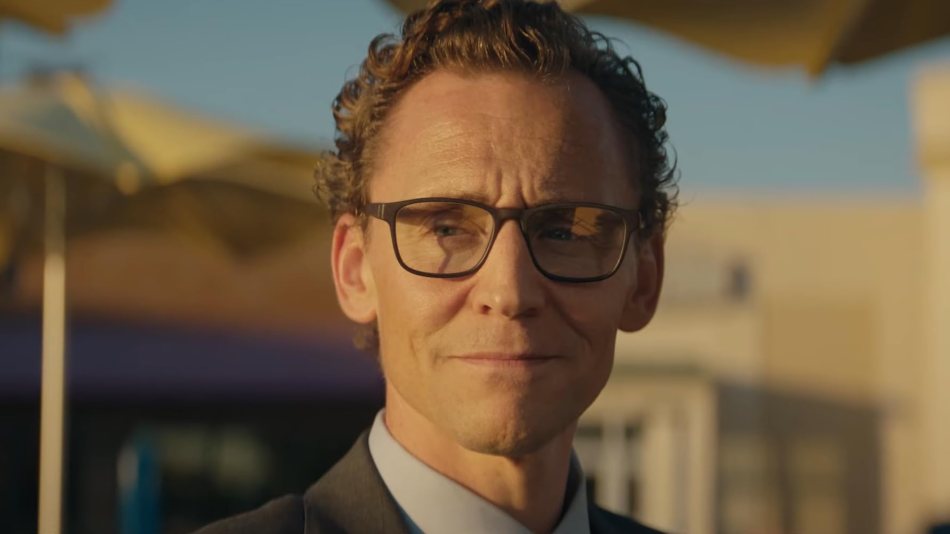
The Life of Chuck wears its heart on its sleeve. It is a celebration of life and everything that makes up one’s world. It marvels at the minutiae and the spark in simply living. Unabashedly sentimental, it is a film that takes viewers on a special journey. At first, it is undeniably strange. It opens with Act Three, entitled “Thanks, Chuck!” It is a science fiction focused chapter, finding a world on the brink of annihilation, all while billboards, commercials, and more – all with an increasingly threatening aura – fill the world with the simple message, “Charles Krantz. 39 Great Years! Thanks, Chuck!” Who is Charles Krantz (Tom Hiddleston)? None of the characters know and what is more, natural disasters are occurring all over and the internet is down with the end of days seemingly here. What is this all about? Where is The Life of Chuck going? It is a journey best taken as blind as possible, but it is one worth embarking upon with director Mike Flanagan’s sweet, wonderful, and contagiously enjoyable film standing as a truly unique experience.
There are elements that feel evocative of other films. The Life of Chuck tells the story of Charles Krantz in reverse, though it is non-linear rather than the linear aging-in-reverse story of The Curious Case of Benjamin Button. Its opening chapter feels like a bewildering The Truman Show, except where nobody knows who Truman is and the surrealist world it inhabits could even be compared to a film like Synecdoche, New York. Its pursuit of the meaning of life with a startlingly stirring celebration of its wonders, while diving into the past, present, and future of everything in a person’s universe evokes feelings of The Tree of Life. In one particularly fantastical story element and its sometimes whimsical storytelling, one can see Tim Burton’s Big Fish. Tonally, this may be the closest comparison I can think of with the two approaching heavy subjects with a light-hearted nature that keeps the film somewhat upbeat and optimistic in spite of its more emotionally devastating scenes. And yet, none of these comparisons quite capture The Life of Chuck. It feels wholly its own, even if indebted to the grandiose and wondrous approaches taken in those films.
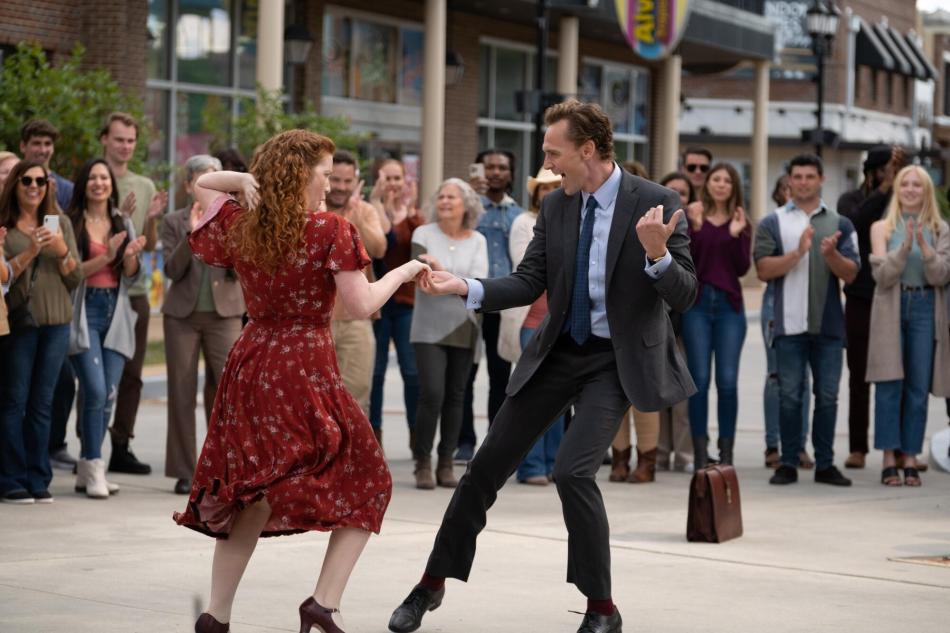
Flanagan has earned a reputation as one of the finest horror directors working today and with adaptations of Gerald’s Game and Doctor Sleep in his filmography, he has further established a cinematic connection with Stephen King. Here, he returns to King’s universe again in adapting a short story from King’s recent novella If It Bleeds, but The Life of Chuck is no horror story. It is a story about life itself, the moments, perceptions, and beliefs that come to make up one’s existence. It is, on the surface, an unexceptional story. Charles Krantz is a simple man. He is an accountant. He is married and has a son. As a boy, he suffered a tremendous loss with his parents dying in an accident, leading to him being raised by his grandparents, Albie (Mark Hamill) and Sarah (Mia Sara). He likes to dance, as his grandmother taught him how and it reminds him of her. It is a story of Charles, but it is a story of everyone. It is simply life itself committed to screen, complete in its familiarity and mundanity but with genuine awe at the inherent magic of life. Maybe it is basking in the glow of a fantastic evening, happening to walk outside as a comet passes in the night sky, or losing oneself in a moment and doing something completely unexpected. These moments are all special, because we are all special. The Life of Chuck, as one might expect with a brilliant dance scene in “Act Two – Buskers Forever”, has a lot in common with classic musicals. Flanagan directly references some with a clip from the Gene Kelly and Rita Hayworth vehicle Cover Girl playing on a few occasions. Like a great musical, The Life of Chuck turns life into a beautiful burst of energy with sparkling colors and an internal glow that transports the audience into Chuck’s world.
The Life of Chuck, in trying to condense itself and its novella into something cinematic relies heavily on narration, delivered by Nick Offerman. Characters’ inner thoughts are spelled out and details, like the type of shoes Charles is wearing, are given extensive and flowery explanation. True to Flanagan’s filmography, there are plenty of monologues musing about life and its many elements. These are often the film’s greatest drawbacks with the film too often hung up on characters spelling out every emotion and idea they have, which both brings the film to a halt and is a bit too on-the-nose. In general, The Life of Chuck is a disarming film with its unconventional structure and a story in its first act that makes no sense at first. Thus, its reliance on heavy narration is understandable but it is not always necessary. However, how Flanagan connects and unravels all of those events in the following two acts, where that opening third act takes place, and what The Life of Chuck has to offer in its examination of existence, makes it an incredibly powerful and emotional ride. Even if its dialogue can be stiff, it does find comedy in it and its slice-of-life events. It is perhaps even too saccharine for its own good at times and yet, it is so human and authentic – a la Boyhood – that most of its indulgences can be forgiven with its sweeping emotion so complete that it works, flaws and all.
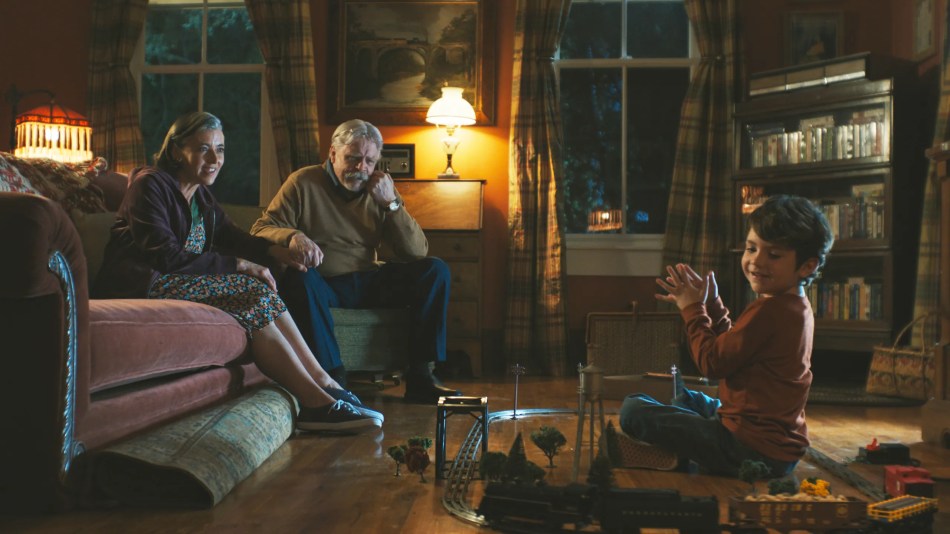
The mise en scène is consistently impressive. The surreal world of Act Three is given great detail with this small town, its ghostly and dimly lit hospital, and the final scene in an idyllic neighborhood turned nightmarish all benefitting from terrific production design and effects. The magnificent dance choreography of Act Two, paired with the meticulous blocking of the approach of Chuck, Janice (Annalise Basso), and Taylor (Taylor Gordon), really makes the scene spark to life. The glowy visuals and high-key lighting used by cinematographer Eben Bolter turns an ordinary city center into a wonderland of emotion and energy. The Victorian home that Chuck lives in with his grandparents is filled with warmth. The dark interior, the heavy wood and busy backgrounds (loaded with books and trinkets), and the shining kitchen in which he learns to dance with his grandmother, are all filled with a nostalgic and inviting look that emphasizes the general love in the home. The dimly lit steps up to the ominous coupla, naturally, possesses a different energy with an ominous element captured in the low-angle framing and details like a lock on the door. The Life of Chuck, as a celebration of life, naturally feels alive and it is in every detail that Flanagan’s film exudes that energy.
Though The Life of Chuck is not perfect and its dense script is often a lead weight, its sweeping emotion, ambitious approach, and incredible warmth enables it to overcome its flaws and land as a unique and powerful experience. Mike Flanagan and Stephen King have already proven to be a perfect pairing in horror and, now, their shared sentimentality and awe at the small moments in life that come together to make up a person’s entire universe makes them again a perfect pairing for this story.
Discover more from Cineccentric
Subscribe to get the latest posts sent to your email.
 Cineccentric
0 comments on “The Life of Chuck ★★★”