
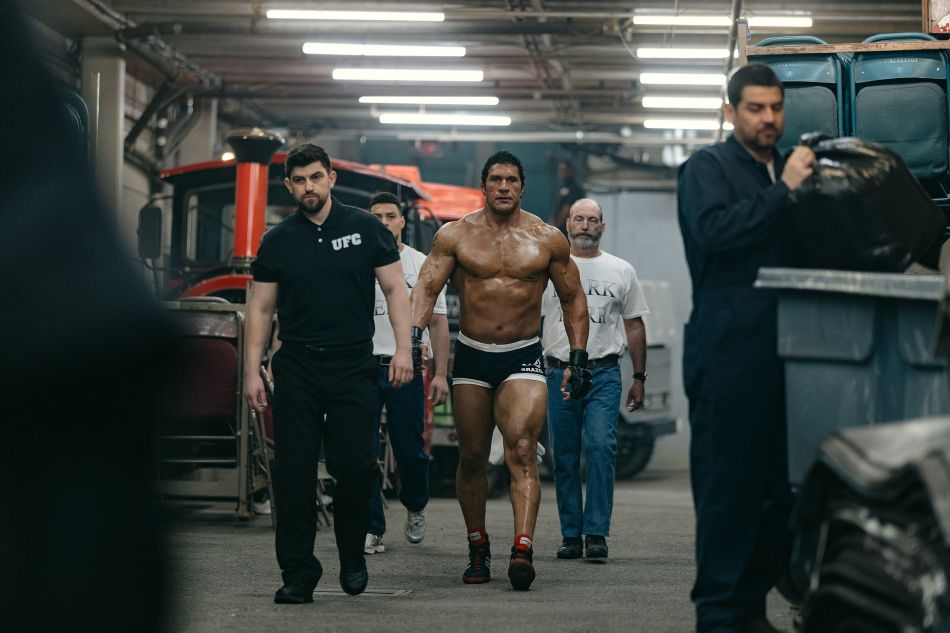
The solo directorial debut of Benny Safdie, The Smashing Machine comes with plenty of anticipation. With films like Good Time and Uncut Gems, the Safdie brothers were launched into being some of the most celebrated and anticipated young filmmakers working today. However, to follow up those successes, the brothers decided to go their separate ways with Benny directing this film and Josh directing the forthcoming Marty Supreme. It will be interesting to see how the two compare, though in seeing The Smashing Machine, the anxiety and heart-in-throat tension of the Safdie brothers most celebrated works are not found in this biopic of Mark Kerr (Dwayne Johnson). In its place is a surprisingly uninspired and flat telling of the early era mixed martial arts legend’s story, his friendship with fellow competitor Mark Coleman (Ryan Bader), and his tumultuous relationship with his girlfriend Dawn (Emily Blunt).
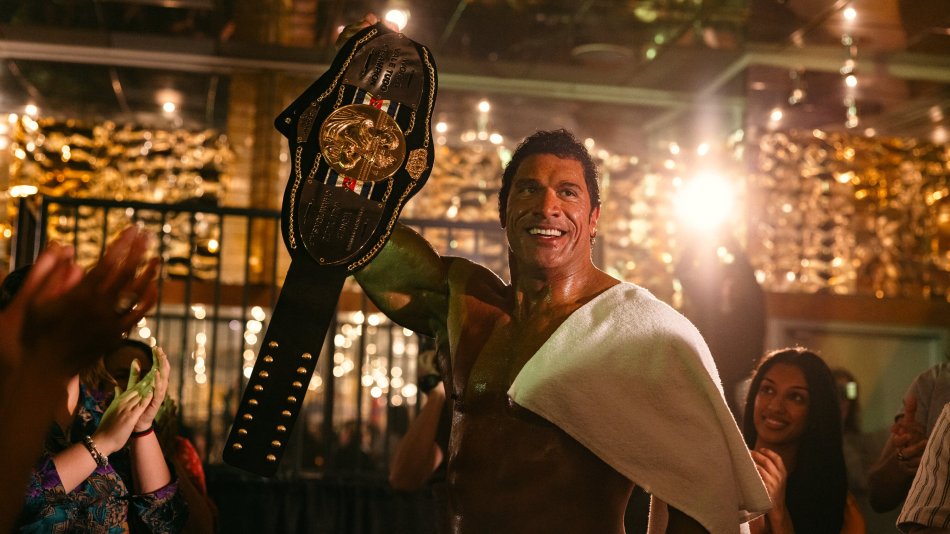
Safdie moves through 1997 to 2000 and there is a lot to cover in Kerr’s life. The aforementioned relationship issues and his friendship with Mark Coleman are main focuses, as are Kerr’s rise in fame, run of success (and some failure) in competition, and his struggles with drug addiction due to the overuse of pain medication. As it sounds, The Smashing Machine hardly rewrites the overall tropes of the biopic genre with it being another biopic about a moody and incredibly talented man who excels at his sport but struggles with everything else in his life. There is a documentary of the same name about Kerr’s life and, for the most part, one wonders if The Smashing Machine were not better off being left in that format with even Safdie and this wonderful cast unable to breathe new life into these tropes. Worse yet, The Smashing Machine feels choppy and undercooked. A key point of the film is to raise awareness for the early heroes of mixed martial arts. Yet, aside from Kerr, few see much screentime and even Coleman is given just a few brief scenes out of the fighting world before given a triumphant showcase in a big event that he wins. There is little-to-no emotional pull towards him with the character so underwritten that it feels distracting from the story’s larger focus on Mark Kerr and Dawn. Safdie relies heavily on obtrusive narration from the fight’s play-by-play announcer who holds the audience’s hands, explains the stakes, and tries to explain how the fighters are feeling at every moment in the lead up to the actual fight. Much of this is a failure of editing with The Smashing Machine feeling more akin to a highlight reel of the depicted events, never finding a flow that enables the audience to connect with the action on-screen.
Even in examining the tumultuous relationship Mark Kerr and Dawn have, The Smashing Machine struggles. It paints him as a moody manchild and Dawn is hardly given any room whatsoever to have her story explored. She is kept at arm’s length with references to her own struggles with late night partying being brought up, but never actually shown nor explored outside of the audience being flatly told about what is happening. Instead, The Smashing Machine shows Kerr and Dawn having the same fight over-and-over about how Kerr does not let Dawn in and how Kerr, especially once he is sober, does not feel like Dawn is supporting him properly. These scenes and many others – especially given the film’s reliance on showing Kerr or Coleman being interviewed before a fight – affords the characters little chance to express themselves in ways other than directly saying how they feel. It is a frustrating structure with this seemingly narrative film unable to unshackle itself from the confines and depth of the documentary it expands upon and was inspired by. Stiff dialogue does not help, especially when delivered by first-time actors like Ryan Bader who, whenever Coleman is called in to intervene in the latest fight at Kerr’s home or in the locker room, may be heartfelt but certainly lacks polish in his delivery and emotion.
However, The Smashing Machine is not entirely irredeemable. Maceo Bishop’s work as cinematographer is terrific. The use of grainy footage as though one is watching an old videotape in some of Mark Kerr’s earlier fights is a great touch, while Bishop’s tracking shot of Kerr as he storms out of the ring after his first ever loss is involving and packed with emotion. One feels the heat and intensity radiating off of him and the righteous indignation over faults committed by his opponent not being called as such. Johnson’s broad shoulders fill the screen in that scene and many others with the tight framing often affording a chance to see the many marks of battles with bruises and discolorations all over Mark Kerr’s body. The great make-up work is clear, as is the toll that this line of work has taken on him. As the film explores his addiction, struggles with sobriety, and attempts to quell the agony of his many injuries, these up close and personal looks at what has happened to him tells a story on their own. Any film about fighting should have great fight scenes and The Smashing Machine, mostly, delivers. One wishes they were longer with too much time dedicated to setting the stage and not enough actually in the action, but the bits of actual training and fighting in the film are good and suitably brutal. This is more a story about what happens out of the ring, but with how much of that action is determined by what happens inside of the ring, more time actually spent there instead of narrating about it all would have been appreciated.
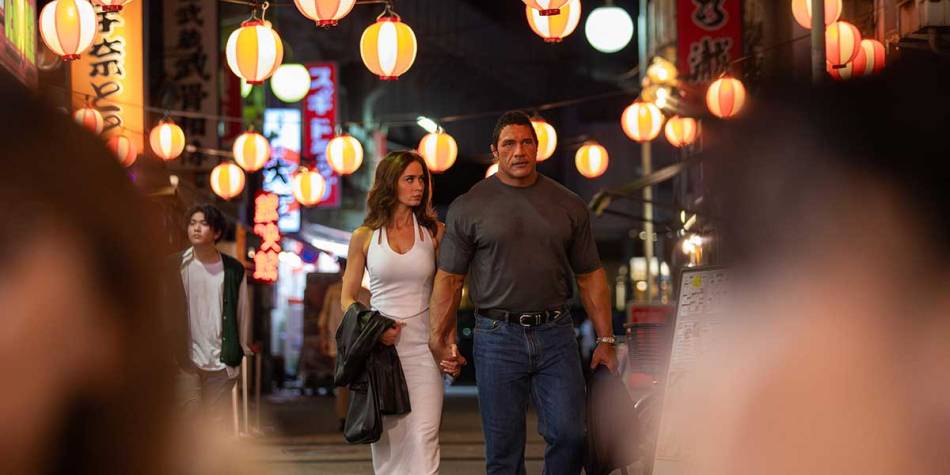
The acting by Dwayne Johnson and Emily Blunt is certainly the main draw to The Smashing Machine and both impress throughout. Blunt needs no introduction as one of the strongest actresses of today with Blunt again delivering an incredibly lived-in, raw, and immersive performance with great accent work and physicality to express the very passionate emotions bursting within Dawn. The Smashing Machine aims to draw neither Mark Kerr nor Dawn as wholly good or bad, instead showing the toxicity in their relationship that sets them on a course for mutual destruction. Blunt does well in garnering some empathy – though the story being framed, mostly, from Kerr’s perspective invites negative bias in her portrayal – in this situation, while also leaning in to Dawn’s poor impulses just enough to show the murky gray area the character operates within. Dwayne Johnson gives perhaps the best performance of his career, inhabiting the body and pain of Mark Kerr from beginning to end. His own background in the world of wrestling is, of course, a huge asset but Johnson particularly shines in the smaller, introspective, and emotional moments where Kerr is being interviewed or is simply sitting all on his own in the locker room. Johnson exudes the feeling of being unbeatable that radiates from Kerr in the beginning and the confusing mixture of emotions he feels once that illusion shattered. There is a lot of pure acting in expressing that emotion, plenty of little ticks and nuances in his delivery that Johnson really nails and it lends The Smashing Machine the gravitas it badly needs.
For Benny Safdie’s first solo directorial effort, The Smashing Machine is underwhelming. It lacks much of the juice and focus that his films with his brother Josh Safdie possessed with Benny seemingly trying to find his own voice as a solo filmmaker. Hopefully this will be a good jumping off point, but The Smashing Machine itself is an unfocused, undercooked, and disappointing film that benefits from great acting and cinematography but never fully realizes its potential.
Discover more from Cineccentric
Subscribe to get the latest posts sent to your email.
 Cineccentric
0 comments on “The Smashing Machine ★★”