
There are endless ways a movie can frustrate a viewer. In the case of Clint Bentley’s Train Dreams, it’s the frustration of watching a movie dance on the periphery of greatness but refuse to cross the line and do something truly remarkable.

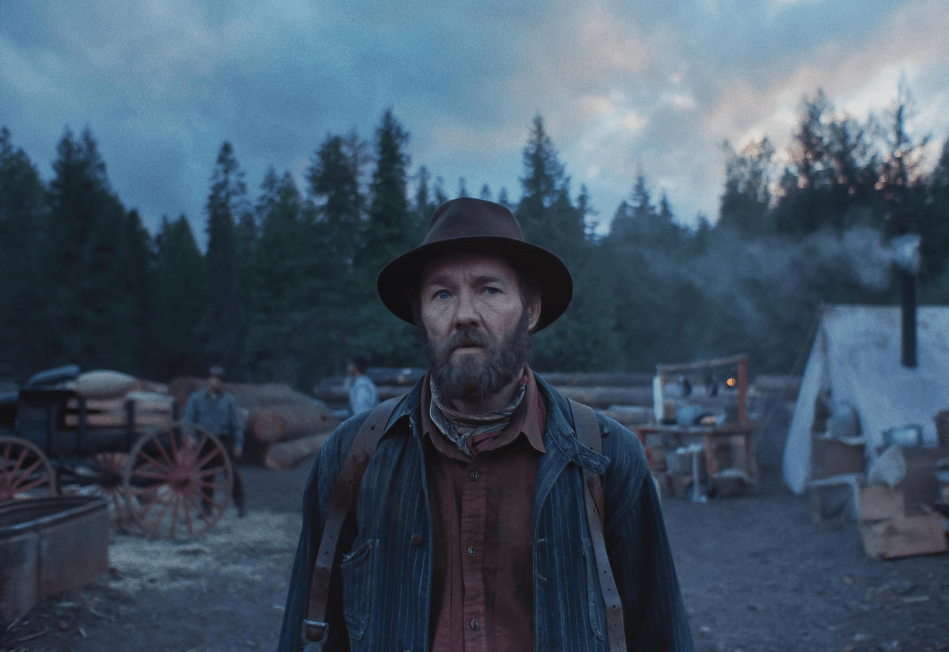
Train Dreams is without a doubt a gorgeous movie. Shot by the Brazilian cinematographer Adolpho Veloso (who worked on Bentley’s previous feature Jockey and is scheduled to lens M. Night Shyamalan’s next picture), it is at times breathtaking in its imagery. Part of the credit can go to the lush, ancient woodlands of Washington state, where the movie was shot. But Veloso and Bentley make the most of it, using the boxy 3:2 aspect ratio to compose painterly tableaus that often come to life and reveal new levels of detail as the camera either remains unmoving or slowly dollies out. I have no criticisms when it comes to how Train Dreams looks and moves along at its pleasantly deliberate pace.
But Train Dreams is an adaptation. And while there’s always some debate about how much you should judge such a movie against its source material versus how much it should simply be judged on its own merits — I can only watch the movie with the same eyes I used to read Denis Johnson’s novella and there’s no avoiding the fact that this adaptation has made a lot of choices that serve to strip the material of its most haunting, unique and impactful elements. Visually, it exceeds expectations. Story-wise, it’s a mixed bag.
The film’s basic outline is the same as the book. We’re charting the existence of one Robert Grainier (a wonderful Joel Edgerton), whose life essentially spans the first half of the twentieth century. He never knew his parents and works primarily as a logger in Idaho. He’s a quiet man who gets along with his coworkers but mostly keeps to himself. Grainier can listen patiently as one guy never stops talking, and is at peace with working alongside a guy for a month and never exchanging a single word. He knows he’s lucky that he has a loving wife (Felicity Jones) and daughter back home, and it isn’t easy spending long stretches of the year away from them. After all, it’s the kind of job where any day a tree or a branch can take an unexpected fall and, just like that, it’s all over. They call those falling branches “widow makers” for a reason.
Bentley’s film excels in capturing these scenes of men at work in the woods, but Train Dreams isn’t really a story about logging. More than anything else, it’s about a guy who’s forced to spend decades dealing with grief, of feeling cursed and yet finding a way to move through life while carrying those things that never leave you. Bentley’s movie captures the basic essence of what Johnson was writing about, and he even manages to relay the novella’s pace and structure (this is helped by Will Patton‘s narration — Patton recorded the audiobook and does a lovely job doling out passages of Johnson’s text from time to time). But somewhere along the way, Bentley’s Robert Grainier veers away from Johnson’s Robert Grainier, the story flattens out. It omits the darkest and the funniest parts of the book — what made the book special and memorable has been lost.
More to the point, Johnson’s tale — arguably the reason the story is being told — is leading up to one particular transcendent moment. It’s a moment that blurs the line between dreams and reality, between beauty and horror. And oddly enough, early on, the movie hints that it is where it will be taking us as well. It lays a good portion of the ground work, but then, for no discernible reason other than fear of upsetting a literal minded audience, it fails to deliver the goods. A more cynical critic might even suggest that it omits the stranger parts of Johnson’s book so as not to risk its Oscar chances. For in the end, all of the book’s unique and extreme moments are gone so that all can remain inoffensively sad and bittersweet.
Throughout it all, the one movie that kept coming to mind was The Straight Story. It may be because David Lynch has been on my mind a lot this year, but Train Dreams would have benefitted from someone like him, someone with the ability to not only showcase the lyrical beauty of the story, but also its humor, its darkness, its violence, its drunkenness, and, occasionally, its mind-bendingly horrific moments. Bentley’s film does the material a disservice by failing to capture all of these essential ingredients in Robert Grainier’s life — the ingredients that make the short story feel so full. In some cases, it can be applauded when a movie hits one tone and just sticks with it for the duration. In this case, it’s a shame.
It’s all the more frustrating because the actors are showing up to deliver memorable performances. I’m not sure Edgerton’s ever been better, and it’s been a while since Jones has had this kind of chance to shine. It’s also a pleasure to see William H. Macy pop up in a small but impactful role as Arn Peeples, an old timer in the logging game who specializes in explosives and telling crotchety tall tales. Where has Macy been for the past ten years? I’ve missed you, man.
Everyone is putting in good work here, and I wouldn’t say Train Dreams is a bad movie by any measure. In fact, I’d say that with 1999’s Jesus’ Son and Claire Denis’ triumphant Stars at Noon, the adaptations of Denis Johnson’s work are maintaining an overall winning streak. And compared to Frankenstein and Jay Kelley, Netflix’s two other prestige-y Oscar season films, I’d say Train Dreams is the best of the lot. I only wish it was willing to take some more chances and commit to the complexities of the material.
Discover more from Cineccentric
Subscribe to get the latest posts sent to your email.
 Cineccentric
0 comments on “Train Dreams ★★½”