

Joachim Trier’s Sentimental Value begins with narration about a home. It is the home of the Borg family and has been for generations. Like any home and any family, it carries with it its own unique set of quirks and secrets. It has witnessed multiple generations of the family inhabit its walls, it has seen World War II and the occupation by the Nazis, it has seen liberation and raucous parties, and it has seen family members come and go with death, fighting, laughter, and love all through the years. As the narration questions, does the home prefer being empty or full? This home is the foundation of the Borg’s. It is where they have come for so long and it is where they have experienced everything life has to offer. It is also where Gustav Borg (Stellan Skarsgård) will set his new film. This is the home where he was raised until his mother hung herself in the home. This is the home where he lived with his wife and two daughters, Nora (Renate Reinsve) and Agnes (Inga Ibsdotter Lilleaas) until he moved out after separating from their mother. This is the home where, after so many years of estrangement, he will walk back into their life at their mother’s funeral.
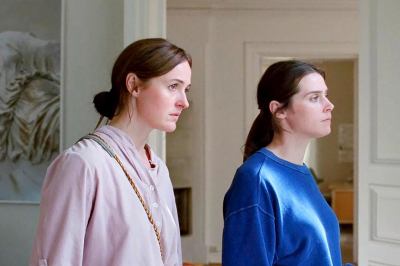
Sentimental Value is a remarkable film. It so easily distills life in all of its messiness and beauty. Trier builds it on numerous themes, most notably sisterhood, father-daughter relationships, loss and trauma, and artistic expression. As it explores Agnes and Nora’s current life – Agnes once acted in a film directed by her father but no longer acts and is now married with a son while Nora is a celebrated stage actress, previously attempted suicide, and is single though having an affair with a married man – and the fractured dynamic they have with their father Gustav, it is consistently poignant. For Gustav, this new film is one he wrote for Nora and is, as the sisters will discover, his way of trying to make amends. One of the best scenes in the film comes later on with Nora and Agnes talking. The two sisters share a cry over their childhood, of how safe Nora made Agnes feel, and how isolated Nora was in having to care for her sister with no one to care for her. It is a sweet and tender moment, a magnificently written and performed scene that exemplifies the often unspoken bond between the two. They have always been there for one another and, most of the time, they were the only ones there for each other.
And yet, even with their father gone, he seems to know about them. There are events in the script that Gustav was never there for, but nevertheless reflect lived moments in Nora’s life. This is a story of generational trauma, dating to the suicide of Gustav’s mother and her own torture at the hands of the Nazis for partaking in the Norwegian resistance. This is a story of traits and ways of understanding the world passed on from generation to generation. As Gustav says in a contentious living room scene between him and his daughters, he sees himself in them. This is not just a physical thing, but something deeper. They process the world in many of the same ways. Nora, especially, as an actor, sees and feels in much the same way that Gustav does. He is a man who struggles with his feelings and emotions, lacking much commitment in his daily life but able to create poetry with words and commit them to a page while having the vision to bring it to life. He bears his soul with the written word. Nora, though often suffering from considerable stage fright over her vulnerability and the depth of her feeling on stage, bears her soul for the audience every night she performs. They are themselves fully when they are working and expressing themselves artistically. They struggle day-to-day, alone with their thoughts and feelings. They are not easily understood by outsiders, and yet easily understood by one another even across the distance that separated them for many years.
Trier keeps the action often metatextual with Gustav, initially rebuffed by Nora who is incensed at him coming back into their lives, casting famed American actress Rachel Kemp (Elle Fanning) for the role that he wrote for Nora. Fanning is wonderful in the role, a glowing and expressive figure whose character is artistically fascinating. She is moved by the role, but she cannot understand it and it frustrates her. She sees this woman who is, in the climactic scene, going to kill herself in much the same way Gustav’s mother did, and does not understand what is going on behind her eyes. It is a role she can perform, but does not fit. Yet, she asks such interesting questions that it feels like Trier probing the audience for their own perceptions. This is a film that does not come out and express itself often, rather it relies on the audience to stare into the characters’ eyes and come away with an interpretation of what they are thinking and feeling. What is going on in this characters’ mind? What is the sadness that has gripped her soul? As we see Rachel work her way through the role, we see Nora moving through her life with much the same distance, sadness, and sorrow within her. We see Gustav moving through his life with the same feelings. We see, like Nora, Agnes trying to find out what is making Nora feel this way and trying, through all her might, to reach Nora across the emotional minefield that Nora has planted to keep those she loves at a distance. Nora nor Gustav are easy to understand, nor do they make themselves readily available to love. And yet, they are achingly human and marvelously rendered in Sentimental Value with Reinsve and Skarsgård capturing something truly soulful in their performances.
Despite its often heavy nature, Sentimental Value finds plenty of laughs and joy. Gustav can be quite charming and goofy. He is an older man out of step with the times. His night on the town with Rachel when they first meet shows so much of his vitality and impulsiveness. His gift to his young grandson of DVDs of The Piano Teacher and Irréversible among others should make plenty of cinephiles recoil and laugh in equal measure. Nora’s relationship with her nephew, too, is so joyful and delightful. Her laughter as she lays next to him and he declares his desire to marry her when he is grown up is so adorable and contagious. The two are so capable of these deep and passionate feelings, and it goes in both positive and negative directions but offers Sentimental Value the full array of feeling.
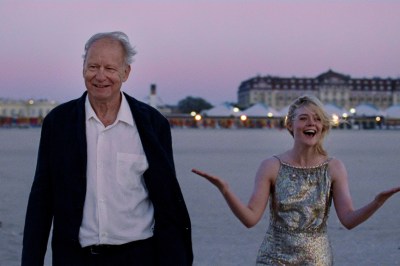
Like François Truffaut’s Day for Night, Trier finds fun in toying with the form and calling attention to filmmaking techniques with a keen self-reflexive nature. The film’s finale is described at first in its shooting technique by Gustav – “a oner” as Rachel says – and Sentimental Value will later end in exactly that shot with a single take before pulling out to show the Borg home turned into a classic film set on a soundstage. Trier freely mixes the film-within-the-film, the film itself, and Nora’s plays, together into a study of technique, of the process (Gustav financing his film with Netflix then recoiling at the notion of it not playing in theaters is perhaps too much of a sore spot for many cinema aficionados right now), and of artistry it takes to turn either a stage or a home into something else. It is a study of these characters and it is a celebration of art, the way it can move you and stir up deeply buried emotions and feelings for the world to see. In this, so many of its shots have considerable power. The close-ups cinematographer Kasper Tuxen uses, the long takes, and shots across a hallway down to a room carrying the weight of the death of Gustav’s mother in its tight frame. Everything about Sentimental Value feels alive and human, and the camera is our portal into their world with every shot carrying with it the immense weight of the years this family has spent in this home and together.
Joachim Trier’s Sentimental Value is a terrific work. It is deeply moving, funny, and stirring. It is a portrait of life as it is, as messy as it can be, and as complicated as it can be. It is a study of art, of the nakedness of bearing one’s soul in whatever medium they choose and of the techniques of replicating reality in a fictional world. It is self-reflexive and playful at times, calling attention to what it will do and nevertheless taking the audience into the film-within-the-film it creates with as much intensity, emotion, and passion that one feels for the baseline film. It is a story of art blurring the lines between reality and fiction, even as the fiction makes itself known, the feelings it elicits and its foundations are not fictional at all. Like generational trauma and traits passed down from father to daughter, the hallmarks of its creators are all over the place. Their fingerprints and lifeblood, right alongside their own subconscious world-view, perceptions, and understandings turned into something truly marvelous. Trier’s direction, his script co-written by him and Eskil Vogt, and the magnificent cast all turn Sentimental Value into a truly wonderful representation of the cinematic artform.
Discover more from Cineccentric
Subscribe to get the latest posts sent to your email.


0 comments on “Sentimental Value ★★★★”