
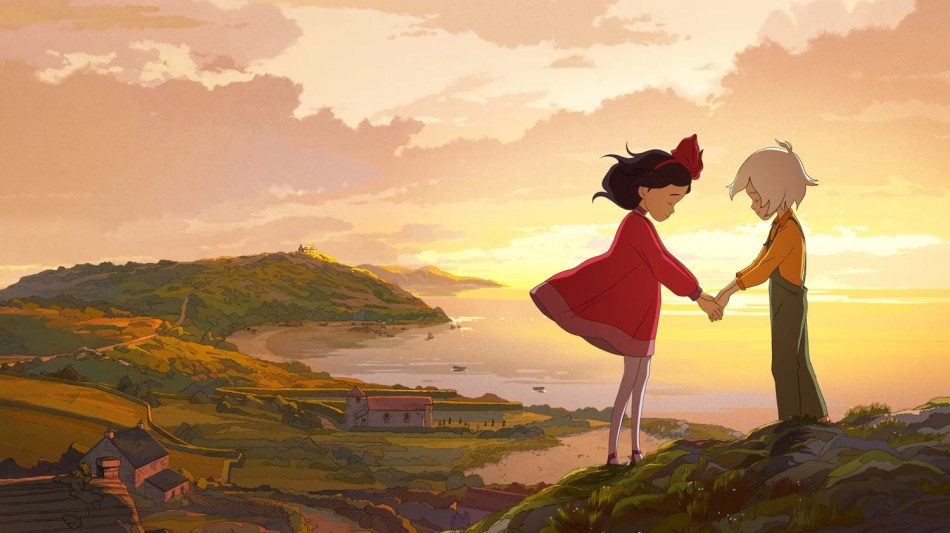
That well-meaning message of countless children’s movies, “Just be yourself”, becomes increasingly ambivalent in Olivier Clert‘s animated feature film debut. Premiering in the Special Screenings section at Cannes, the loose adaptation of Michael Morpurgo‘s novel “Listen to the Moon” is about a young girl washed ashore in Sicily at the beginning of World War I. However, its violence and the tragedies it brings upon the central characters, who are teenagers in the source novel but only children on screen, are considerably mellowed for the oddly sugary scenario. A touch of fairytale-like magic reframes the existential experiences of loss—of memory, loved ones, home, and identity—as an amusing adventure.
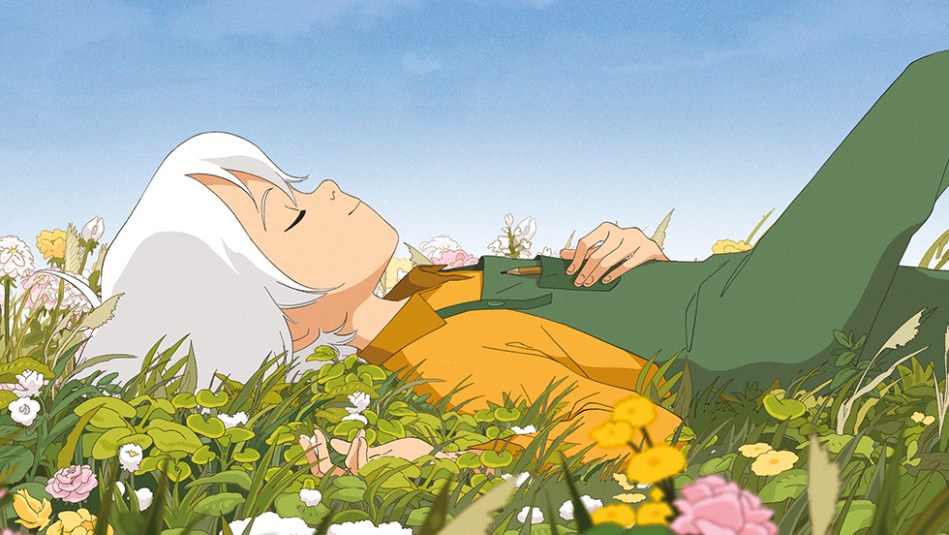
The real-world disaster that is pieced together bit by bit from fragments of memory and visual clues feels uncomfortably disconnected from the safe haven Lucy Wheatcroft (Charlie Rosenzweig) found with the family that adopted her. On a stormy night, they found the little girl with white hair down by the raging sea. She can’t remember anything apart from the name Lucy, so this is what her foster family calls her. Wary of all intruders, the other locals look distrustfully at the little outsider who hardly speaks, and if so, only to her imaginary friend Milly (Haïly Yseembourg). The mischievous American girl of the same age as Lucy is her polar opposite.
Bubbly, bold, and always up for jokes, Milly seems to incorporate a vivacious happiness that Lucy either represses or, as her name implies, lost. The horror of the event that brought her to the island is easily identifiable as the source of her odd behavior. While the playful plot treats Milly as a reality, the fact that no one else can see or hear her implies a congenital condition instead of acquired dissociation due to trauma. Lucy’s symptoms suggest schizophrenia, which often manifests in teenage years, Lucy’s original age in the novel. In its most empathetic moments, Lucy Lost explores neurodivergence from the perspective of the person living with it.
Though the gimmicky aspect of Milly’s exuberant temperament and exasperating pranks undercuts the emotional impact of Lucy’s experience of social stigma, self-consciousness, and alienation, it nevertheless introduces mental illness to children as something not to be feared. Sadly, this unique element is all but erased by the revelation of Milly’s origin. With her boundless energy, Milly encourages Lucy to trace her own heritage, which her foster parents seem almost reluctant to discover. Together, the two girls search the coastlines for hints of Lucy’s forgotten past, gradually mending the broken connection to her true family and identity. But neither trauma nor neurological conditions heal as easily as the naive narrative suggests.
Well-executed but generic visuals mixing classic European animation with an anime aesthetic reflect the overcautious story’s vacillation between serious themes and sentimentality. Character designer Camille Bozec‘s overly cutesy figures, the island’s picturesque storybook beauty, and Lucy’s cozy home life present a flat, idealized imagination of rural Italian life. Historical background and psychological depth give in to convenient tropes before they can fully develop. Dream logic and fantasy elements become a refuge, not only for the titular character but for Clert. That his ambitious feature debut realizes the pressure of assimilation and stigmatization of physical and psychological differences, especially in isolated communities, makes its simplistic solutions and disposable message all the more frustrating.
Discover more from Cineccentric
Subscribe to get the latest posts sent to your email.


0 comments on “Lucy Lost ★★”