
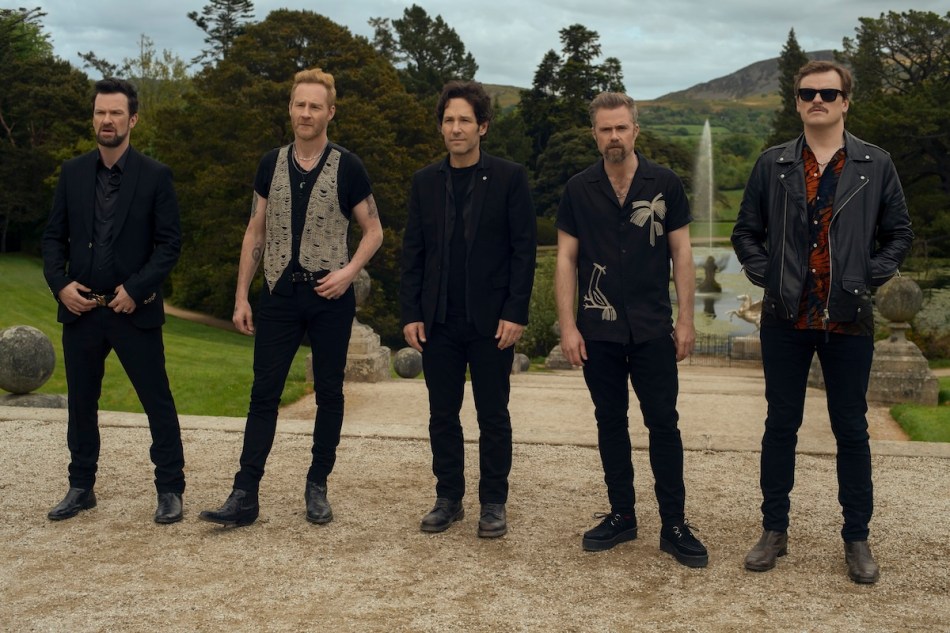
John Carney has made a career of examining the intersection between music and life. It can bring two disparate individuals together, it can give one hope, it can be an outlet for self-expression, and so much more. Whether one is playing or listening, a song can touch the soul. A song tied to specific moments in a life or a particular feeling can bring those emotions back anew in a wave of nostalgia. The work of a wedding band like Power Ballad’s “The Bride and Groove”, frontmanned by American Rick Power (Paul Rudd) exists heavily in this space. They play iconic tracks that the married couple request, some that they just like and others that may have been playing when they first met. Rick has his own memories tied to these songs, though none mean more to him than the songs he wrote, which he works into a set every once a while to deafening silence from the audience. But, the songs mean something to him. They were part of his life long ago and he never shook the dream of becoming a celebrated artist in his own right.
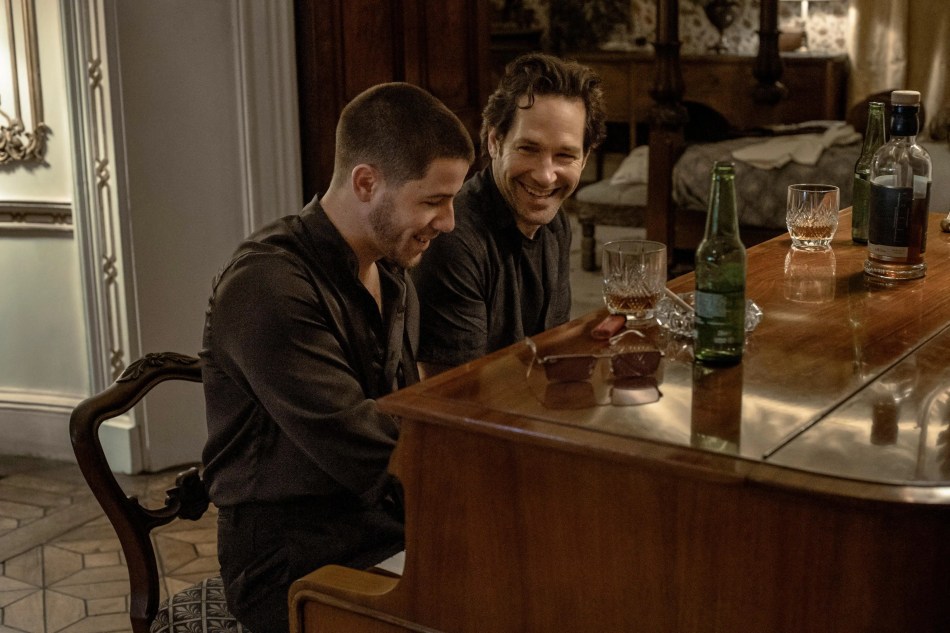
Music changed Rick’s life, albeit not in the way he expected. He was touring with his band and carrying youthful dreams of performing at Madison Square Garden when they stopped in Dublin, he met his eventual wife Rachel (Marcella Plunkett) and he started a family with her. His days of touring the world were over, replaced by settling down in Ireland and joining this wedding band. He still worked on writing some songs here and there, particularly one entitled “How to Write a Song Without You,” which he had a chorus for but could never quite crack the bridge. The song just meant too much to him, to a particular moment, feeling, and person in his life that nothing ever quite felt right. During his band’s latest gig, they had a special guest: former boy band member and aspiring soloist Danny Wilson (Nick Jonas). He is a celebrity and though the band is skeptical of his talent due to his boy band roots, Danny is a friend of the groom and is ushered onto the stage at his friend’s request to sing at least one song. Danny begrudgingly obliges and Rick, after initially being put-off, is soon won over by Danny’s talent with the two harmonizing and jamming out together in a truly magical performance. The one song together soon turns into more as they meet up after the wedding and spend some time in Danny’s studio, bouncing ideas off of one another. Danny’s solo career has thus far failed and he needs a hit, hoping that Rick could have some out-of-the-box ideas that help him. Rick plays “How to Write a Song Without You” for Danny as a showcase of something he is working on as well, then the two part ways.
Life is good, the band is doing well, and Rick’s home life is happy. That is until he hears, a few months after his jam session with Danny, the new single from Danny Wilson: “How to Write a Song Without You”. At first blown away then incensed that he did not receive credit for the song, Rick becomes obsessed with tracking down Danny and talking to him about the song. Nobody in Rick’s life believes him, as nobody remembers hearing the song before and Rick, as he never finished it, had not recorded a demo. His bandmate and best friend Sandy (Peter McDonald) is willing to back him up, but even he concedes not remembering the song. Having no legal footing, Rick just stews in this pent up emotion and is stonewalled and threatened by Danny’s manager Mac (Jack Reynor). Rick’s job and marriage alike are threatened with Rick refusing to play the song for married couples despite their requests and obsessing over it so much that Rachel is driven to the brink of sanity.
For as heavy as Power Ballad sounds, it is often a crowd pleasing and easy-to-swallow confection. The songs are catchy and well done. The concert scenes are electric with Power Ballad disappearing into the flow state a musician can reach when at the top of their game and performing a song that they love. The main narrative thrust is Rick’s pursuit of Danny, his hope to receive the credit he deserved for having partially written the song – Danny did write a bridge for it before releasing it as his own – and, in particular, to receive the acknowledgement that he did something in music that people want to hear. Danny’s single is a number one hit, the most popular song in the world and a true phenomenon. Power Ballad exists in an interesting space where, while one would think Rick is incensed at having it stolen from him, he is not upset about that, just that Danny never asked. He respected Danny’s artistry, talent, and desire to create songs with meaning, so Danny taking one that meant so much to Rick, putting his own spin on it, and releasing it feels somewhat hollow to Rick. It also, for a moment, robs him of the meaning and feeling the song gave him, replacing those warm memories with the cold ones of a perceived friend stabbing him in the back.
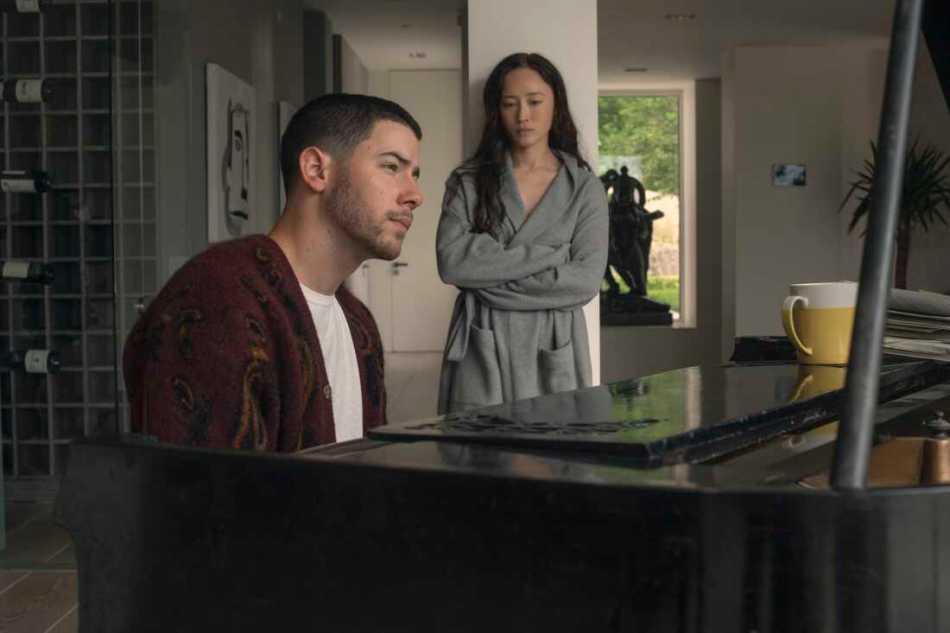
Power Ballad, in examining Danny’s work, serves as a fascinating look at the music industry and the demands of being a pop star. Danny was desperate when he took the song, only doing so because his then-girlfriend Marcia (Havana Rose Liu) was blown away when she heard him playing it and because none of the songs Danny actually wrote worked for Mac. Everything he had put together fell flat. This was his last chance, as Mac threatened that Danny was one more failure away from needing to “eat bugs on a survival show” to stay relevant. His dream was slipping through his fingers. It is a plight Rick knows all too well, having once been signed by a label then unceremoniously dropped after he took some time off to start his family with Rachel. The music industry is constantly demanding and those unwilling to sacrifice their time and morality are often cut out. This is all the more challenging for somebody like Danny who has tasted fame and now feels the cold chill of falling out of favor. Power Ballad never excuses what happens, but Jonas plays it with enough grace and humanity that one can see the man in totality.
Jonas impresses as an actor as a result, though really shines in the music scenes. His talent is on full display, as is Paul Rudd’s with Rudd being a perfect fit for this man who never shook his dreams of stardom. Rudd naturally nails the light comedic touches of Carney’s script, as well as the dramatic with Rudd selling every big emotion of the character. He is also quite a capable performer on stage, matching Jonas’s vibe and the two truly having great chemistry both on and off stage. Co-writer and co-star Peter McDonald also impresses as Sandy, the ex-convict and ardent best friend of Rick, who will follow him into every battle. His scene at a party hosted at Danny’s house is hysterical in the sidequests Sandy gets into and the always-late help he provides. Havana Rose Liu is only briefly in Power Ballad, though her chemistry with Jonas is a big help to those scenes, which also adds some punch to a montage of Danny’s return to fame once “his” new song is released.
Power Ballad walks a delicate tightrope of being somewhat tense in its depiction of Rick Power’s obsession over his song, but director and writer John Carney takes it in a different direction than one might expect. Power Ballad is mostly an examination of the power of music. The meaning it has for listener and creator alike, the process of creating it, and the journey that a song can take one on whether it is to stardom or a quaint life in Ireland. The story of Rick trying to track down Danny and confront him with tension and suspense brewing is comparatively lackluster as it is undercooked given Carney’s attention elsewhere, while also harshing some of Power Ballad’s mellow. However, with contagiously enjoyable concert scenes, Carney’s always successful crowd pleasing appeals, and the easy charm of Paul Rudd and Nick Jonas, Power Ballad is a winner.
Discover more from Cineccentric
Subscribe to get the latest posts sent to your email.


0 comments on “Power Ballad ★★★”