
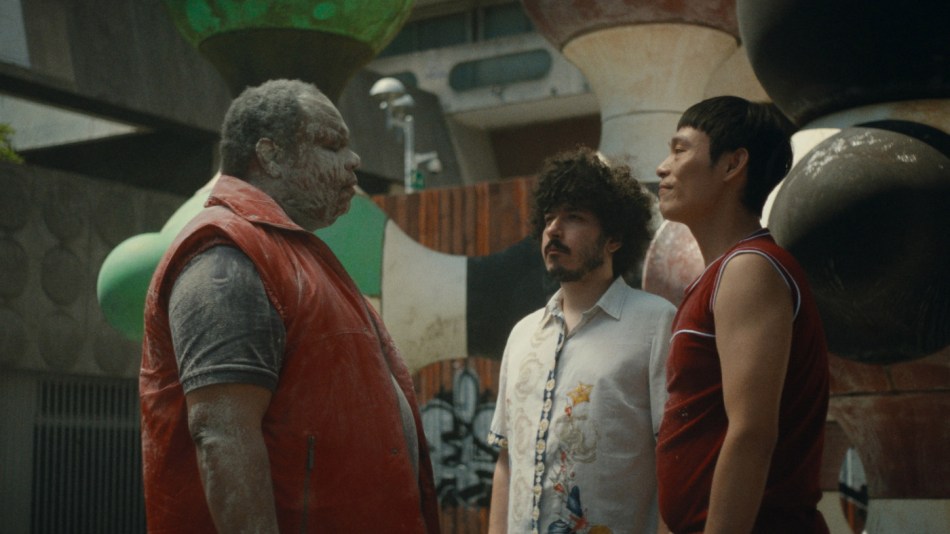
With its playful repetition and romantic associations, the title of Isabelle Tollenaere‘s aimless feature film debut creates a curious contrast to its timely themes of displacement—global through forced migration and urban through enforced gentrification. Both of these lead the unlikely trio of friends at the core of the aimless storyline together in an empty Parisian apartment structure. The bare flat in a building marked for demolition becomes a temporary refuge for Chinese-speaking Yi-En (Chen Yi-En), Palestinian poet Hamzah (Mahmoud Beshtawi), and Congolese construction worker Junior (David Mutamba). Episodic essay and ensemble piece fuse into an observational study of places and people in the moments before their disappearance.
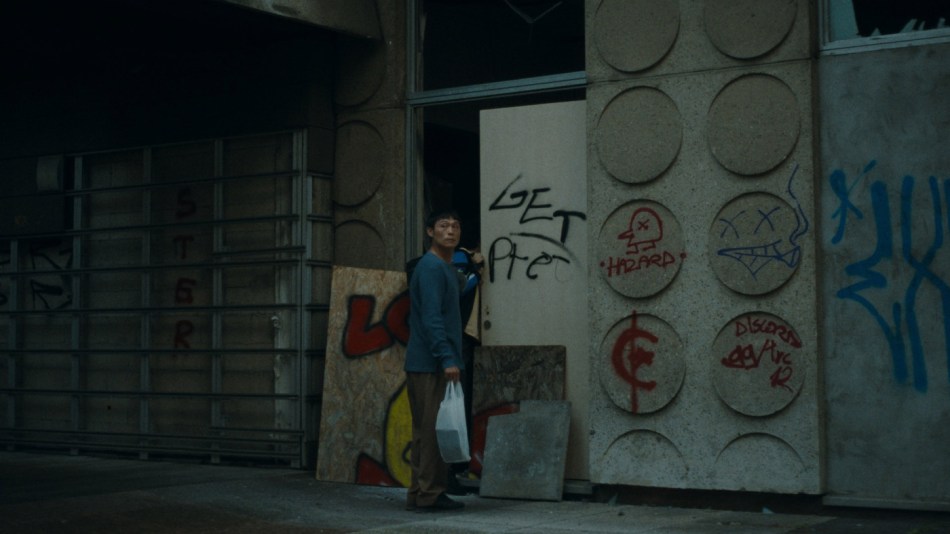
Yi-En was actually born in Paris, though not the French capital but a replica tourist attraction of it in China. Hamzah sells trashy toys on the street to make ends meet and Junior keeps finding animals. Yi-En, on the other hand, has a tendency to lose the few possessions he has, such as shoelaces and cutlery, and comes up with inventive replacements for them. The whimsical vignettes springing from these improvisations soon become a trend, however, just like the tragicomical scenarios’ deliberately recitational dialogues. Part urban fairy tale, part pseudo-philosophical meditation, the paper-thin plot ponders the connection between memory and materiality. People disappear when there’s no one left to remember them.
Soon, the places and objects conserved in their own memory secretly evaporate as well. What sounds like the premise for a sci-fi thriller never develops beyond a droll idea, like a joke without a punchline. Away from its tourist traps, Paris appears as a transformative landscape of architectural and structural change. Tollenaere hints at the many personal stories to be found between all the building sites and demolition gaps, but can’t settle on any of them. Hamzah is haunted by memories of the war. Junior feels lost in his own hometown of Lubumbashi. Yi-En was born in a fantasy replica of a real place he never knew.
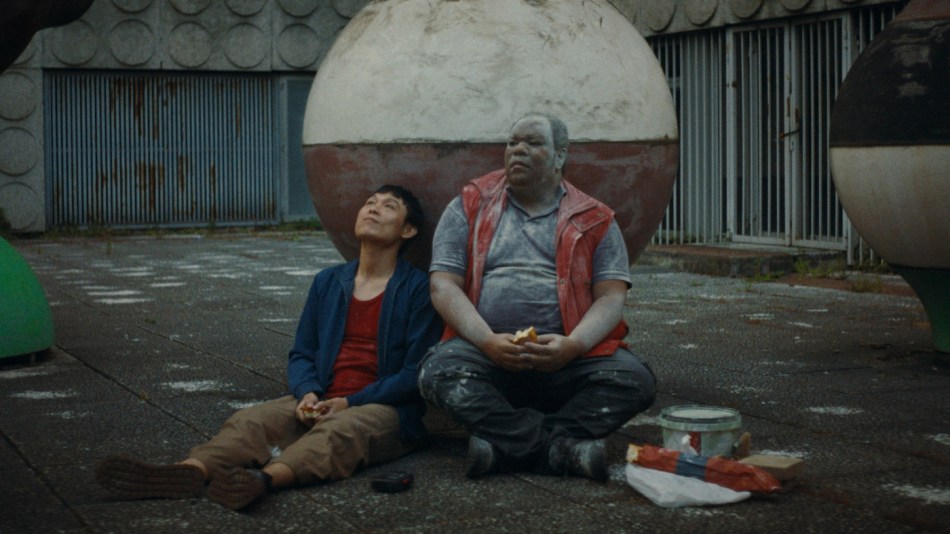
Supporting characters supposed to enrich the social texture disappear as quickly as they emerge, giving the narrative a scattered, sketch-like structure. Though visually distinct, the episodes feel as empty as the flat the characters reside in. Acting and dialogue are intentionally stilted, decelerating the already slow-moving events to the point of stillness. Though the Belgian filmmaker’s first major fictional feature shows some traits of her understated documentary work, it never succeeds in reshaping these into something truly interesting. Thomas Verijke‘s cinematography frequently captures familiar locations from unfamiliar angles, emphasizing peripheral districts and transitional spaces. Long static takes linger in dim spaces until their emptiness feels all-consuming.
However, this apparent refusal of romanticization is only an artsy gesture in a scenario defined by naivety and friskiness. The very real struggle of displacement and homelessness looming over the protagonists is presented as an amusing adventure and an easy way to make new friends. Even the trio’s precarious housing situation appears comfortable and communal thanks to their mutual hospitality and generosity. A faux-documentary hybrid style and the use of non-professional actors further mark this meandering meditation as a forceful attempt at arthouse cinema. It’s like a French meeting of Wim Wenders and Angela Schanelec no one invited.
Discover more from Cineccentric
Subscribe to get the latest posts sent to your email.


0 comments on “Paris Paris ★½”