
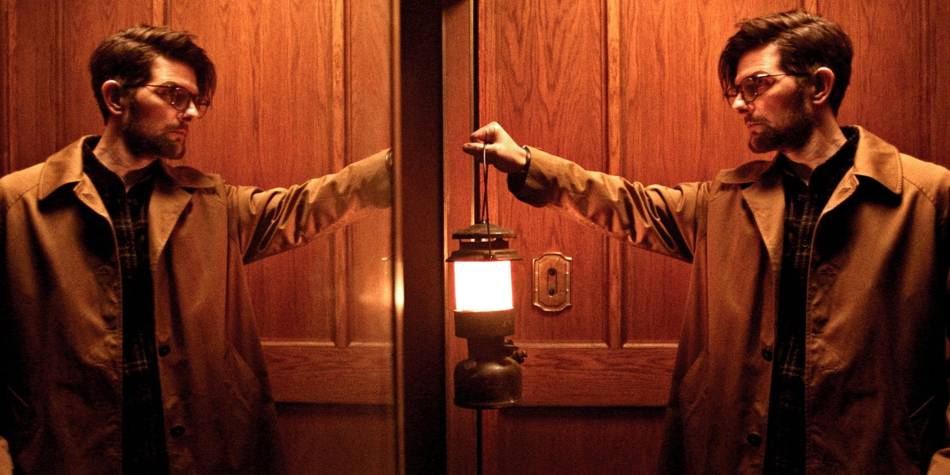
Of all the horror genres, there is a particularly chilling nature to folk horror. Ranging from classics such as The Wicker Man or more recent films like The Witch, folk horror has a way of crawling under one’s skin, challenging what we think is possible, and presenting frightening visions of worlds just beyond our own. Folk horror makes real what lives in the shadows. Writer-director Damian McCarthy’s Hokum is a perfect representation of this, presenting a startling and creepy setup that delivers every ounce of terror, dread, and unease one expects. Ohm Bauman (Adam Scott) is a writer. The opening scene of Hokum is from his latest novel, the conclusion of his “Conquistador trilogy.” He is struggling with how to end the series, showing a conquistador traveling in the desert with a young boy and a glass bottle with a map to a promised land inside. A bitter and self-loathing man, Ohm is haunted before he even gets to Hokum’s primary folk horror setting. He is at home in Pullman, Washington and thinks he sees a shadow on the stairs. Flashing a light over to it, he sees nothing is there… but behind him… there is something, a reminder of his past, and a physical representation of the weight that Ohm carries with him every day.
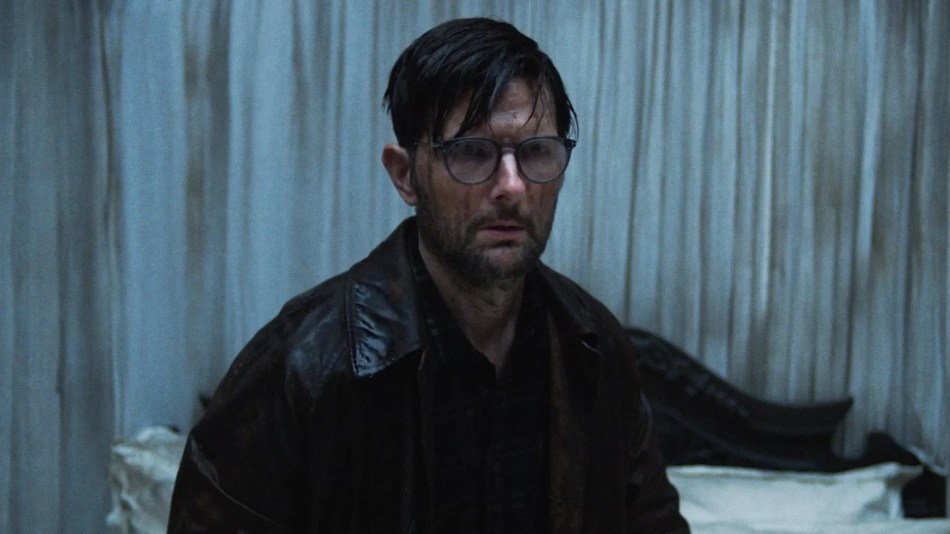
Hokum is indeed another modern horror film that is equal parts horror and equal parts exploration of trauma, guilt, and grief. Ohm carries it with him to Ireland. His parents are long dead, his mother having died in a tragic accident and his father having died wallowing in anger and grief in the aftermath of her death. Taking their ashes with him, he intends to visit the hotel where they spent their honeymoon. He is perhaps seeking closure, or perhaps a fitting epilogue to his own tale. Either way, he ends up with far more than he bargained for. As he arrives, the hotel’s owner, Cob (Brendan Conroy), is regailing a pair of young boys with a story of a witch who lives in the woods, enchanting lost travelers who have strayed from their path, and tying them up to have them ripped apart by those in the underworld. The boys are terrified and Ohm chastises Cob for bothering them with such nonsense. It is not the last time Ohm will hear such stories, hearing from hotel employees Fiona (Florence Ordesh) and Alby (Will O’Connell) about the honeymoon suite to which access is forbidden due to it being inhabited by a witch. Ohm dismisses it as “hokum,” despite Alby’s story that he himself has seen the witch in the lift that only goes up to the honeymoon suite.
It is stories like these and Ohm’s encounters with a man named Jerry (David Wilmot), who lives in a van in the woods, that sets the tone for Hokum. That and a particular act that Ohm commits while staying there, which prolongs his stay and keeps him around just long enough to discover that Fiona has gone missing. Nobody knows where and all he knows is about her love of folklore and desire to explore the honeymoon suite. Thinking she may be up there, he and Jerry make plans to explore the suite once the hotel closes for the season, setting into motion a nightmarish stay that has one simultaneously entranced, begging it to end (in a good way), and making plans for how to counter the next week of nightmares that will need to be endured after seeing Hokum. The scenes in the honeymoon suite are particularly bone chilling. The room is locked tight and there is no escape for Ohm once he is up there. It is just him and whatever is inhabiting this room. While, naturally, the menace promised by an alleged witch in the room carries with it considerable weight, there is more to the room than a witch. The visions that Ohm has and the startling intertwining with his own memories makes for pure nightmare fuel, while McCarthy times a few jump scares and terrifying reaction shots to perfection.
Hokum is a smart horror film. It knows its strengths lie in the obscured visions. The just-awoken nightmare images that defy reality (there is a television in this suite that produces images so cursed and haunting that one is basically fighting full body chills as it plays) and leave one questioning if they are actually there or not. The beings heard in the distance and the faces obscured by curtains or shadows. It is there, one can see it, but Ohm is too afraid to see it in full light and unobstructed view. The potent point-of-view shots – with a very clear influence from survival horror video games – from Ohm’s perspective as he endures this time of terror and manic fear place us firmly in his head space, seeing what he sees, feeling what he feels, and reduced to a very child-like mental space. After all, folk horror often centers on children – there are some parallels to Hansel & Gretel in the story Cob tells the boys – while Ohm’s particular horror visions are influenced by his own childhood traumas. Whether it is hiding under the sheets or not touching the floor, kids’ minds can play crazy tricks on them when afraid and Ohm experiences it all in real life. Is there something there? Is the chalk circle he drew for protection actually powerful enough to keep him safe? Will these things be there when he awakens? It is perhaps this that grants Hokum and folk horror its power, tapping into that child-like terror of the dark and showing that there is something to be feared lurking at the edge of our beds and in the basement.
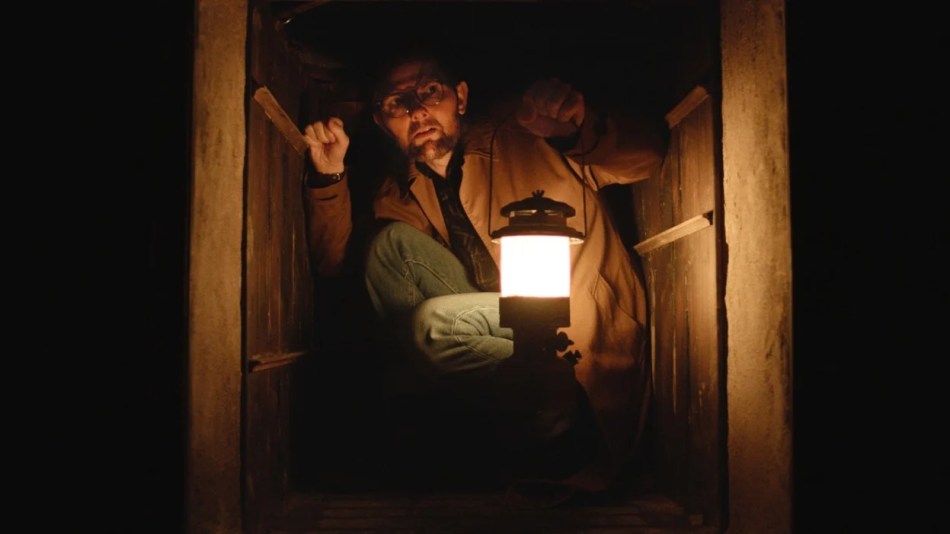
Hokum excels in its production design. The hotel itself is eerie from the onset. The surrounding woods carry with them a natural maze-like menace, while the hotel’s interior is disorienting. There are plenty of dark finishes, tight corridors, misorganized rooms, and hidden doors. McCarthy layers in small details, like Ohm thinking his room should be one place but, instead, is around the corner and down the way. It all contributes to a feeling of unease. That something is amiss and askew. By the time Hokum gets up to the honeymoon suite, it is filled with a thick and dense air of dread and atmospheric tension. One is ready to jump at the first sight of this room and a door is blowing in a breeze that is not there. Every little creepy knick-knack and odd carving in the way – the close-up shots of Cupids and similar romantic iconography add to the atmospheric build-up – plus the decaying wallpaper and dark interior design, add a heaviness to the room. It is dimly lit and the bathtub is filled with dirty water. There is a dumbwaiter that goes to the basement, which has been cut off from the rest of the hotel after renovations so nobody uses the dumbwaiter anymore. But, the basement is still accessible from it and it, too, offers plenty of terror and great attention to detail with creepy lighting, vast and dark tunnels, and odd decorations adorning its ceiling and even some chalk on the ground. It carries with it mystery and enticement, demanding to be explored but carrying with it a feeling, a call from beyond to run and never look back at this place. Hokum’s power is in these details, every element adding to the haunting feeling McCarthy cultivates and encouraging one’s mind to run wild with what could be lurking in this quaint old Irish hotel.
Hokum blends these details with strong character building, taking this often cruel and mean man in Ohm and making him understandable. The pain he carries with himself everyday and the ghosts, whether dreamed or real, that make his everyday living intolerable. Stories and novels are his way of escaping, his works often expressing his bleak and nihilistic world-view. His experiences in Hokum makes manifest some of these visions, while also offering him a chance at confronting his demons face-to-face and finding some kind of solace amidst the chaos befalling him. Adam Scott is great in the role, carrying with him the sarcastic dry edge that makes Ohm a bit funny at times and also the smug indifference to others that makes him contemptible. He anchors Hokum wonderfully, providing the story its heart and making for a genuine everyman once he encounters such nightmare visions and desperately seeks a way out of this cursed honeymoon suite. A fantastic piece of folk horror, Hokum is sure to enter the pantheon of the subgenre, capturing the child-like sense of wonder that makes such fairy tales and legends take hold in one’s subconscious and torture one in the middle of the night. It is menacing, atmospheric, and filled with terror, while McCarthy shows a knack for producing scares from idle sounds, effective and well-earned jump scares, and the knowledge that something is lurking in the shadows and one is powerless to escape its grasp.
Discover more from Cineccentric
Subscribe to get the latest posts sent to your email.


0 comments on “Hokum ★★★½”