
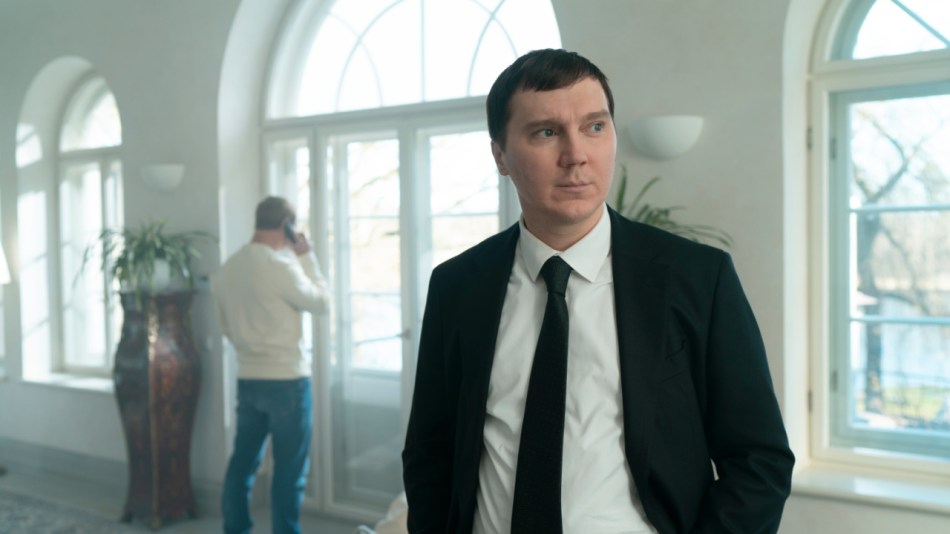
Olivier Assayas’s The Wizard of the Kremlin is a sprawling and ambitious film. Tracking a changing Russia from the fall of the Soviet Union to the present day through the eyes of Vadim Baranov (Paul Dano), a fictional version of a man who rose to prominence as a key advisor to Vladimir Putin (Jude Law), The Wizard of the Kremlin touches on a wide variety of themes. While watching The Wizard of the Kremlin, I kept thinking of Luchino Visconti. Visconti’s films often centered on themes of sociopolitical shifts, European history, nobility, sexuality, and more, all of which The Wizard of the Kremlin touches on. In particular, Visconti’s The Leopard, which Assayas once listed as his favorite film released by the Criterion Collection, looms large as an influence on The Wizard of the Kremlin.
In The Leopard, Don Fabrizio (Burt Lancaster) is a man fighting for relevancy and power. Italy is changing all around him and he is out to ensure his family is at the forefront of whatever is occurring. By the end of The Leopard, however, Don Fabrizio recognizes that there is an Italy of the past and an Italy of the future. He belongs to the past and must fade into the distance, no longer desiring to fight for a place in a world he does not recognize. For Vadim Baranov, this is a key element to his story. Much of The Wizard of the Kremlin takes place in Baranov’s home where he is visited by Rowland (Jeffrey Wright), an American journalist and professor who has long lived and researched in Russia and other former states of the Soviet Union. The two talk and Vadim shares stories of the Russia that grew around him, arising out of the Soviet Union’s ashes. Assayas uses this framing device and consistent narration from Dano to tell the overarching story of ambition, power, and unique social tides gripping Russia as it lurched between various identities and structures in these past 30 years.
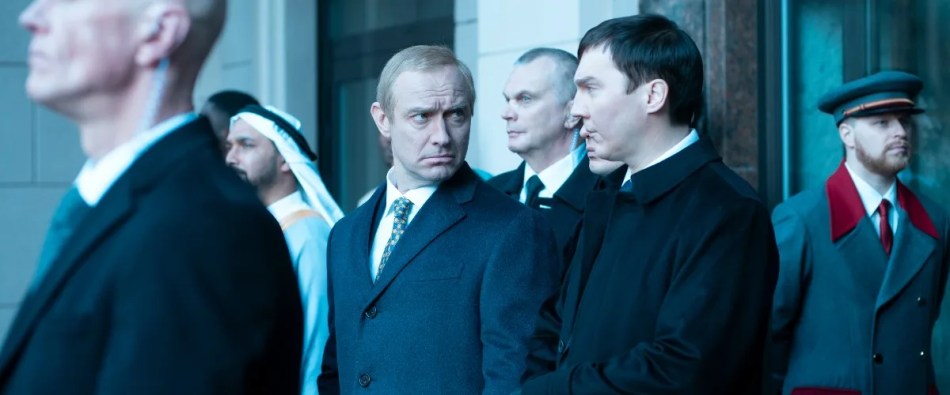
A constant refrain and topic of discussion are the concepts of time, generation, and social influence. Vadim is cognizant of it from the very onset with The Wizard of the Kremlin’s electrifying early chapter “The New Russians” detailing a Russian youth thrust into the throes of freedom. Culture from the world beyond is infused into Russia, all while young men like Vadim are in the right place and at the right age to re-invent themselves, to boldly step into this new world and try to shape it into something that they can control and influence. All around him are entrepreneurs and creatives. It is a world defined by “proximity to power” and one’s hunger and drive to make it in this new Russia. As Vadim grows in this world and shifts his career from the theater to working in propaganda television, around him are hallmarks of the ever-changing Russia. His boss, Boris Berezovsky (Will Keen), is a Tsar-maker of sorts. Whatever story needs to be spun, he can spin. He picks and chooses his candidates and builds them into someone the Russian population will elect. When he picks Vladimir Putin to be Boris Yeltsin’s Prime Minister and eventual successor, it will happen. However, Berezovsky has no idea what he is unleashing on the Russian population and the world at-large in promoting Putin. Assayas tracks the major changes brought about by Putin – including, at Vadim’s urging, a return to the strict structure of old Russia, a “vertical” style of government, more authoritarian and regimental because, as Vadim believes, that is what the Russian people want – and various wars he gets the nation into in Chechnya, Crimea, and Ukraine. It tracks the shifting social tides around him, but more than anything, it shows men who are “in”, who are influential and powerful, who have access to power, and what happens to them when their time is up.
Vadim saw it in his youth. His father was connected to the Communist Party. Early in his narration, Vadim relates that he had a “happy childhood” which was uncommon in the Soviet era. However, when the Soviet Union fell, his father lost all status. The family lost all connections and power. Vadim had to build himself up and, like Don Fabrizio, fight to assure his family’s role in this new Russia. Whatever avenue he could find, he went into and his ambition knew no bounds. Vadim is always at Putin’s side, always having his ear and helping to shape his policy. Even if he disagrees, he puts it into action anyway and shapes taste across the nation. As he once watched his father lose power and influence, he watched Berezovsky fade into the background. The one-time Tsar-maker is relegated to living in exile, having spent years fighting Putin and his agenda after realizing what kind of man he had empowered. Russia, an entity that Berezovsky thought he could shape and control, had changed without him. It had passed him by. As Vadim tells Rowland towards the end of The Wizard of the Kremlin, Vadim “thought only of the future,” during his time as a young man in a new Russia and as he established himself at Putin’s side. However, as he confesses in the same breath, the birth of his daughter in recent years (at this point, he is speaking in the early 2020s), taught him to “live in the present.” By now, he is out of influence. He is coasting and living day-to-day in his rather lavish cabin in the woods with his daughter and a few dogs. He lives in the present, but to Russia, he is in the past. The world he shaped and controlled is different. His generation and social influence have waned. Assayas gives him none of Don Fabrizio’s graceful exit. This is a man who may have never pulled a trigger, but was nevertheless violent and indifferently evil, nakedly ambitious and power hungry without care for the lives of those he touched. He just cultivated power. There is no sense of recognition that Russia has left him behind, just a figure off-screen ushering him out of the present.
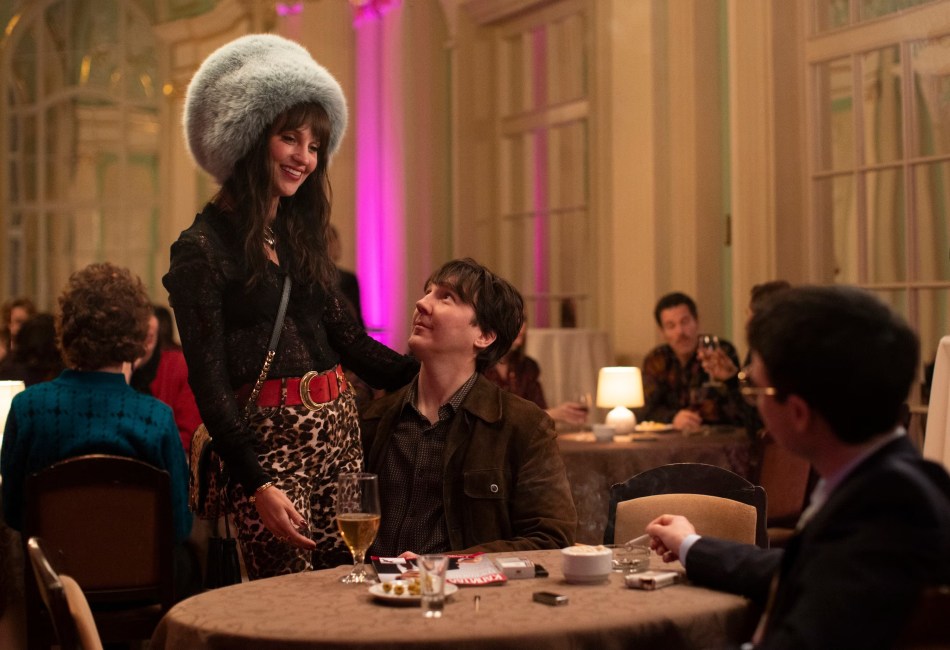
Layered and packed with sprawling ambition in detailing this rich history of modern Russia, Assayas’s The Wizard of the Kremlin is indebted thematically to Luchino Visconti, particularly The Leopard. However, it does not touch Visconti’s works in quality. Assayas’s film is far clunkier narratively and the performances wanting. As easy as it is to invest in the overarching narrative that The Wizard of the Kremlin spins, the reliance on constant narration and a Dano performance that feels too disaffected and is delivered with a goofy accent leaves The Wizard of the Kremlin feeling a bit awkward. It is as though Assayas knew the story he wanted to tell and the themes he wanted to touch on, yet lacked an idea on how to shape them into something that flowed. The Wizard of the Kremlin is at least coherent, but far too talky, steeped in exposition ,explanation, and elaboration. It does not give any moment room to breathe, nor do the performances – even with talented performers around Dano like Jude Law, Alicia Vikander, and Jeffrey Wright – ever get enough space to click or for these actors to explore their individual characters. Law’s Putin – with great make-up and commitment from Law in demeanor and physical presence – fades into the background too much, Vikander’s Ksenia is hollow and one-dimensional despite Vikander’s lively energy (especially in the party scene where she first meets Vadim), and Wright’s role reduced to absolutely nothing, a background figure and a waste of Wright’s talent and the initial build-up given to the character via the framing device of him going to visit Vadim.
The Wizard of the Kremlin is engrossing. It tells a rich and layered story of new Russian history and of the shifting sociopolitical tides that sweep up even the most powerful men of an age. True to the Luchino Visconti influences, there are themes of decadence, nobility, sexuality, and a larger European historical context, that fill The Wizard of the Kremlin, but it is foremost a story not too dissimilar to Visconti’s The Leopard in tracking a man watching himself fade into the past in a changing country. However, while these themes are fascinating and Assayas’s exploration of them effective and powerful, The Wizard of the Kremlin’s structure, narrative approach, characterization (of everybody except for Vadim), and Paul Dano’s performance leave it lacking. It is not a total misfire, but Assayas did not quite crack how to shape The Wizard of the Kremlin into an entirely successful work.
Discover more from Cineccentric
Subscribe to get the latest posts sent to your email.


0 comments on “The Wizard of the Kremlin ★★½”