
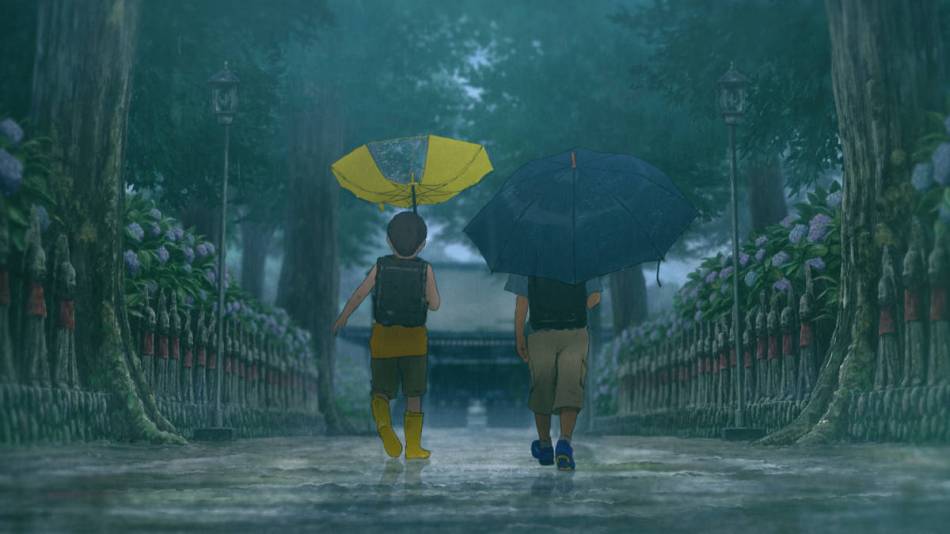
Childhood constructs of the world around and the seismic reverberations their collapse send into adulthood drive Kohei Kadowaki‘s engrossing debut feature of friendship lost. A disillusioned look at the trifling strifes that can lead to drastic consequences and the small missteps that prove the first on a lengthy path in the wrong direction, the Japanese director-writer‘s tender animated drama retraces two seemingly contrasting adult lives back to the point when they interlinked. Hazy images, a tarnished color palette, and increasingly dim lights recreate a feeling of blurred memories and marred happiness. Within this fractured realm of nostalgia, bursts of science-fiction and even horror confirm inevitable subjectivity that sees only one side of the story.
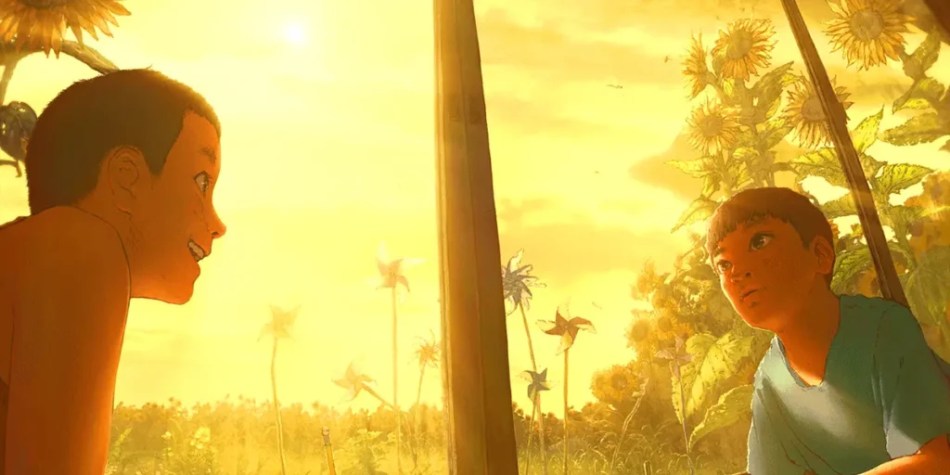
Thanks to the bilateral structure of Kadowaki’s carefully constructed plot, the audience sees both sides. First that of introverted schoolboy Tsubasa (voice: Ryota Bando) who feels lost among the other kids in his third grade due to his moody nature and disinterest in popular traditional boys’ activities. His opposite is buoyant Gyotaro (Amane Okayama) who is constantly attracting the attention and often admiration of his peers with his brisk comments and daring actions. Tsubasa, living with his loving but, because of her work, often absent mother, seems destined for failure; a drab existence as a lonely outsider in some unwanted job. However, his ability to adapt proves a crucial advantage, as demonstrated in his friendship with Gyotaro.
The popular kid senses a hidden creativity and sensitivity in his silent classmate, making the first move toward a camaraderie quickly growing into a happy friendship. Their secret messaging, goofing around on their way home, and immersing themselves in fantasy worlds make for some of Kadowaki’s most touching scenes. Even as the story, first told from Tsubasa’s point of view and then once again from Gyotaro’s perspective, turns into a test of patience with its repetitive nature, these small moments of shared joy radiate a warmth and authenticity that make the breaking of this unique bond all the more painful. A series of misunderstandings leaving Tsubasa feeling hurt without openly telling Gyotaro creates a rift between them.
Other kids in school start sneering at Gyotaro, who retains his childish quirkiness as they behave more grown-up. Tsubasa’s social astuteness — a survival skill Gyotaro fatally lacks — tells him Gyotaro’s growing unpopularity will rub off on him. One fateful escalating prank, unintentionally hurting a girl both boys like, shatters some school property and their friendship for good. A collage of narrative vignettes of their teenage years and early adulthood underlines Tsubasa’s denial of his former friend and Gyotaro’s social and mental decline. Flash forward to the present where Gyotaro is at his lowest point, recalling how his life went downhill from the moment he became an outcast at school because of Tsubasa, whom he recognizes in the street.
It is at this point that the blend of 2D computer animation and rotoscoping diverts most drastically from the mellow style popularized by Studio Ghibli, morphing into an almost nightmarish confrontation. When Gyotaro and Tsubasa, who even got to marry his childhood sweetheart thanks to adaptive skills, meet again, their individual situations challenge concepts of social fairness and equal opportunities. Its ghostly atmosphere positions the scene between reality, imagination, and the metaphysical, as a pale, hollow-eyed Gyotaro seems like a vengeful personification of Tsubasa’s conscience. Though Kadowaki doesn’t quite know where to take his story from there, arresting moments like this climax and the warmhearted scenes from the boys’ youth give this twisted drama its unique appeal.
Discover more from Cineccentric
Subscribe to get the latest posts sent to your email.


0 comments on “We Are Aliens ★★★”