
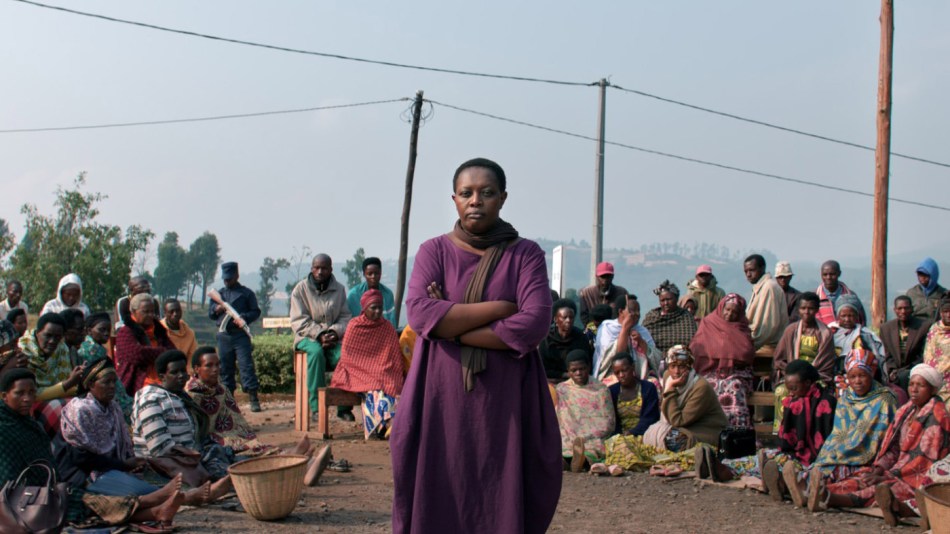
In her language, the word for yesterday is the same as for tomorrow, reminisces Rwandan reconciliation initiative worker Vénéranda (a magnificent Clémentine U. Nyirinkindi) in Marie-Clémentine Dusabejambo‘s gripping feature film debut. Its carefully crafted story, playing out 18 years after the genocide perpetrated by members of the Hutu against the Tutsi minority, leaves it to its female protagonist and, in a wider sense, the Rwandan audience to decide, to define this symbolic contronym. Is it a sign of hope that even an almost unbearable pain can be the foundation for progress? Or does it see the idealistic spirit of the country’s young generation haunted by the ghosts of the past?
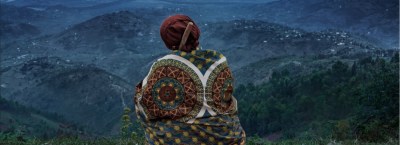
Said past is omnipresent—in the horrifying testimonies of survivors, in the silence of the perpetrators, many of whom walk free, in the physical and psychological scars that all members of the elder generations carry—in the social-realistic scenery of the multilayered meditation on collective trauma and the conflictive nature of forgiveness. In a pivotal scene early on during a courtroom hearing in the town of Kibeho, Vénéranda publicly declares she forgives a member of the Hutu militias in a belated trial for murdering her family members. Her sister Suzanne (Isabelle Kabano), however, is enraged by this apparent emotional detachment, reminding Vénéranda that she can’t speak for them.
In an intimate moment later, Vénéranda’s brooding silence implies the gap between her public statement and her true feelings. That clemency doesn’t come easy for her underscores her treatment of her daughter Tina (Kesia Kelly Nishimwe). As her mother says her contested words in court, the 18-year-old student stands on a table in her university’s cafeteria, rallying her fellow students to continue protesting against the severe cuts to their scholarships. “We will accept no form of discrimination!” Tina shouts to the young people who seem open to the unity their parents understandably struggle with. This unity becomes a personal issue for Vénéranda when Tina is suspended from school for being pregnant.
Vénéranda throws Tina out of their house, all the more infuriated that the child’s father is Tina’s Hutu boyfriend. The reconciliation she encourages at the community meetings where the all-female survivors and relatives of perpetrators share their memories of killings, mutilations, and sexual abuse seems impossible at the prospect of having a grandchild that’s half Hutu. Years of activism taught her to conceal her own pain for the greater good, but now it writhes back to the surface, eroding her moral convictions. In her graceful transition from her acclaimed short films, director-writer Dusabejambo shows reconciliation as constant hard work, a lifelong process on political, social, and personal fronts.
Visually, cinematographer Mostafa El Kashef creates images of restrained beauty that never romanticize suffering. Natural light dominates the interiors of cinematographer Mostafa El Kashef’s naturalistic images, highlighting a serene beauty that contrasts with the protagonist’s inner turmoil. Framing frequently isolates Vénéranda within communal settings, reinforcing her growing internal alienation despite her public role as a mediator. Nyirinkindi’s heartfelt performance reveals her character’s emotional ambiguity in minute gestures, as the certainty sustaining her work for years crumbles. With its almost all-female cast of mostly non-professional actors and authentic perspective, Ben’Imana embodies the full force of a young Rwandan cinema, taking back the history that has been continuously (mis)represented through a white Western lens.
Discover more from Cineccentric
Subscribe to get the latest posts sent to your email.


0 comments on “Ben‘Imana ★★★★”