
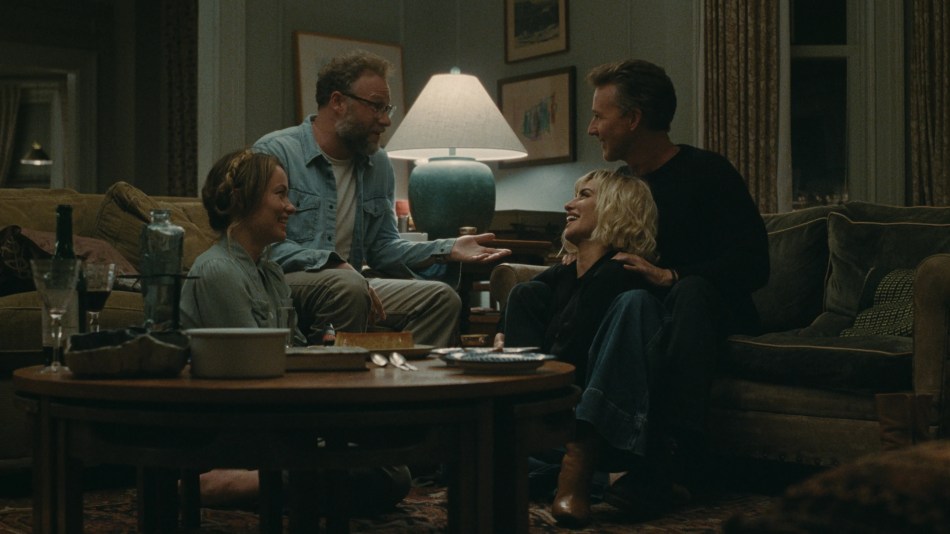
Olivia Wilde’s The Invite centers on a dinner party hosted by married couple Angela (Wilde) and Joe (Seth Rogen). Angela is a stay-at-home mother whose main focus these past few months has been organizing and deciding the renovations of the couple’s apartment, which Joe has inherited from his parents. They have been drifting apart. The malaise of daily existence has set in with this once happy couple becoming ever more at odds with one another, a dissatisfaction with how their lives have turned out standing between them and finding them often silently blaming the other for their increasingly distant feelings. Their lives have slowly slipped from their grasp. Joe is a one-time aspiring musician who now teaches high school band, a reality that fills him with shame and the inherited apartment is just one more reminder of who he did not become. Angela feels the emotional gulf in her marriage. She fills this home with love and affection, desperately trying to make this apartment into something uniquely her and Joe. She is longing for human connection, a yearning that drives her to seek out the companionship of their upstairs neighbors, Hawk (Edward Norton) and Pina (Penélope Cruz).
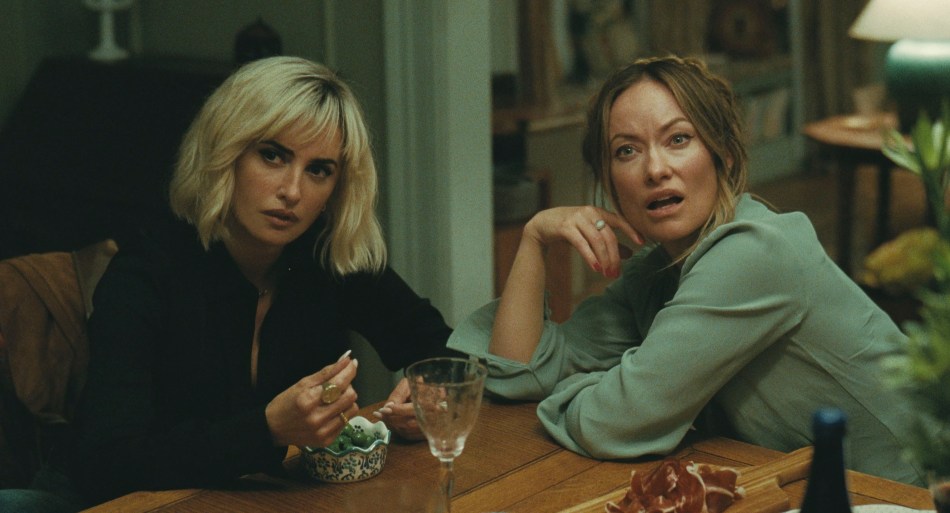
Hawk and Pina have long been central to Angela and Joe’s fights. As Angela feels increasingly overlooked and undesired, Pina runs counter to this with her loud orgasms from sex with Hawk frequently heard in the couple’s apartment. Joe is incensed by the noise, but Angela is drawn to it, undeniably aroused by the implication and reveling in the hot blooded feeling it arises within her. This does little to acquiesce the emotional distance between the pair, in fact exacerbating that feeling with the loss of their sexual chemistry just one more item on the long checklist of what has gone wrong in their marriage. When Hawk and Pina arrive in the apartment, they pick up on the tension in the air. It is partially due to Angela and Joe having just fought – Joe had no idea this party was happening and Angela, lying, claimed it was long planned and he just forgot – but also due to an underlying sexual tension lingering, these two feelings combining and frequently rising to a crescendo, especially once Hawk and Pina make their own offer: a night of partner swapping.
It is easy to feel a connection and influence of Paul Mazursky’s Bob & Carol & Ted & Alice, a once-risqué look at open relationships in the 1960s with a recently converted free love couple’s sexual openness juxtaposed to a conservative-yet-sexually-repressed couple that culminates in the same partner swapping temptation. Wilde herself has frequently cited Mike Nichols’s Who’s Afraid of Virginia Woolf as The Invite’s “north star” with that connection, too, easy to see in both its dinner party setting, the highly taut atmosphere of a couple bickering, and the examination of both the central couple’s marital issues and the undercutting of their guests’ seeming “perfection.” Part of this night is a simple attempt to make friends in middle adulthood, part of this night is a chance for Angela especially to connect with another woman and to see face-to-face the woman she has long thought about. This is crucial to The Invite as Hawk and Pina carry with them a genuine sexual chemistry that Norton’s confidence and Cruz’s sensuality heighten, Wilde soon undercuts them as anything but perfect, as not only a newish couple (having only dated for a year) but also one with great flaws between them, especially in their approach to their swinging lifestyle and their language barrier. The great sex they have is just a band-aid for their flaws, not quelling their deep-seated issues. Yet, before meeting them and encountering this, the ideal of their love-making lorded over Angela and Joe, drawing a contrast between their currently dead bedroom and what excitements occurred just above their ceiling.
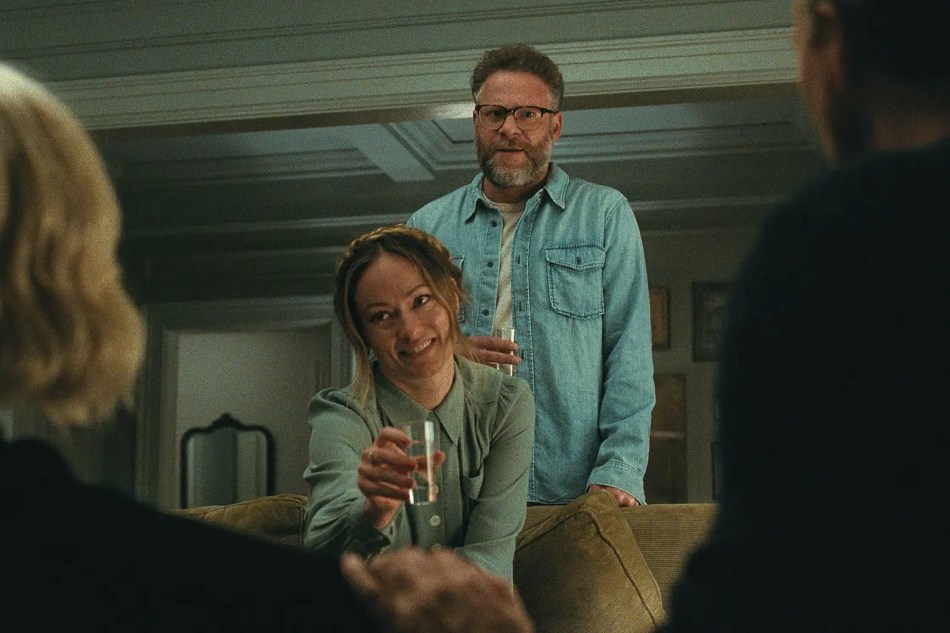
The Invite’s study of marriages and relationships, the distance that quietly grows with neither side intending any malice, and the different seasons of these romances, allows Wilde to explore the thin barrier between tragedy and comedy with considerable grace, poignancy, and authenticity. As she says in a letter published on A24’s website in promotion of The Invite, “The best comedies allow us to see how close pain is to pleasure, how connected heartbreak is to love, because it makes it all feel inevitable and therefore survivable. When Nora Ephron wrote Heartburn, which would be made into a perfect film by my lord and savior Mike Nichols, she slapped down her own broken heart as a sacrificial offering so that we could understand it didn’t kill her, and therefore might not kill us. Comedy about tragedy is catharsis.” The Invite is a very funny film. It finds its four performers at the top of their game, both dramatically and comedically. Practically every joke hits, but the power of The Invite is not just in how frequently it makes the audience laugh but in its personal touch. It is a remake of the Spanish-language film Sentimental and yet, Wilde breaks free of her influences and this original, adding her own personal spin and heart to this familiar setup. Wilde, as with Ephron before her, carries her own past onto the screen and instead of running from that trauma, she lays it bare for the world to laugh and relate, enabling The Invite to move and stir as often as it leaves one in hysterics.
Each performer carries with them that humanity, adding their own spins to their characters that are true to them and their on-screen presences. Every tick, movement, and utterance feels real. As a comedy of manners blending with dramedy or tragicomedy, The Invite revels in the small mannerisms and expressions of its brilliant cast. Wilde, especially, is excellent in playing this anxiety-ridden and desperate-to-please woman (her offering Pina “jamón” is one of the funniest moments in The Invite). She has long been ignored, forgotten about in her home that every pent up emotion over these past few years is bubbling right beneath the surface. She is a very sad character, a brilliantly realized one but barely keeping it together. She wears the weight of her marriage’s dissolution in every action, every little bit of affection or desire-filled look from Hawk or Pina fills her with an emotional warmth that she cannot contain. It leads to plenty of goofy lines and funny moments – the “namaste” line, especially. Rogen delivers many jokes that he has over the years, but here with a weariness and maturity to them, undercutting his own often prickly on-screen demeanor to show this unfulfilled and wayward man. Her reaction to everything to do with this offer of group sex is at once funny in a self-deprecating way and also deeply sad, feeling so unattractive and undesired in his own regard that being included baffles him to no end. They both exemplify this knife’s edge between tragedy and comedy that The Invite exists on, examining not only the fraying of the martial bond but also the deep loss of self-image and self-actualization that has heavily contributed to their mutual dissatisfaction and emotional haze.
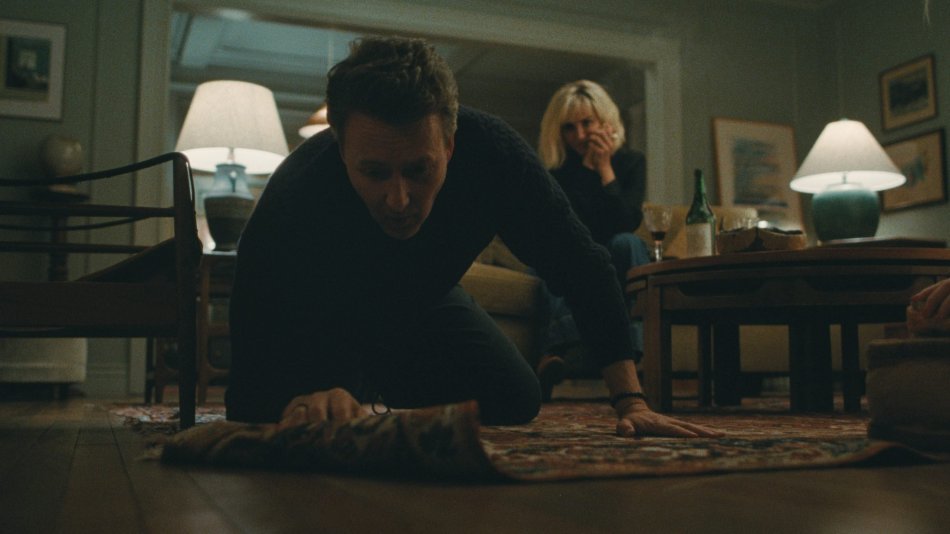
The Invite excels in simply letting its performers do their thing. Wilde and Rogen are often at the forefront, but Norton and Cruz are just as excellent. Their casual calmness in discussing the more outlandish elements of their swinging, Cruz’s energy and vitality, and Norton’s thinly veiled self-absorption mixed with bravado, make their characters into fascinating and wonderfully complex figures. The Invite finds laughs and poignancy is watching everybody function in this space, coming to somewhat a halt in its final act as it stops the ratatat of the evening after a big emotional crescendo to have a sort-of therapy session led by Pina that really drills home at what has gone wrong in Angela and Joe’s marriage, while bringing to the surface Hawk and Pina’s issues more directly. It is all about what is said in this sequence, running counter to the more “what is meant” nature of the dialogue earlier. It is hardly a huge flaw and its emotional touchpoints are needed in the overall context of The Invite, but it does feel a bit jarring on a first watch. Fortunately, it ends in a great final scene. Wilde is wise to leave The Invite ambiguous in terms of where these characters are headed with the harmony found between Angela and Joe in the quiet moments after the party is over, filling one with warmth and tapping into the feeling of the love that they once shared. It is always on the edges of their current disdain – their reaction to the offer of swinging, stealing away into Joe’s office to giggle between themselves and revel in the insanity of where this night has headed highlights their chemistry that their bickering often masks – but seeing it play out in such a quiet and intimate moment is a wonderful touch. It may not save their marriage, or it may be enough to have them try again. Either way, this evening has ripped them out of their sleepwalking, ending a chapter and starting a new one, free for them to write to their own desires.
The final scene of The Invite is a real highlight for the emotional warmth it possesses, but also for its cinematography with Wilde and cinematographer Adam Newport-Berra’s use of soft interior lighting cast on the face of Wilde and Rogen, the tight two-shot framing, and mixing in of close-ups creating a very intimate and touching visual. Wilde and Newport-Berra’s work throughout is exemplary. Wilde’s remarkable attention to detail in the mise-en-scène gives The Invite a vitality and claustrophobia that helps to ratchet up its emotional impact and tension. The blocking with the edges and corners of this apartment framing the characters within the walls, the usage of mirrors and windows as these connections between these characters in this home and with their neighbors, and the often intense close-ups that draw one into the nuanced reactions, considered emotions, and suspense of the odd beats in The Invite, all stand out as Wilde makes full use of this mostly one-location set. Every element in Angela and Joe’s apartment comes to life, every conversation and movement within it carries weight. Wilde and editors Yorgos Mavropsaridis and Anthony Boys really set the tone early with a throwback 70s-esque credit sequence with a split-screen montage of Angela and Joe readying the home or returning home, respectively, for this party. It is eye-catching and together with great usage of selective focus and focus racks, shows the nuance and depth with which Wilde considered every shot and sequence in The Invite. Every frame is filled with a multitude of decisions and inspirations, making it a revelatory and often exciting visual experience.
With a fantastic cast – Wilde, Rogen, Norton, and Cruz have all rarely been better, all playing characters finely tuned to their inclinations and making great use of their respective screen presences – and a sharp script from Rashida Jones and Will McCormack, The Invite is a wildly funny and thought-provoking exploration of fractured relationships, marriages, and the way time and life can create a slow, almost imperceptible drift in our lives that can sometimes take an extraordinary and unusual shock to the system to break out of. Olivia Wilde directs The Invite to perfection, creating a thoroughly lived-in and personal film that brilliantly lives on the knife’s edge of tragedy and comedy.
Discover more from Cineccentric
Subscribe to get the latest posts sent to your email.


0 comments on “The Invite ★★★½”