
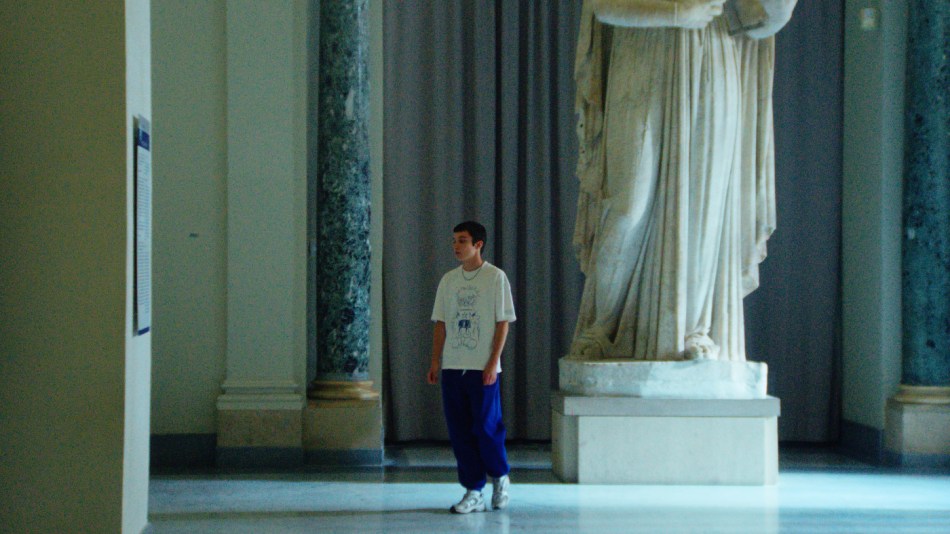
Before tackling Marine Atlan‘s didactic debut feature, it‘s helpful to know that its title refers to German writer Wilhelm Jensen‘s 1902 novella Gradiva: A Pompeiian Fancy about a woman who supposedly lived in Pompeii in AD 79, at the time Vesuvius erupted. The work was inspired by a plaster cast in the Vatican Museum and inspired Sigmund Freud‘s 1907 text Delusion and Dream in Jensen’s Gradiva. These convoluted references to the morbid thrall of ancient ruins, male fantasies about dead women, and the romanticizing of tragic events, give a foretaste of all the intellectualist and academic heavy-lifting that goes into what is essentially a pretentious puberty parable.
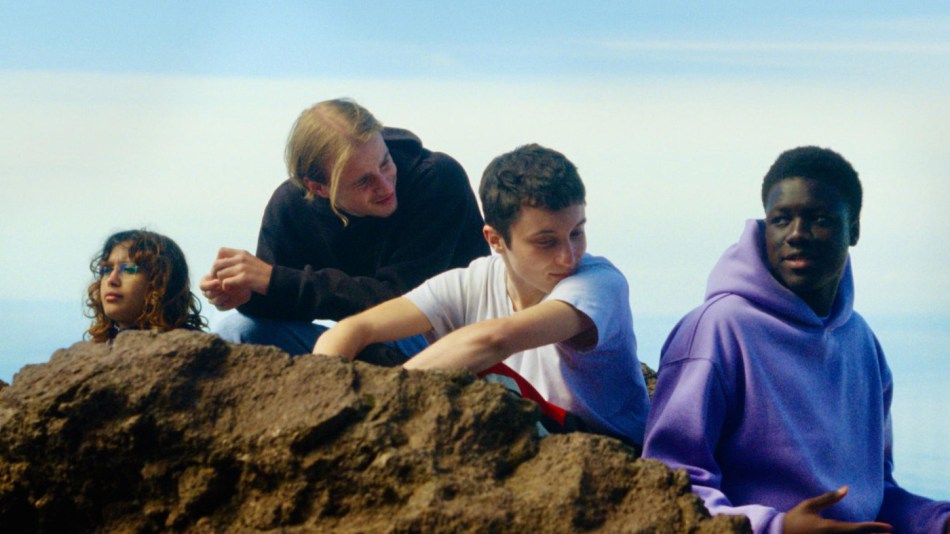
That being said, there are some interesting images – as is to be expected from a first-time feature director distinguished as a cinematographer – and promising plot points about class, queerness, and self-perception in the sprawling script. Co-written by Atlan and Anne Brouillet, it stretches to almost two and a half hours, most of which are filled with persistent gazes of melancholy contemplation or not very well hidden desire. One of these intrusive looks introduces the audience to two of the quartet of essential characters. Teenager Suzanne (Suzanne Gerin) stares at her classmate Toni (Colas Quignard) watching his best friend James (Mitia Capellier-Audat) have sex with Angela (Hadya Fofana).
All three are part of a group of Parisian high-school students traveling to Naples and Pompeii on a Latin class excursion under the supervision of their teacher Madame Mercier (Antonia Buresi). Constantly exasperated about the relatable kids’ disinterest in her infantilizing explanations, she is a mouthpiece for Atlan’s art historical views. These unfurl in verbose monologues that add considerably to the plot’s long-windedness. One exhaustive talk is on the destruction of Pompeii, another on a prenuptial wall painting. Together, they highlight the key motifs that feel as ancient as the Roman ruins serving as a scenic backdrop: sex and death. An obsession with these themes is also one of several shared traits of Suzanne and Toni.
A morose, unremarkable loner and wannabe teacher’s pet, she is the stereotype of the class outsider, while he embodies the stereotype of the class clown, hiding dark feelings behind a funny facade. They are also both queer, Toni openly and Suzanne closeted, and have a penchant for narcissistic fantasies. Toni tells made-up romantic stories about his aristocratic Italian family relations and his grandmother to everyone around, including himself. Meanwhile, his straight best buddy James, a supposedly good-looking extrovert loved by luck and all the girls, sets his sights on Mercier, who is hardly above her students in terms of self-centeredness and volatile favoritism.
Suzanne daydreams of being a citizen of Pompeii, having sex on the fateful day of the eruption. It’s a bizarre vision ostensibly meant to be erotic and hypnotic, but bed-linen Roman costumes and a shaking camera as a substitute for the trembling earth make it crudely laughable. Chats and petty arguments among the young people, all played by non-professional actors, are simply not enough to sustain a narrative that has little else to offer. There are hints that Toni might be underclass, which would explain his manipulative myth-making regarding his family background, as well as Mercier’s instinctive contempt and unfair treatment of him. But these are never developed, nor are the motifs of death wishes and romanticized suffering.
Despite its palpable potential, the tepid tale is simultaneously too overwrought and too underdeveloped to be more than an artsy coming-of-age story. Even as such, the painfully slow story doesn’t really work due to its clichéd characters and obtrusive symbolism. As the story itself points out, there is a distinct difference between art and artificiality. La Gradiva only achieves the second.
Discover more from Cineccentric
Subscribe to get the latest posts sent to your email.


0 comments on “La Gradiva ★★ ½”