
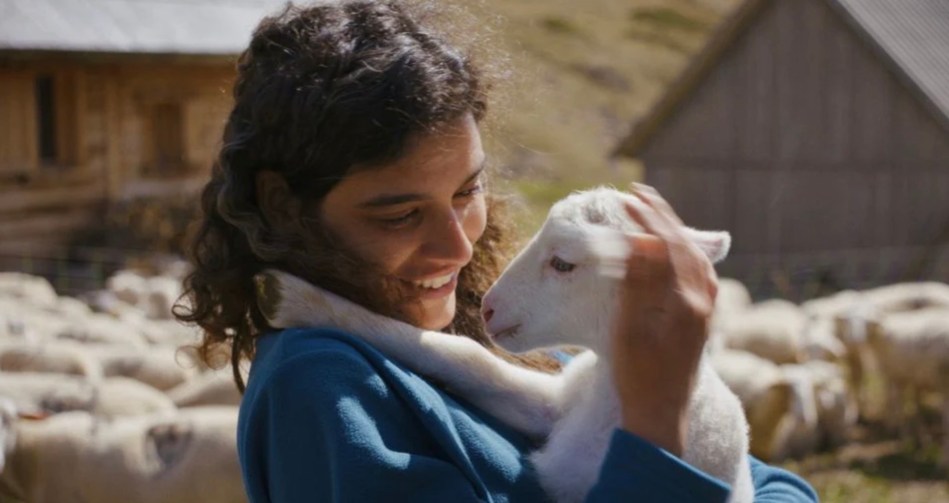
“Quite a lot of people get lost,” remarks the young protagonist of Naël Khleifi and Lisa Debauche‘s intimate portrait of inner and outer exile. Premiering at Locarno’s Concorso Cineasti del Presente, the semi-fictional study creates a fleeting but genuine impression of the personal process of reconciliation. The scenic beauty and serenity of the Alpine meadows where Hana (Manal Issa) lives and works as an apprentice shepherd in an isolated cabin emerge as a contrast to her troubled inner landscape. No matter how far she might be physically removed from her Lebanese home country, the longing and pain associated with its memory remain close. Beneath the picturesque pastures where she grazes, her sheep lies a phantom picture of Lebanon’s wind-swept plains.
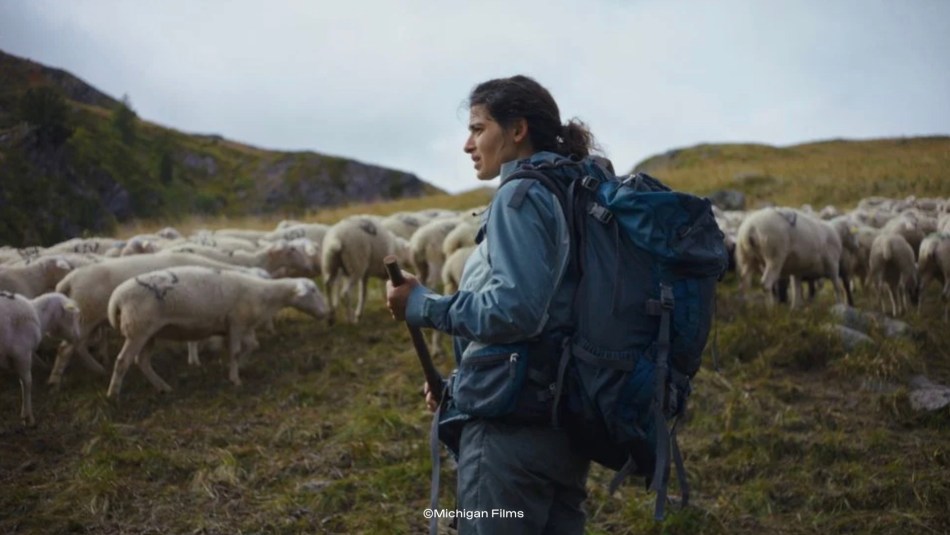
They only once take shape in grainy mobile footage, after two formative encounters that pull her out of her emotional emigration. The latter is seen as a form of betrayal by her mother, whose reproachful voice on the phone doesn’t need any additional physical presence. Through cinematographer Diego Romero Suarez-Llanos‘s documentarist images, the director-writer duo stays always close to their protagonist, creating a strong sense of time and place. “Do you know that there’s a war?” asks Hana’s mother rhetorically. Articulating the guilt her daughter feels also intensifies it while revealing the family rifts that led her to this distant place without proper phone reception.
While it never becomes fully clear how long she has been residing in the French Alps, it must have been a considerable time. She has gained trust with the secluded population. After her former shepherding assistant left impulsively due to an unexplained fallout, they send inexperienced Lisa (Sybille Bataille) to learn and help. With her levity and softness, she poses a contrast to her companion. Their diverging attitudes shine in casual moments of checking the flock together. Lisa picks up and cuddles a lamb while Hana laughingly reminisces about her family home-slaughtering sheep, and her own first time cutting their throats.
Little moments like these also serve as a reminder of the death and violence impending even in the most peaceful settings. As they grow closer, Hana shares some memories of her home and settling into mountain life. Not everyone is welcome there, as police hunt two immigrants who crossed the border in the mountains. Hana only watches from a distance, but later the two young travellers become guests in her cabin. Her instant solidarity and shared language create an immediate bond with one of them, a young man from Morocco travelling to explore the world and escape the confines of his upbringing.
Their conversation becomes the straightforward plot’s realist center, reconnecting the idyllic setting following the rhythms of weather, animals and manual labour with global politics and geopolitical rifts. Hana’s three companions initiate an inner transformation halted for far too long in the most humanist way. With its timely hybrid form wavering between documentary and fiction, the tentative study of character and environment sketches its central protagonist and her psychological shifts with swift but precise strokes in only 65 minutes’ runtime. Manal Issa’s subdued performance and her natural rapport with Elkabir Belfatmi‘s migrant traveller evoke an emotional understanding that needs no narrative exposition, only patience with new dramatic approaches.
Discover more from Cineccentric
Subscribe to get the latest posts sent to your email.


0 comments on “Summer Meadow ★★★”