
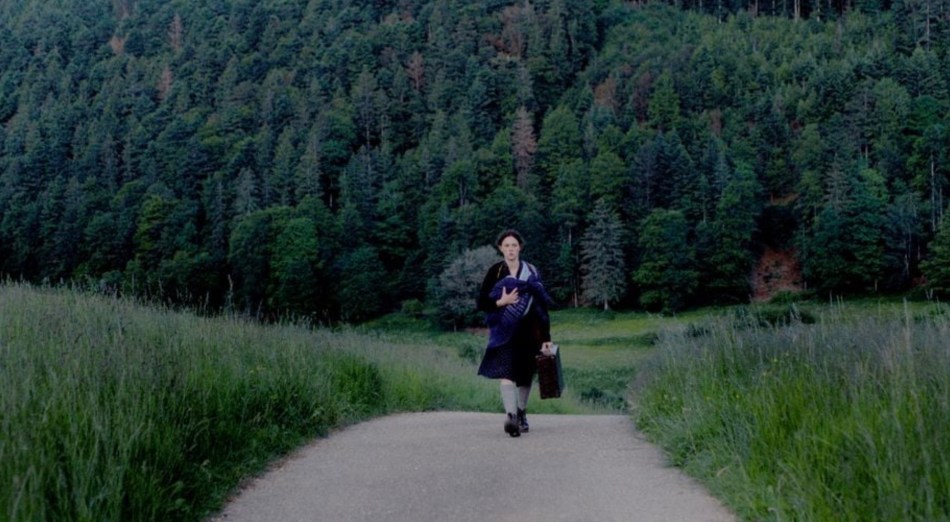
Her mother is “a bad woman”, says 15-year-old Emma (a remarkable Lila Gueneau) at the beginning of Marie-Elsa Sgualdo‘s ambitious debut feature that builds its moral trajectory inversely to that of its young protagonist. Her scathing statement reveals her own sense of moral superiority as well as her complicity in the sanctimonious system the director and her co-scriptwriter Nadine Lamari try to deconstruct. Just as Emma is an exemplary figure, the village serves as a window into Switzerland’s humanist hypocrisy during the Second World War. As the story begins in 1943, Emma’s home country is using its status of neutrality to profit from the Nazi terror.
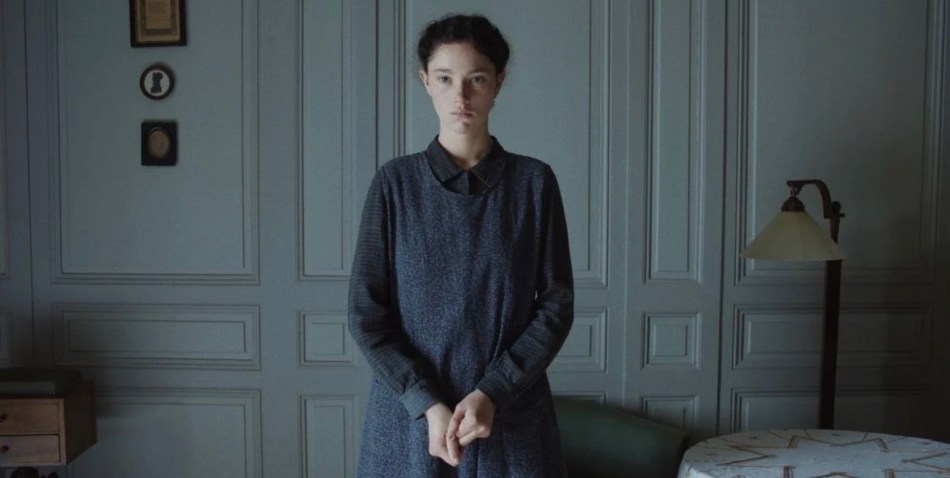
While Swiss border patrols are trawling the forests for German Jews trying to escape, Emma is wrapped up in her own struggles. Since her mother was chased from her home in a Swiss Protestant village for having an extramarital affair, Emma takes care of her two little siblings while working as a domestic servant for the pastor’s family. Their daughter Colette (Sasha Gravat Harsch) is almost like a friend to Emma, who is nominated for her village’s “virtue prize”. The money coming with this prudish trophy would allow her to attend nursing school with Colette. These modest dreams are shattered when a sexual assault by a young man from an affluent family leaves her pregnant.
The village superiors’ heightened scrutiny of her as a promising candidate for their prize increases the pressure and fear of public shame for Emma, who tries each of the miserable options she has. An attempt at a self-induced abortion fails, the perpetrator refuses all responsibility, and her hasty marriage to a German soldier becomes unbearable. Benoît Dervaux’s bleak images in cold, muddy hues underline the utter joylessness of Emma’s existence. So far her life has been determined by fulfilling other people’s expectations, only for her to realise how quickly her community rejects her. Forced to reconsider her moral views, she attempts to reconnect with her mother (Sandrine Blancke).
Competent acting, especially from Gueneau, lends some emotional substance to the characters whose main function is to embody sociological positions. Accordingly, Sgualdo’s primary focus is on the manipulative mechanisms turning people into accessories to a system that represses and exploits them. Puny tokens of acknowledgement promise inclusion into a higher circle that, in fact, will never accept them. While class status and financial stability grant Emma’s employers an instant moral seal of approval, working-class people like her have to constantly prove their worthiness. It’s unclear if Emma supports these structures until she herself falls victim to them, whether because she doesn’t see through them or because she believes she could still profit from them.
Her own motivations and hopes remain vague, as the plot points that could reveal them – like her friendship with Colette – are never fully developed, and the rebellion the international title evokes never materialises. As an individual analogy to Switzerland’s collaboration with the Nazis, her struggle expands the central themes of ethical autonomy and moral responsibility to an everyday scenario. Production values are high throughout and the rural setting creates an expressive contrast of scenic landscapes and pious corruption. The sober look at Swiss history casts some light on an intentionally overlooked historical chapter. Despite its potential and promise for the director’s future works, the well-crafted period piece can’t overcome the intellectualist atmosphere of a moral lesson.
Discover more from Cineccentric
Subscribe to get the latest posts sent to your email.


0 comments on “Silent Rebellion ★★½”