
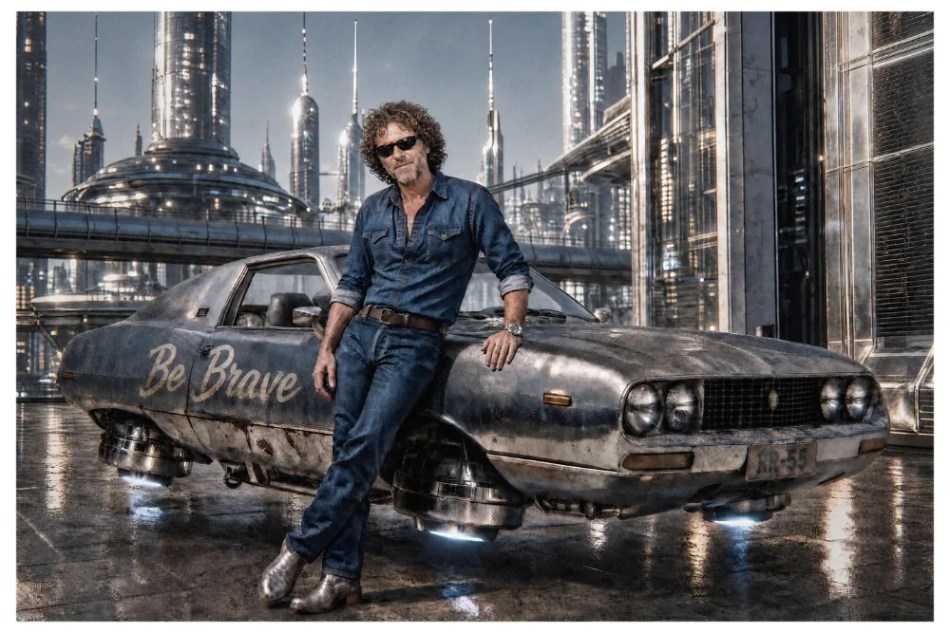
This story the audience was about to see really happened, claims a text at the beginning of Francesco Carrozzini’s promotional portrait of Diesel founder Renzo Rosso. “So, yes, it’s true.” However, many of the images and scenes are created with AI. ‘So, yes, it’s fake.’ The antithetical comparison is one of countless to come in the next 90 minutes; a tell-tale sign of texts generated by AI which the director and co-scriptwriter proudly presents as the defining force behind the (officially) first AI feature in the programme of the Venice Film Festival. Though Carrozzini raves about it as if it was the first AI-film ever, or rather: prompts his chosen ChatGPT-variant.
Having the latter write the director’s statement on the Biennale film page seems only logical and less inept than the Biennale’s various other directors’ statements riddled with AI-slop symptoms. That’s not to imply there was any quality in said statement, giving a foretaste of the off-commentary’s megalomaniac mythologizing of Rosso while indirectly overstating Carrozzini’s supposed genius. Its eight sentences use four times the wording “provocateur”, “provocative”, and “provocation” – for applying an omnipresent technique. Nevertheless, even this seemingly insignificant snippet underlines that Be Brave is a full-blown marketing vehicle, every little part of it styled and streamlined to project a specific image and narrative.
Praising AI as rule-breaking, creative, rebellious, and original, when it is in fact – to use the algorithm’s favored antithetical comparison – programmed, derivative, conformist, and generic, is part of Rosso’s self-aggrandizing strategy. If he wants to be perceived as the epitome of inventiveness and disruption, the technique, tools and talent associated with him have to be inventive and disruptive, too. Consequently, the eclectic biopic carefully selects and stylizes the people included in the slick synthetic scenery while omitting others. Arianna Alessi, vice president of Diesel’s parent company OTB (Only the Brave) and Rosso’s wife, appears as underground punk artists when joining the company. In real life, Alessi was in banking.
Martin Margiela, chief designer of the French luxury brand Maison Margiela which OTB bought in 2002, seems a kindred spirit to Rosso. Only six years later he discreetly left the company in disillusionment, but that’s never mentioned. And Rosso? Fake black-and-white footage, grainy vintage video imitations, and nostalgic photographs (some of them apparently real) reimagine his early years as humble beginnings which hard work and chaotic creativity turned into success. The rebellious rags-to-riches story is a far cry from that of a university student who used his father’s money to buy shares in a well-established company he later renamed. Idealised imagery reflects this conceited careerist canonisation.
Futurist visions show a denim-clad ageless CGI construct of the protagonist whose balding, pudgy physique looks nothing like the sinewy frame and lush curls of his AI alter ego. Desperate to be hip and sexy, this cringy caricature is the hero of an array of old and new advertising clips. Daring, sometimes questionable campaigns had an immense impact on Diesel’s brand status. But that doesn’t mean any credit for Jocke Jonason from the advertising agency Paradiset, whose formative ads all seem like Rosso’s brainchildren. About a dozen full-length Diesel ads from the 90s to the noughties speckle the algorithmic amalgam of biography and brand profile without any analysis of what made them effective.
By targeting minority customers with subversive humor and political commentary, while reassuring its conservative customer base with old-fashioned family values and classic iconography, Diesel cemented its image as at once traditional and modern, reliable and unpredictable. Carozzini’s cinematic commercial continues this strategy by fusing cinema and AI. Systematically avoiding social, political, and psychological insight, let alone criticism or mentioning the brand’s filing for bankruptcy protection in 2019, becomes symptomatic of Carozzini’s materialist mantra. It tries to do the only thing AI is able to, ironically what Diesel did all along: copy existing patterns and arrange them into a semblance of originality. Paraphrasing a Diesel slogan: Be stupid.
Discover more from Cineccentric
Subscribe to get the latest posts sent to your email.


0 comments on “Be Brave (documentary) ½”