
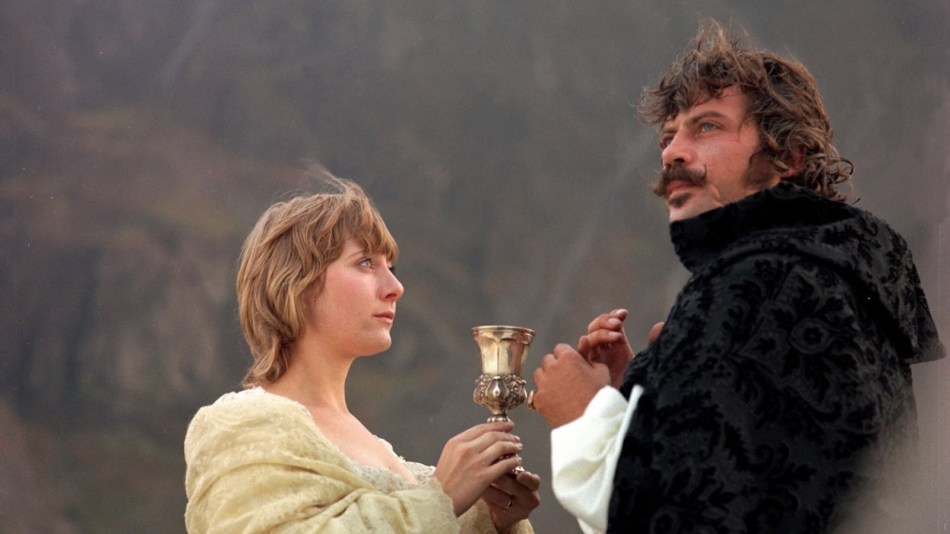
Director Ken Russell’s The Devils has a turbulent history. First released in 1971 to negative reviews, it reached the big screen in a censored, cut down version mandated by Warner Bros. It was nothing unusual for Russell who, by then, had already clashed with numerous film studios over his daring visions with his penchant for religious imagery mixed with psychosexuality, fetishism, and mania leaving studios before and after his work on The Devils unsure of how to handle the material he delivered. The Devils and its controversy, especially its perceived blasphemous and sacrilegious material, earned it a particular notoriety. For years, it was nearly unavailable. In the digital age, an early 2010s DVD release in the United Kingdom via the British Film Institute and a short-lived stay on the equally short-lived streaming service FilmStruck – the latter is how I first saw the film in 2018 – accounted for the few times The Devils had legally emerged from the vault in decades.
British film critic Mark Kermode, a long-time friend and ally of Russell’s, has led the charge for decades in liberating The Devils. A decade ago, I remember reading rumors – on physical media website message boards, so consider the source – about a Warner Bros. executive who would “faint” every time The Devils was even mentioned to them. Where the truth lies on that likely hyperbole is uncertain, though Kermode for his part long ago confirmed that Warner Bros. had no intention of releasing the film in any form. They had rebuffed offers from the Criterion Collection and others to restore the film and, in particular, reverse the censorship of Russell’s most controversial scene in The Devils: the “Rape of Christ” scene. It is a scene that was absent from its past altered releases, including in the version that I first experienced the film. Now, in 2026, 55 years after its first release, The Devils is back on the big screen. It is the first release for Warner Bros.’ new arthouse label WB Clockwork (and now the first release of the newly merged Warner Bros.-Paramount behemoth, Skydance), the re-release the result of work on restoring The Devils in its entirety, presenting it as Ken Russell originally intended.
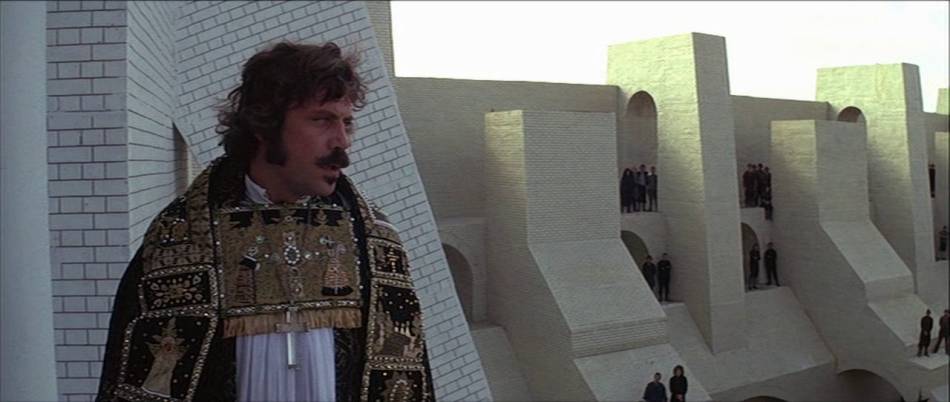
Perhaps the most shocking element of The Devils is that, as its opening text announces, it is a true story. Now, Russell has undoubtedly given it his usual spin, but the basic facts nevertheless check out. An adaption of Aldous Huxley’s The Devils of Loudun and John Whiting’s play The Devils, Russell’s film follows Urbain Grandier (Oliver Reed), a 17th-Century French priest who is accused of witchcraft. He was a controversial figure within the Catholic Church to begin with, a Jesuit trained priest who pushed back against clerical celibacy and, as Russell depicts, sleeps around with local women and even takes a wife. He was also no ally of Cardinal Richelieu (Christopher Logue), who was both a leading voice within the Church and a key force behind King Louis XIII (Graham Armitage). Aside from their differing ideals of how to spread and practice Catholicism, Grandier and Richelieu were on opposite sides regarding Loudun’s unique governance. Loudun was part of France but self-governed, the city surrounded by a wall that was geared towards keeping out all enemies, including an overreaching French government. Outside its walls, France was deep in the throes of religious conflict with Richelieu leading the charge to rid France of all Protestants. King Louis XIII was keen to see this through – as Russell shows him to be a belligerent and hedonistic leader, a man who is rather flamboyant and sees this as less an opportunity to spread Catholicism, of which he is skeptical, but to simply take his sadistic desires out on a group of perceived lessers – but also beholden to a promise to Loudun’s prior Governor to allow it to remain with its walls and political isolation.
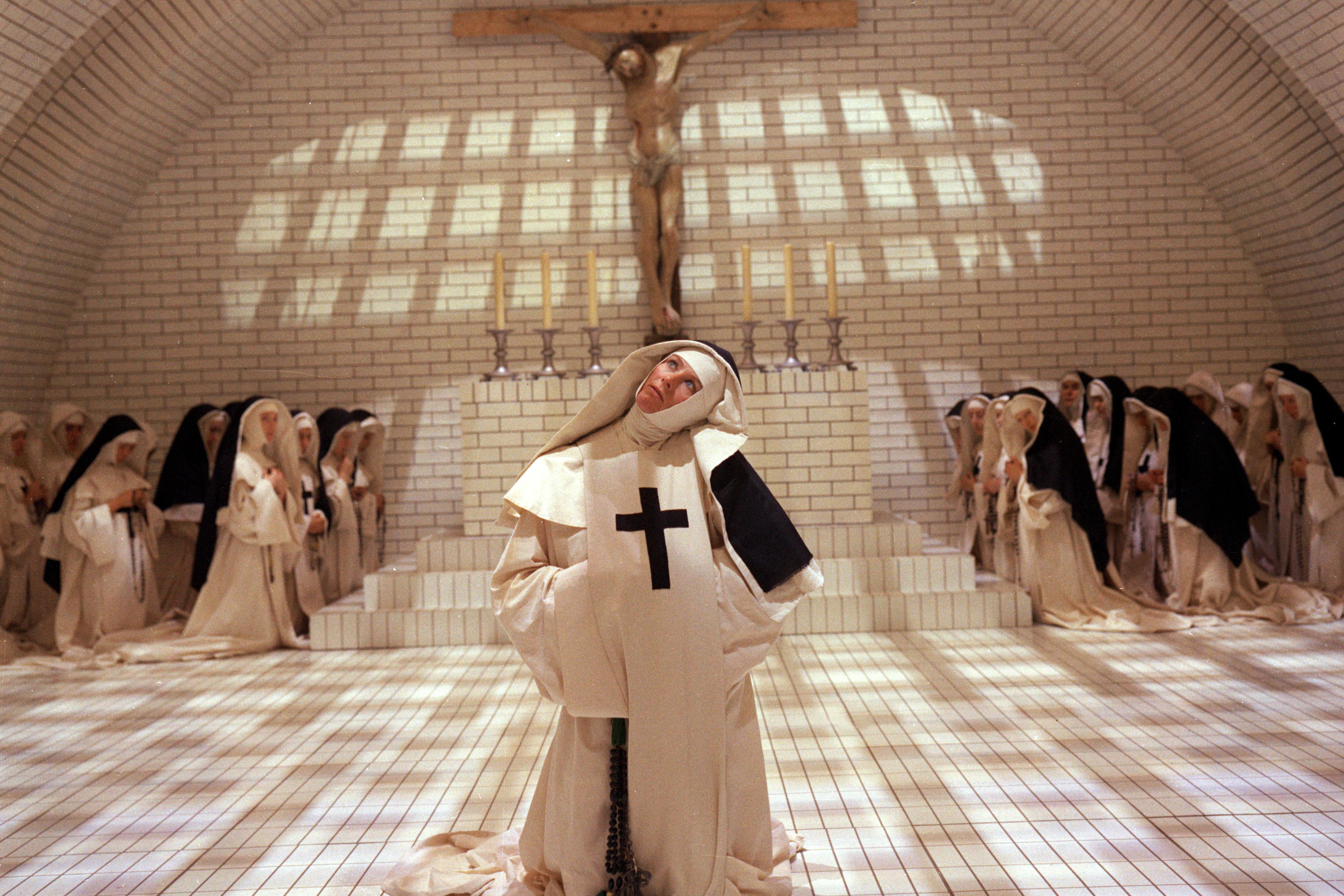
Grandier’s refusal to turn his back on Loudun’s Protestants and a refusal to allow Richelieu or his henchmen, most notably the Baron de Laubardemont (Dudley Sutton), to tear down Loudun’s walls exacerbated the strife between Grandier and the Church. Soon, Grandier is accused of sorcery, of using his powers of the flesh to bewitch and spoil the nuns of a local Ursuline convent. Sister Jeanne des Anges (Vanessa Redgrave), a sexually repressed nun with scoliosis who is obsessed with Grandier, makes the accusation and soon, her fellow sisters who are just as taken by Grandier’s beauty back up her accusation. Father-Canon Jean Mignon (Murray Melvin) hears the accusation and brings it to the Baron who, acting on orders from the Cardinal, brings Grandier to trial for heresy. Russell plays this to history, positioning this as a clear political act. Whatever Grandier’s genuine personal indiscretions, neither the Catholic Church nor France care. They care about ridding themselves of the opposition, a man who opposes Cardinal Richelieu’s intended Christofascist France and who would dare defy him in his quest to overtake the nation, using King Louis XIII as a mere puppet.
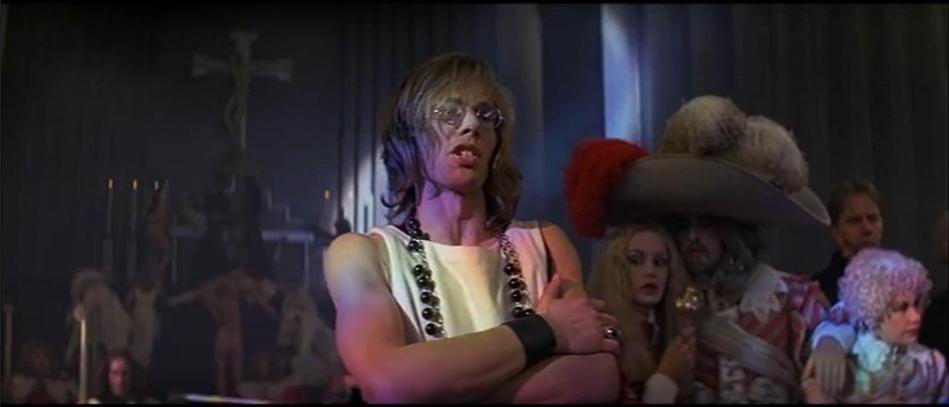
The Devils is most controversial in its depiction of events within the convent. Whether it is Sister Jeanne’s masturbation scene, the portrayal of lust and blasphemy, lesbianism amongst the nuns, and a group orgy/exorcism led by local witchfinder Father Pierre Barre (Michael Gothard) – an event openly mocked by King Louis XIII, including a hysterical bit about a claimed religious relic inside a box that Barre is moved by, only for the King to reveal the box to be empty – The Devils ticks every box that one would expect from a Russell film. It is a film marked by its exploration of sexual repression and obsession, especially in regards to nuns and priests alike with the ramifications of this forced restriction on their minds and bodies being spun into a lust-filled sexual and religious psychosis that leaves them in a manic state. Russell’s religious imagery here, including likening Grandier in Sister Jeanne’s fantasies to a Christ-like figure walking on water or stepping down off the cross to make love to her are part of what makes The Devils controversial, though the “Rape of Christ” scene is at the forefront.
That scene is stunning and haunting. It is challenging and confrontational, a visceral assault on the spiritual mind that demands to be reckoned with as an image. The scene depicts the mid-orgy nuns of the convent tearing down a statue of Jesus Christ on the cross from the wall. Over his hands, crotch, and face, they pleasure themselves. At first, it can be shocking. In context, it is a stunning image, a scene crucial to the main crux of The Devils. The film is notably a story of sexual psychosis like Russell has often done, using phallic and psychosexual imagery throughout the film. However, it is also a study of fascism and the combination of Church and State. It is a film about the Catholic Church wielding the name of Christ and religion for secular gains, a perversion of Christianity that encourages the sinful and soul destroying nature of the Church. As these nuns defile Christ with their bodies, the Church defiles Christ with their words and actions. It is a Church of fear, power, and blood. It is not a Church of love or worship. It is, as Sister Jeanne tells a would-be nun, not even a Church one enters into as a nun or priest out of a desire for service. It is the result of lackluster dowries for young women or the result of disinterest from potential suitors, making it an oath of “convenience” to stuff away undesirables. The Devils undercuts every element of the Church, removing the facade and unmasking the frailties of humanity lurking therein.
For as often as The Devils has been described as blasphemous or sacrilegious, its critiques around religion are less about God or faith in general than in how it is utilized. Especially in this historical context, religion in The Devils is used as an excuse. Protestants are tortured and hunted for sport. These nuns are violently raped and mistreated by these so-called envoys of the Church investigating Grandier. Grandier himself is taken to trial, brutalized, and burned at the stake for his crimes of standing up to the Church. Whatever reason will do in asserting the Catholic Church’s power, whatever reason will do in allowing man to exert his base desire for violence, pain, and feeling powerful over his fellow man, and it is this power, this organization that wields its hold on humanity in such vile ways that Russell is critiquing. Grandier himself is at the center of how The Devils views religion. He is, of course, on trial for standing up to the Church and on behalf of Protestants. But, internally, he is a man who sins openly and freely. He is callous and cruel to the women who obsess over him, but he is also filled with a self-loathing to go along with his vanity and pride. In his own way, Grandier expresses his earnest belief in God and eternal life, but he is flawed and imperfect in a very human way. He aims to steer those in charge toward divinity, all while being unsure of how to attain it for himself, how to not abuse his power and influence, and how to contain his own sinful desires.
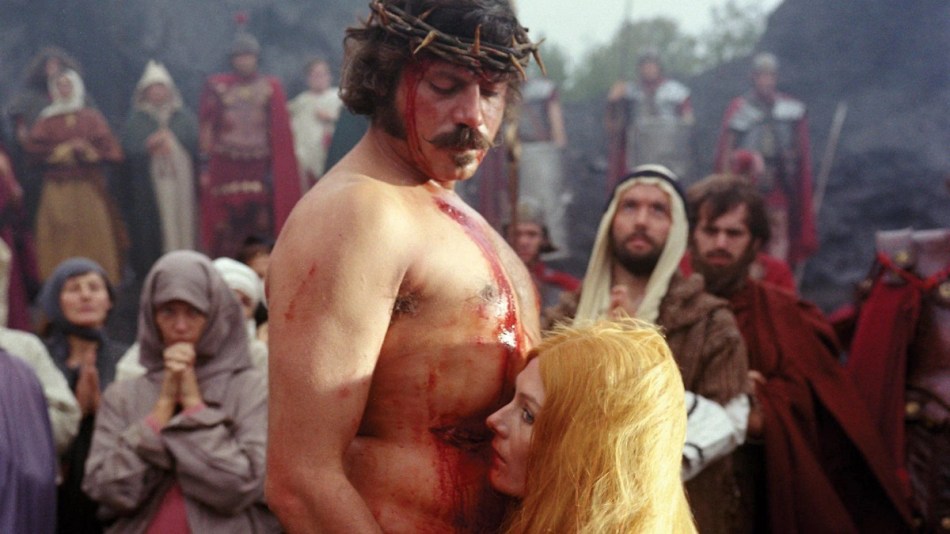
When the Church comes for Father Grandier and makes a martyr of him for defying the creep of fascism into his small corner of France, there are some in the Church who genuinely believe themselves to be doing the work of God. Father Barre may be disassociative enough to believe it true. Gothard’s genuinely insane, 70s rock lead singer-esque performance makes him appear equal parts fanatic and possessed. Father-Canon Mignon, however, is left traumatized by what he has done, realizing only too late that Grandier, no matter the sins of the flesh he committed, was neither heretic nor witch. The greatest irony of The Devils is that Grandier finds no friends in the Church or in Loudun at the hour of his death. It is only his executioner, who promises to strangle him before the fire is lit, who shows him kindness and seeks forgiveness from Grandier when Barre overzealously lights the stake aflame earlier than expected. Grandier was a man who simply wanted to protect his people, a duty and oath repaid by being tortured with the Spanish boot and then burned alive at the stake as the people of Loudun watched and cheered. Furthering the religious imagery and Christ-like connections, Grandier pleads for forgiveness for his people, but the result here is not the birth of a new religion but the damnation of Loudun. Given an enemy of the state, the people of Loudun united against them, all the while the Cardinal, Baron, and King had designs on tearing down their walls and bringing their small slice of France to ruin.
The Devils is a remarkable film, a searing and singular work that only Russell and his specific idiosyncrasies could bring to life. The type of sexual hysteria underpinning the nuns is something that Russell would often show in his films, though I think mostly of his later Valentino, a sort-of biopic about silent film star Rudolph Valentino (Rudolf Nureyev). It is not an altogether successful film, but Valentino opens with Valentino’s body in a coffin only for his adoring female fans to all mob the funeral home, even crashing through glass for just a glimpse and a touch of his corpse. The nuns of Ursuline are quite similar, using ladders to reach high windows to see Grandier, crouching down to street level grates as he passes by to see him again, or orchestrating elaborate excuses for possible meetings where their fantasies regarding him and his powerful physique can come true.
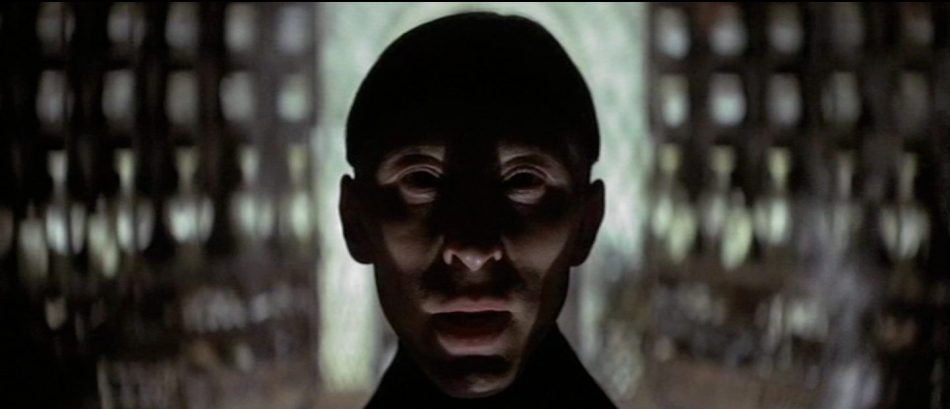
Oliver Reed is, as ever, brilliant. He shines throughout, having an inner power and machismo that make Grandier no figure of imagination but one of stunning vitality that one can immediately understand what has driven these nuns mad. His eloquence and fiery delivery in the trial scene, especially, stand out as he cuts through the arguments against him with ease but finds unkind ears all around and the shell-shocked faces of his one-time allies who have been tortured into testifying against him. There are so many incredible line reads – “Satan’s boy I could never be. I haven’t the humility,” is an especially great one with Reed’s gravitas – that makes his Grandier into a remarkable character, as well as reactions such as almost exasperation at being exalted as the height of beauty by yet another admirer. Vanessa Redgrave’s portrayal of this repressed nun is similarly exemplary, radiating the self-loathing and internal contempt that dominate Sister Jeanne’s life. Her manic and lustful states mixed with her somewhat slithery delivery as she condemns Grandier with her false accusations make for a hypnotic performance. The supporting cast is exemplary across the board. A scene of the conspirators against Grandier shot at an extreme low-angle by cinematographer David Watkin is a stand-out of the film’s remarkable shot compositions, while the scene itself is a great showcase for Dudley Sutton. He has a pompous wickedness to him that is repelling and compelling in equal measure. Michael Gothard’s scenery chewing as this electric witchfinder is impossible to look away from, while Murray Melvin holds some of the soul of the picture in his eyes. That final scene at the stake, especially, but throughout as well. The horror and revulsion he has in his face as he sees the rape of Christ – also shot from a low-angle – while Watkin’s dark, shadowy lighting particularly loves Melvin’s face, casting much of him in darkness but for his eyelids and facial outline. His Father-Canon Mignon’s darkness and cunning at times, only to then be shaken at how his perception of Grandier and his own personal vanities led him to be twisted and used by others add a heartwrenching layer to an already harrowing scene.
The Devils is a remarkable technical feat in every aspect. Derek Jarman’s sets are stunning. The often flat blacks and whites inside in the interiors juxtaposed with the brutal reds of blood that cut into scenes epitomize the visual style of The Devils. It is a jarring picture, a film with editing that emphasizes harsh cuts from fantastical pleasure to unsettling images of violence. It is a marriage of the two, the pain and pleasure going hand-in-hand. Grandier’s early scenes are dominated by sex, only to descend into the city as it is ravaged by plague and flame. By the end, his body is cruelly broken and the flames are now lit for him. Sister Jeanne’s scenes of pleasure and lust are countered by her self-flagellation, trying to cleanse her flesh of the sins she commits and feels. Jarman’s interior design style here and the creation of the facade of Loudun make the blood and orange flames pop against the background. The emphasis of white in the production design also creates a flatness, a false purity and perception of cleanliness upon which the debauchery and chaos that occurs in The Devils roundly counters and massacres.
Ken Russell’s The Devils is a masterpiece. When I first saw it in 2018, I felt that way and now, after seeing it on the big screen and experiencing Russell’s full vision, that feeling is intensified. It is a stunning revelation of a picture, a perfect marriage of Russell’s startling depiction of sexuality and violence and the history-based political persecutions around a Christofascist state. The Devils is a sprawling and unabashedly bold film, one that undercuts the Catholic Church, Christian dogma, and depicts the callousness of religious violence in the name of a God whose image, words, and name these so-called Christians defile and use for their own gain. It is a film born of this religious skepticism, a film not afraid of heresy or blasphemy in the name of expressing Russell’s now-unencumbered vision. The Devils is a film built in history, one that was set in the 17th-Century and was released in 1971, but carries with it a timeless message about fascism wrapped in religion and nationalism that threatens to decompose a nation and bring it under the control of bloodthirsty tyrants.
Discover more from Cineccentric
Subscribe to get the latest posts sent to your email.


0 comments on “Blasphemy, Fascism, and Sexual Hysteria in The Devils”