
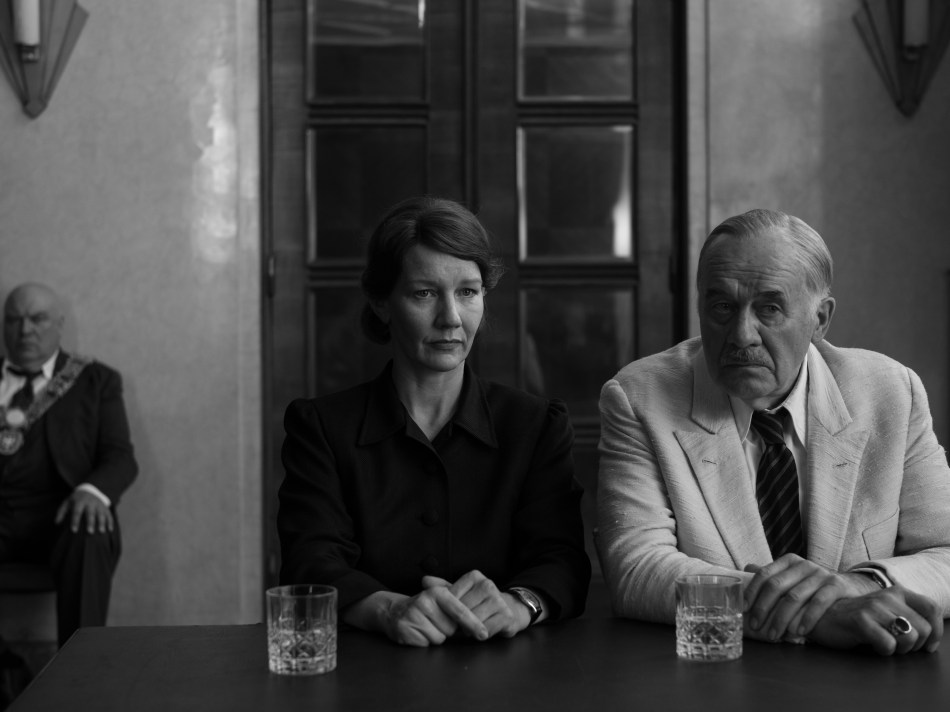
German author Thomas Mann is best known for his deeply introspective novels and his novella Death in Venice. At the start of Fatherland, Paweł Pawlikowski’s latest film which is inspired by true events, Mann (Hanns Zischler) is to travel to East Germany to accept a Goethe prize for his achievements in literature. He is accompanied by his daughter Erika (Sandra Hüller), who acts as a translator to the press, and it is through her point of view the film is told. She observes the reverence at which her father is held, and recognizes the political implications of his accepting the award in East Germany.
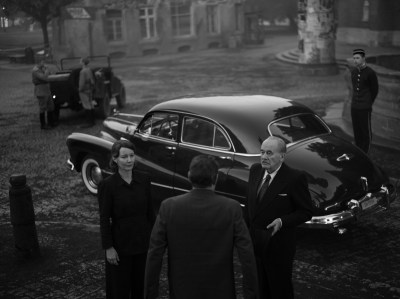
Mann, who was a defender of the democratic Weimar Republic and a critic of the Nazi movement that destroyed it, is devoted to his country and prideful, regarding East and West Germany as one and the same despite Soviet control over East Germany. Erika is more pragmatic about recognizing how Mann’s visit could be leveraged by the Soviets for propaganda and legitimization of their regime. Despite his awareness of this, Mann’s resolve to travel and accept the prize is not reduced given his idealism and, to him, the significance of the award. Johann Wolfgang von Goethe, the namesake of the award, was a leading figure in German literature who was distinguished for his writing that espoused optimism and harmony rather than the darkness, tragedy, and existentialism favored by his contemporaries. Mann admires Goethe’s values and regards his travel across a divided Germany to accept the award as representative of Goethe’s ideals.
During their travel, Erika is informed that her brother Klaus (August Diehl) has overdosed on sleeping pills. Her response to his death is anguish while Mann is less visibly distraught. Mann’s intellectualism is portrayed as cold and naive in the context of their journey and in his response to his son’s death. Mann is very cerebral and similar to the character of Professor Isak Borg in Ingmar Bergman’s Wild Strawberries who is also an intellectual who travels to receive an award later in life. Like Bergman’s film, Pawlikowski’s is filled with gorgeous black & white cinematography with Łukasz Żal meticulous in his framing of characters, particularly music performers (Cold War actress Joanna Kulig makes a cameo).
Compared to the first two films in Pawlikowski’s post-war trilogy, Fatherland is understated and not as bleak. Like Mann, Pawlikowski is introspective and seemingly reflects on the tragedy of the stories he told in Ida and Cold War. In this third entry Fatherhood, Pawlikowski instead pays homage to Goethe’s optimism, emphasizing healing and introspection rather than the adverse political implications of Mann’s trip. Even though the lingering impact of World War II is visible across Germany and surrounds Erika and Thomas, Pawlikowski’s characters find hope, harmony, and peace even amidst the destruction. Whether through Mann’s idealism or Erika’s empathy, Fatherland suggests that healing and recovery is possible for the future and acts as a fitting conclusion to Pawlikowski’s trilogy.
Discover more from Cineccentric
Subscribe to get the latest posts sent to your email.


0 comments on “Fatherland ★★★”