
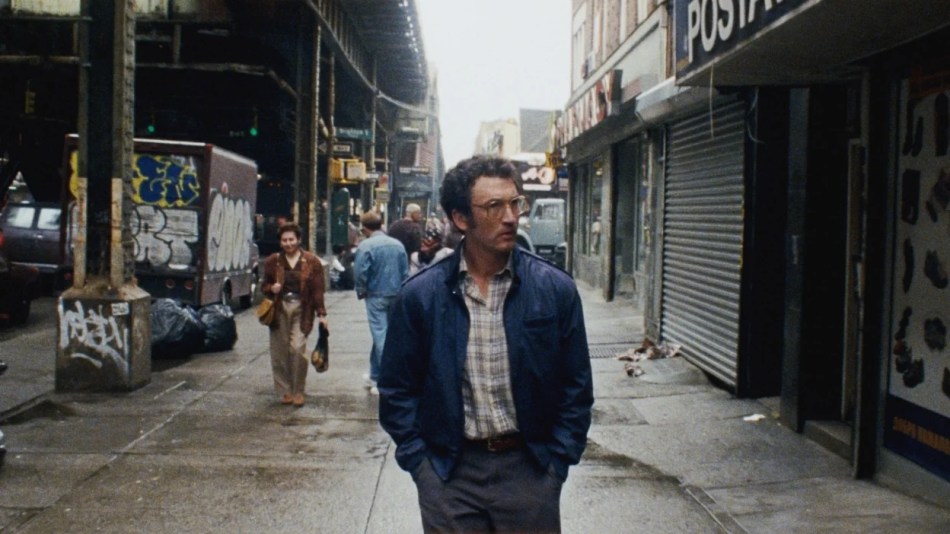
There is a fragility to writer and director James Gray’s Paper Tiger. It is a film finely poised on the precipice of the “before” times ahead of a major life event, a time when Uncle Gary (Adam Driver) was bringing over dinner, mom Hester (Scarlett Johansson) was hustling around the house to get the kids ready, dad Irwin (Miles Teller) was in the yard making storm windows, and the kids Scott (Gavin Goudey) and Ben (Roman Engel) were roughhousing. Life for the Pearl family was pretty good, usual problems aside. They were dreaming of the future and surrounded by love. In life, one hardly knows how good they have it until it is too late, thrusting them into a new phase, an “after” where that which was taken for granted as a constant is gone. Paper Tiger is about the delicate nature of life, of how through our erroneous actions or pure happenstance, our entire worlds can change in an instant.
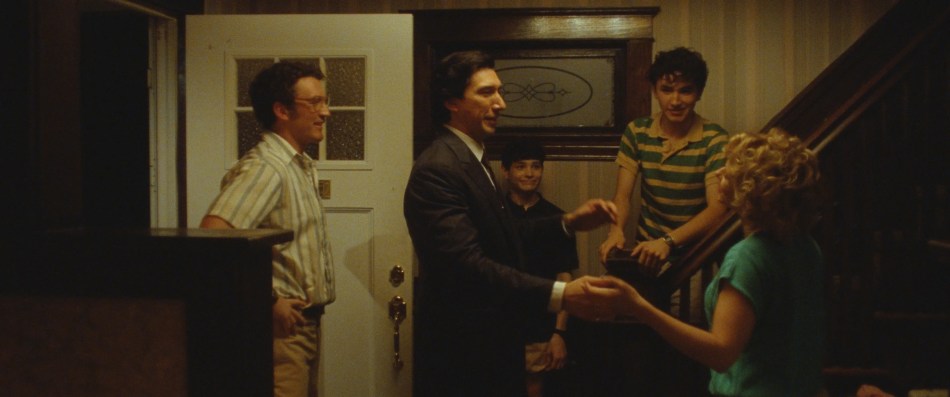
Paper Tiger’s noirish turn of events are started by an offer of dinner and a talk, Gary bringing with him a steakhouse dinner to Irwin and Hester’s home, as well as a business proposition. Gary was a cop, one who prides himself on being “clean” despite the “whole city being on the take,” though he lives a lavish lifestyle, lighting up every room with his charisma and swagger. Some friends of his in City Hall and at the Port Authority have given him a tip about a clean up effort for the Gowanus Canal. It is a hefty job, but one that could turn around the entire area and Gary has found a way in, one he brings to Irwin as an opportunity: an environmental consulting firm. As an engineer, it is right in Irwin’s wheelhouse. They could partner with the Russian immigrants that own the waterfront real estate, help clean up the canal, and collect plentiful consulting fees along the way. It is all simple, but as is often the case, too good to be true. Irwin gets an initial $10,000 fee after the first meeting, but after a late night visit to the docks with Scott and Ben in tow – perhaps driven out of insecurity over how his boys look at Gary and talk about Gary’s Mercedes, Irwin wants to show them what he is doing for work and the opportunity awaiting them – things change. Irwin and the boys saw something they should not have that involved the Russian mafia, and their lives are now in danger. The mafia has their home address. They are convinced Gary can help them with his smooth talking. Gary is convinced money can fix the problem. But, sometimes, one cannot talk or negotiate themselves out of the crosshairs.
A quote from Aeschylus’s Agamemnon, “Let there be wealth without tears; enough for the wise man who will ask no further,” opens Paper Tiger. It centers Gray’s thematic exploration of the American dream, this endless striving for more. Irwin and Hester have plenty, a nice home in Queens and two boys they love and who love one another. But, they want more. They need more. They, too, look at that Mercedes and other luxury items in the world and want them. Their boys even ask why they always end up with the lesser stuff, like the beat up family car. Plus, the boys are about to go to college with their parents hellbent on getting them into an Ivy League school, for them to become better and more educated than their parents. When this opportunity comes along, it is too good to pass up, but soon plays more like a Faustian bargain, a deal that will take more from them than it ever yields financially.
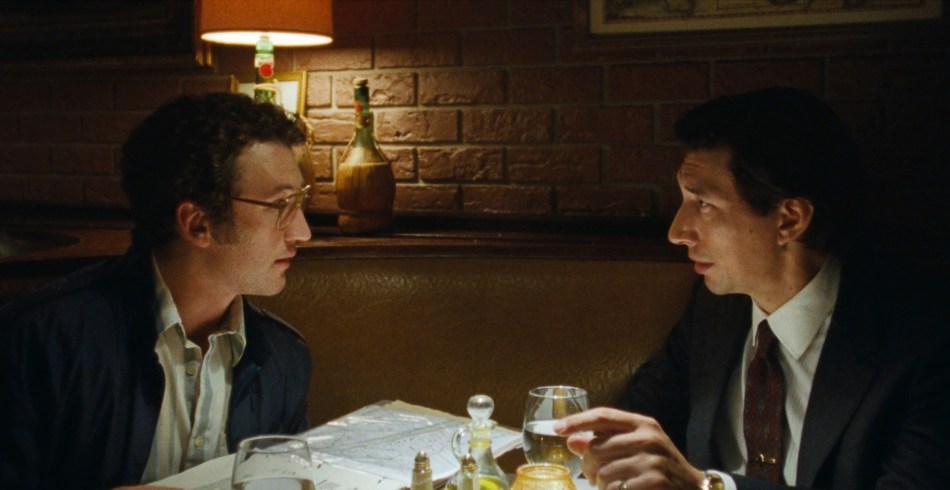
Gray’s films often explore the American dream and the perils of endless pursuit of “more,” of a world of corruption and violence, especially in the shadow of the Russian mafia and its growing influence over 1980s New York City. His personal touch, blending fiction and semi-autobiographical storytelling, enables his films to bristle with humanity and a raw intensity. Irwin and Hester have no idea what they are up against, what these men are capable of in the name of keeping Irwin and their boys silent. Even Gary soon finds himself in over his head, overwhelmed by meeting face-to-face with dangerous mafia boss Simeon Bogoyavich (Victor Ptak) and only finding options that drag him further into the gutter he always tried to avoid. As Gray has explored previously, this is a story of family, brotherhood, and parenthood. Irwin and Gary are excited at this deal at first, a chance for them to do something together and get rich together. As it turns sour, it poisons their relationship. The film’s poignant final scene and closing shot are centered on this theme, a discussion between Irwin and his sons, an apology for everything that has happened, and an urging for the boys to never lose the bond they have together. As the boys leave for school, Irwin watches them go through the window, his face superimposed on the glass. There is a wistfulness to the shot, a mourning over what was lost and forever altered.
That final scene is poignant for reasons beyond the exploration of brotherhood. This is a story of a family, one whose problems are exacerbated by poor communication and an inability to face some harsh realities. Their hubris gets them in trouble with the Russians, but life deals them a brutal hand as Hester begins to experience a handful of symptoms that end in a shocking diagnosis, one she keeps hidden from her family. Johansson has an internal fire to her impressive performance that is hard to look away from, a turmoil and a sadness building under-the-surface as Hester realizes the future she dreamt of may not involve her. There is a feeling of impending doom looming over the film once she learns what is happening, a black cloud that nobody but she is aware of and that leaves elements of Paper Tiger’s potent emotional core lingering long after the film ends. It is just a chapter in the Pearl family’s life that Gray portrays, but one that changes their normal way of life. There is a desperation to cling onto what one has, a feeling that guides Hester’s actions as she tries to not communicate what is happening, seeming to believe that leaving it unsaid will make it go away and not be true. A scene with her mother, where she finally confesses to someone is an emotional sledgehammer. Fractured parental relationships are a constant in Gray’s filmography, whether the abusive one in his debut Little Odessa or an absent father in Ad Astra, but there is love in the Pearl home. There is love between Hester and her mom. “You are my baby. I will do whatever you want,” Hester’s mother says to her after learning about the diagnosis and Hester’s wishes for secrecy. The desire for your child to amount to more, the flame of love and protection that never dims even in adulthood, and the desire to keep them safe from all the world’s ills and troubles, are all noble, beautifully presented, and put to the test in the events of Paper Tiger.
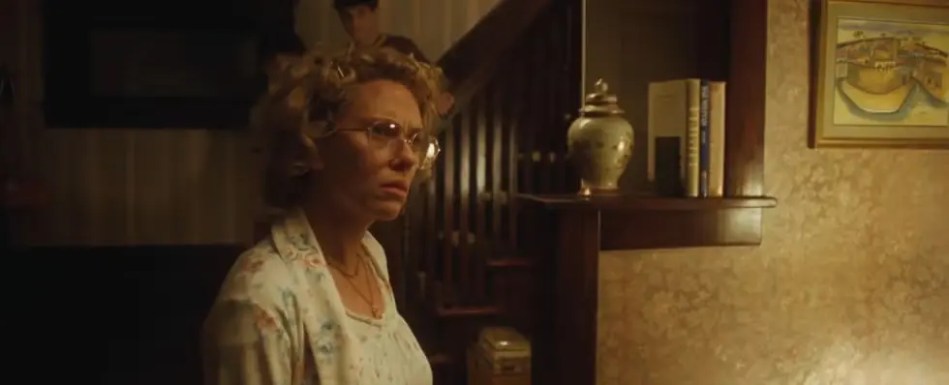
Despite Gary’s assurance that the Russian mafia is a “paper tiger,” who will fold when given enough money, the Pearl family finds themselves facing down a danger from a world outside their quaint suburbia. Though known for slow burn films, including this film, Gray demonstrates his deftness in tension and suspense. A scene at night in the family home is a real highlight, starting with a medium shot of Irwin and Hester in bed, interrupted by a flash of light that seems like that of a camera. As Irwin wakes up and moves through the shadowy interior of his house, he grabs a weapon and one can hear the shuffling of feet downstairs, the moving of furniture, and hushed voices. Gray never rushes the scene, he and cinematographer Joaquín Baca-Asay drawing tension out of the darkness, a lingering drama over the shadow of Irwin’s gun against the wall as the voices below discuss their next move. It is a masterful, edge-of-your-seat moment only to be equaled in tension by Paper Tiger’s climax. Gary, with his back against the wall, driving through traffic with great usage of the rear-view mirror in shooting his eyes and reflecting back the cars in pursuit of him, echoing classic noirs like Detour in execution. As he pulls up to a corn field on the side of the road – a visual nod to The Godfather – and ducks in, hiding out and waiting for the men behind him, Gray dials up the tension. The score disappears, all one can see is Gary’s face in close-up, the brushing aside of corn stalks, all punctuated by the ringing of gunfire.
Paper Tiger’s excellence is defined in its measured approach, its stoic and thoughtful examination of its themes around the American dream and family, but Gray creates action scenes that reach the heights of the noir genre with a Michael Mann-esque thrill that blends his artful style and pure pulp. The cinematography is vital to this with Baca-Asay’s work consistently playing with shadows and light akin to the masters of noir cinematography, though Paper Tiger’s defining look, being shot on film and loaded with grain adds to its overall wistful, melancholic nature. It feels like an old memory, slipping through one’s fingers as time wears on and distance grows. The way Queens looked, the warmth of the Pearl home, and the hum and buzz of the city all given a vitality by the camera, a power that gives Paper Tiger a timeless feeling. It is not a perfect film, some of its scenes feeling as though they crash together or some lingering just a bit too long, but it is in its overarching power that Paper Tiger stirs and lingers.
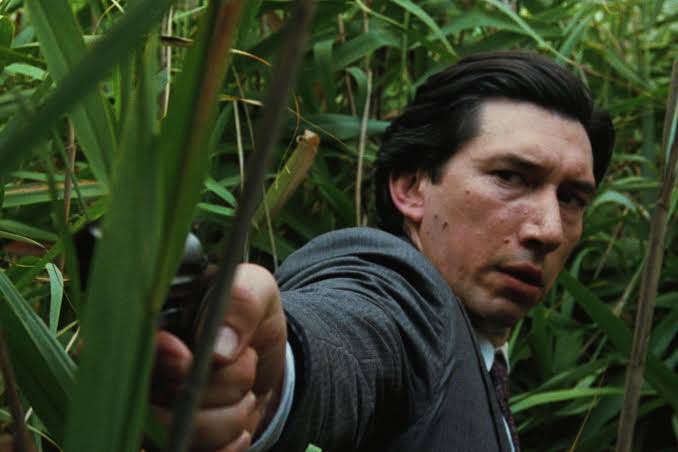
Adam Driver continues to be one of the best actors working today, possessing the suave and disarming nature that captures the confidence Gary exudes. One can see why his nephews are drawn to him, delighting in seeing his car or his gun. No matter who is younger or older, there is a reverence that even Irwin holds for him, seeing Gary as a man who made it, achieved so much, and yet, even Gary has a wife divorcing him and former department friends increasingly at odds with him as Gary’s clean nose buys him no kind eyes in a dirty police force. Driver’s immersive performance, capturing the humanity beneath the bravado and showmanship of Gary, the scared man increasingly boxed in and aware that his money, talk, and former badge will not get him out of the increasingly tightening noose around his neck, create some of Paper Tiger’s most impressively acted scenes. Though not the protagonist, Gary feels like a classic noir protagonist, a man drawn in by the shadows only to realize that the streets he once strutted around are now out to kill him, fatalistically engulfing him until there is no way out.
Paper Tiger is a treatise on the American dream and the cost of wanting more, taking for granted the wealth one has in the endless striving and need for growth. It is a stirring study of family, brotherhood, and parenthood, a look at the present moment as something that can be unsettled by one’s mistakes and hubris-driven blindness as frequently as it can by happenstance, fate dealing hands one never saw being shuffled. Paper Tiger has a soulfulness to it, a resonance in every image and feeling that lingers long after the film ends, portraying a chapter in a typical American’s family life, an ode to the “before” when the house was alive and love surrounded them. The “after” is coming, their lives indelibly altered but for now, they sit in that feeling of the present moment and wonder why they ever wanted more.
Discover more from Cineccentric
Subscribe to get the latest posts sent to your email.


0 comments on “Paper Tiger ★★★½”